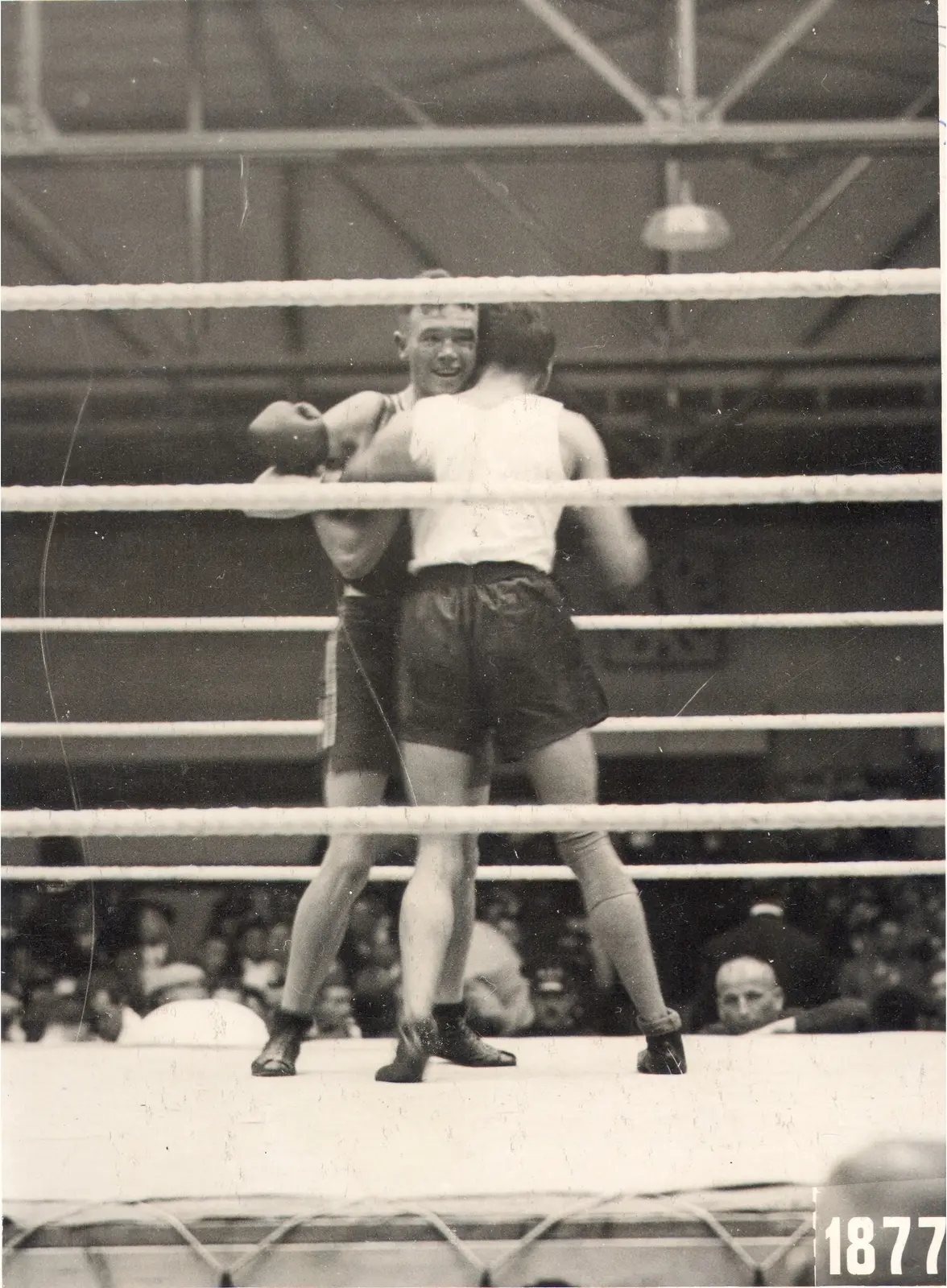
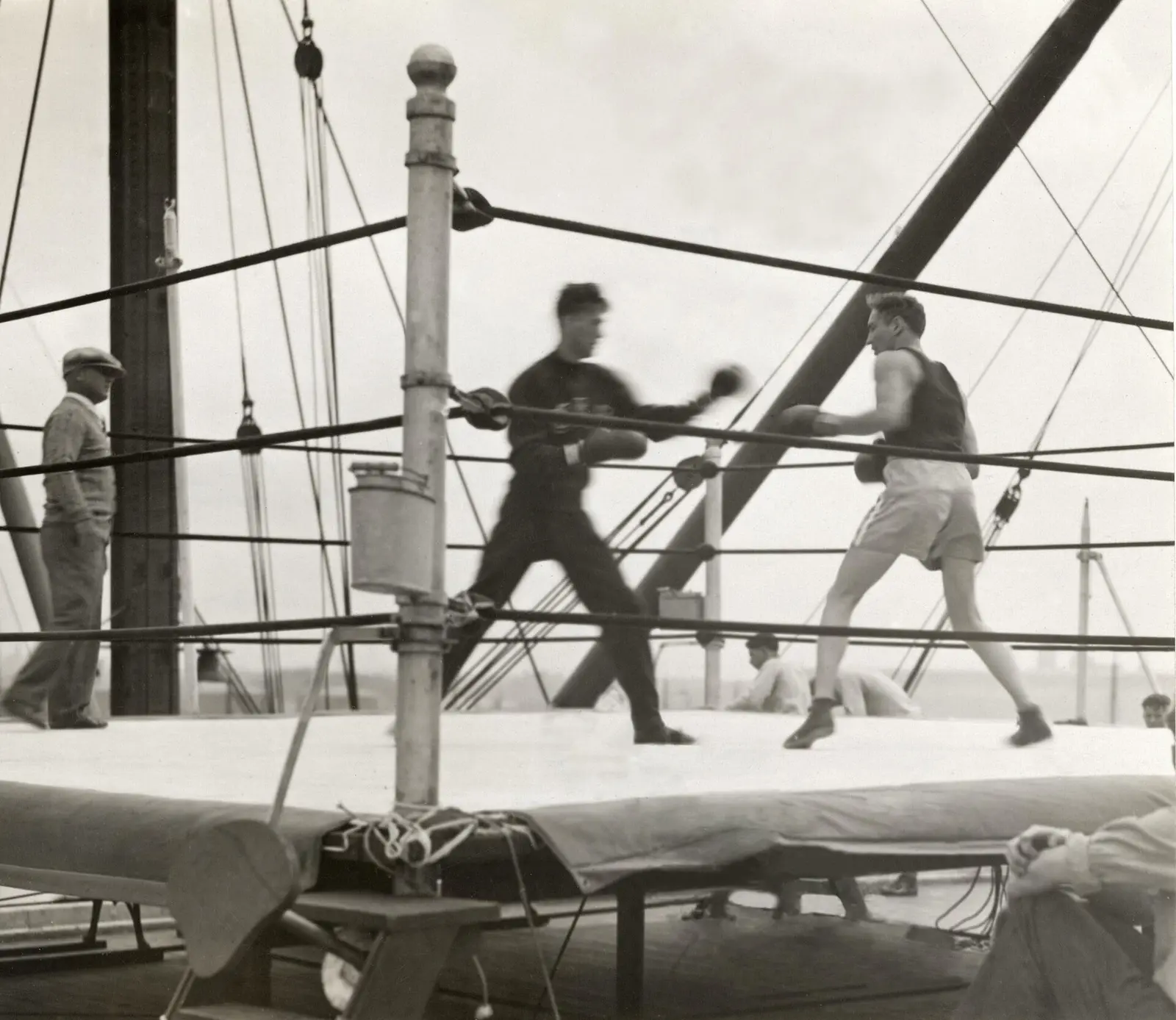
220 milestones from the earliest surviving records to the contemporary sport.
No history milestones match these filters.
The history of boxing stretches from the earliest depictions of fist fighting in antiquity to modern amateur and professional boxing. The Phoenix Boxing Club timeline brings together sourced milestones from ancient Greece, the Olympic Games, the evolution of rules and equipment, athlete safety, women’s boxing, and significant moments in the Greek and international history of the sport. Each milestone is placed within boxing’s broader development and, where documentation is available, is accompanied by sources and historical visual material.
001
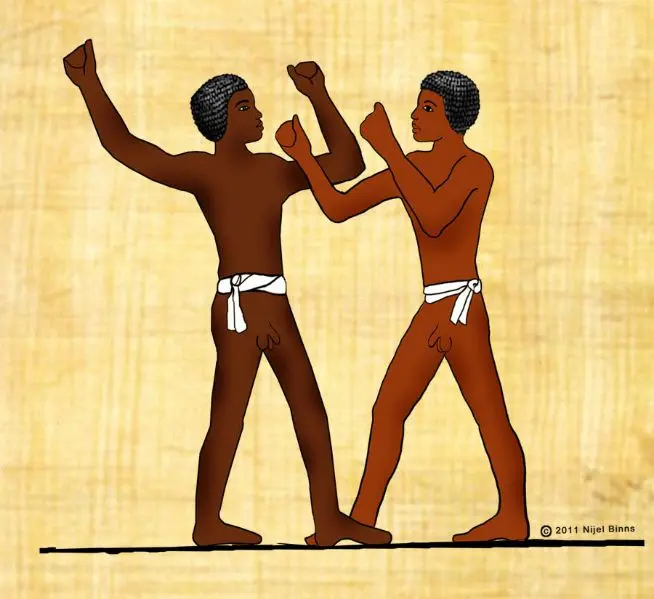
Historical sources place the earliest evidence of boxing as a practice in Ancient Egypt at around 3000 BCE, showing that forms of fist-fighting have been recorded in history for approximately five millennia. As a visual reference, this record uses a later Egyptian boxing/martial-arts scene from the tomb of Khety at Beni Hasan; it dates to the Middle Kingdom, around 2055–1956 BCE.
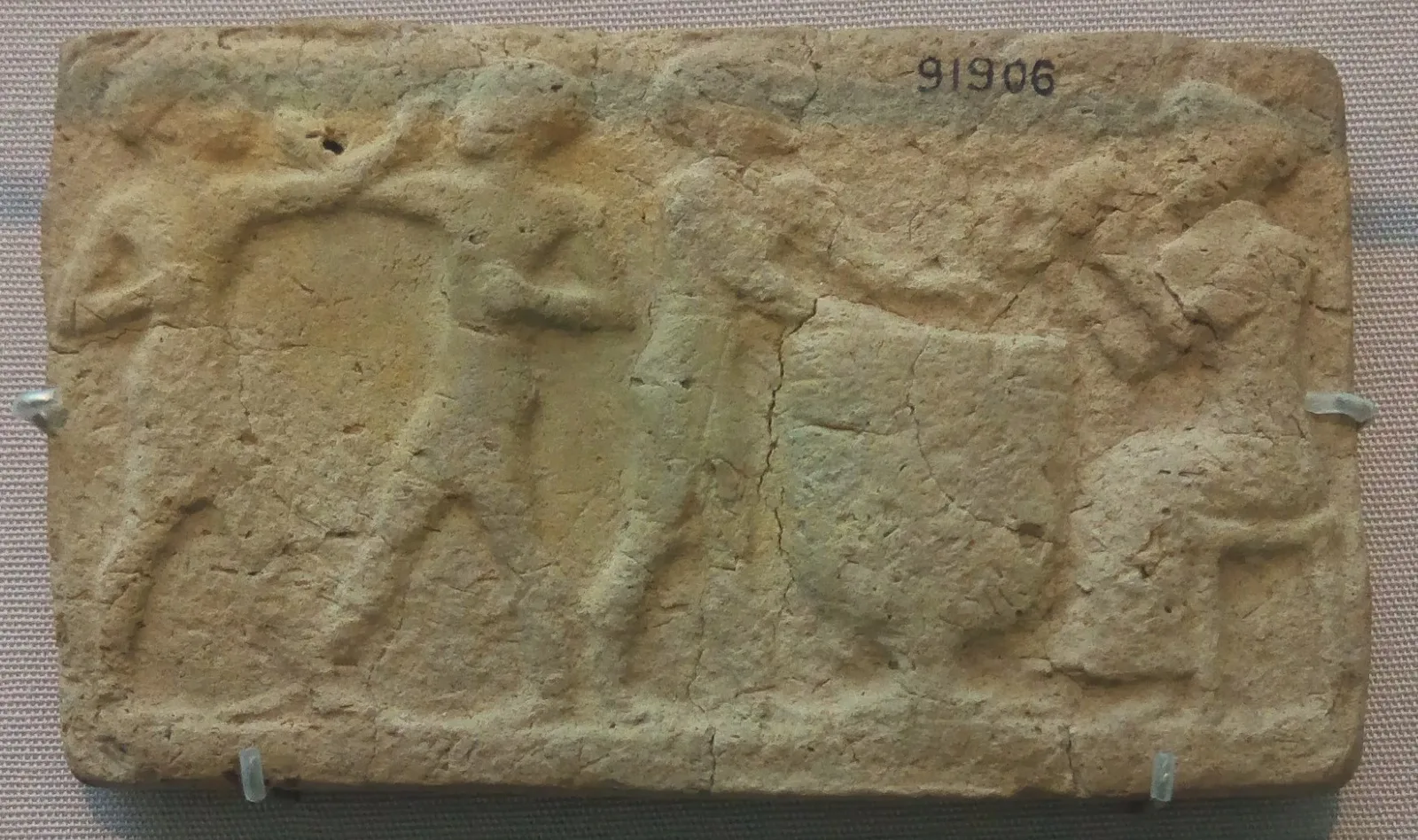
In Larsa, Mesopotamia, an Old Babylonian clay plaque shows two boxers fighting while musicians play beside them, making it one of the earliest surviving visual records of boxing. The image shows the clay plaque from Larsa held by the British Museum.
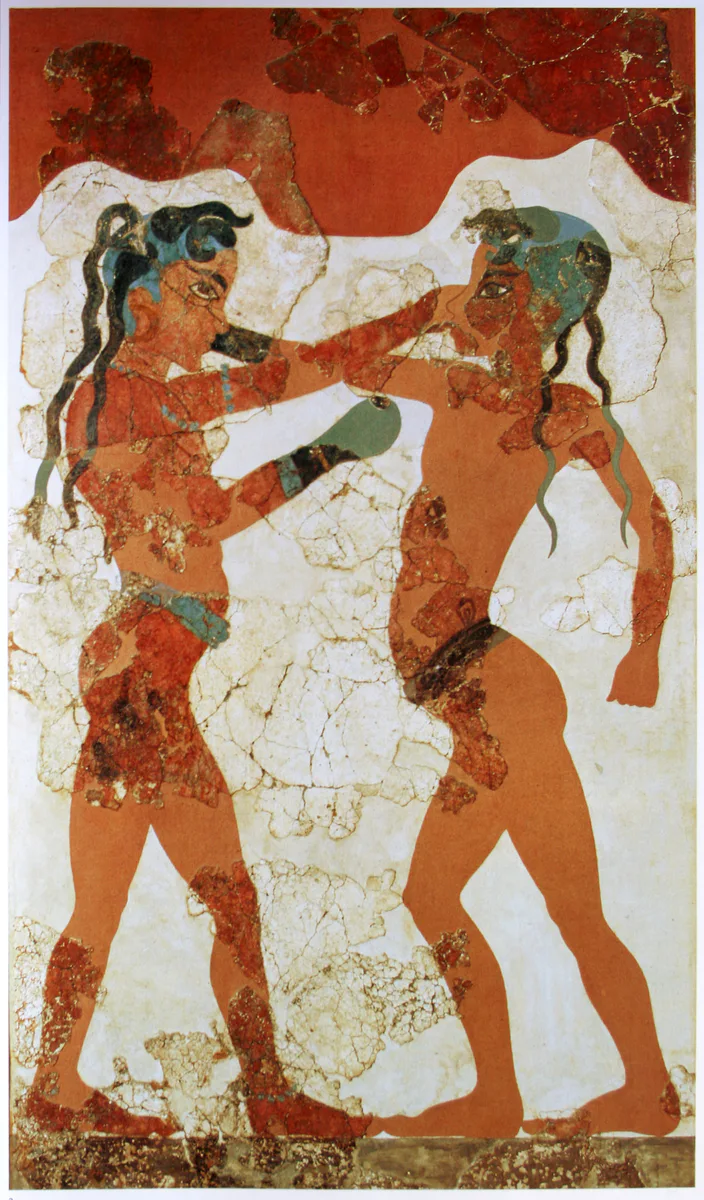
The “Boxing Boys” fresco from Akrotiri on Thera, dating to around 1600 BCE, shows two boys engaged in a boxing contest and provides striking early evidence of the sport in the Aegean world. The depiction of gloves is striking, since there are no references to boxing gloves in ancient Greece.
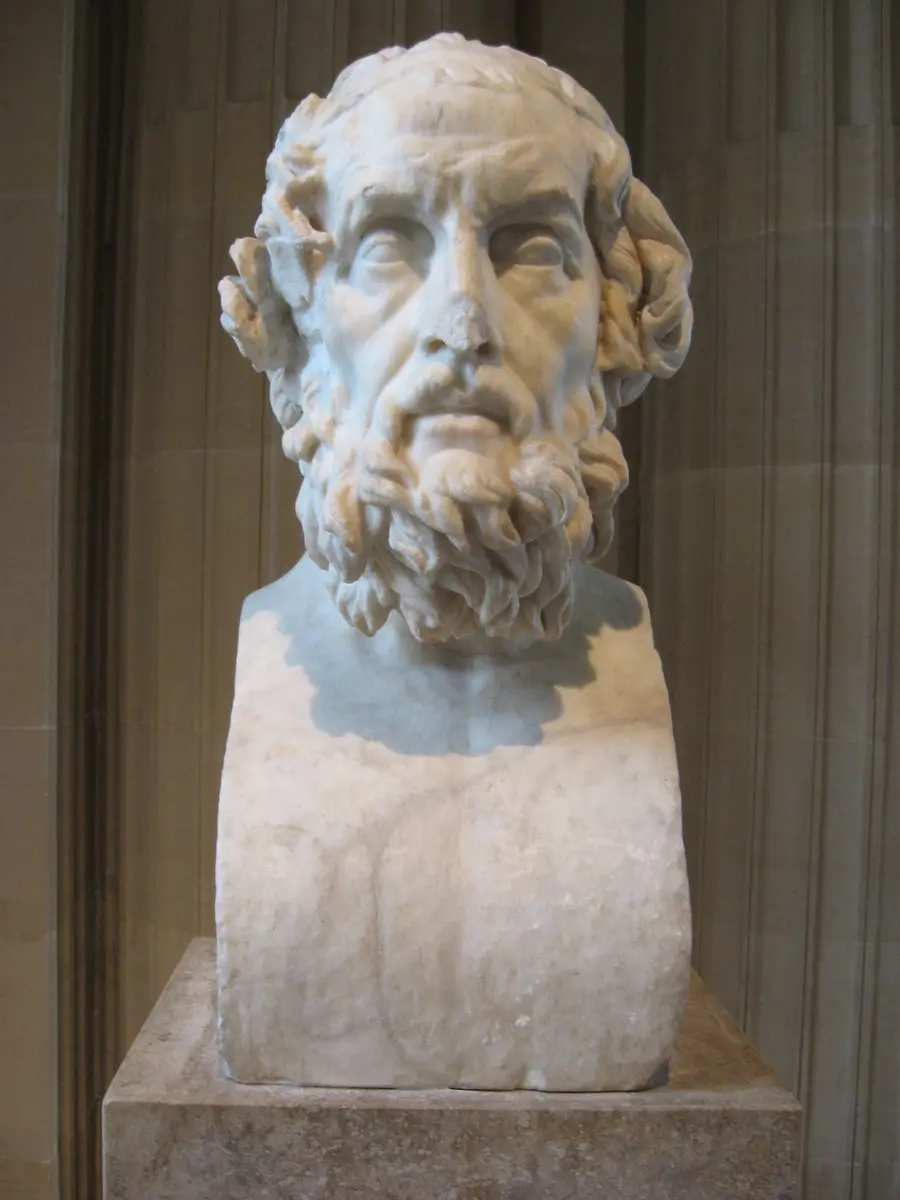
In Book 23 of the Iliad, Homer describes the boxing contest between Epeius and Euryalus during the funeral games for Patroclus, one of the earliest literary accounts of organised boxing in the Greek world. The image shows a marble bust of Homer, known as the Homer Caetani, in the Louvre Museum.
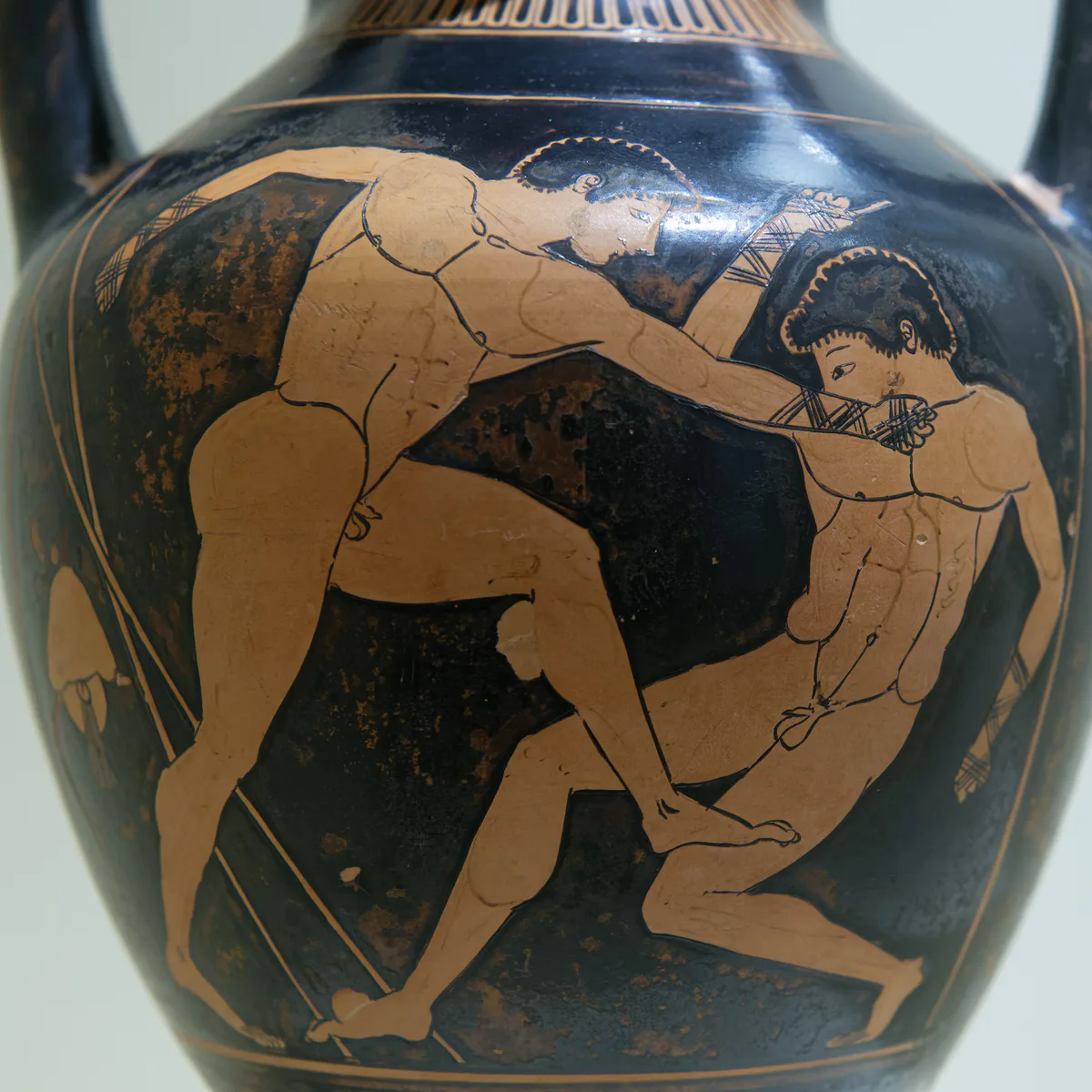
Men’s boxing entered the Ancient Olympic Games at the 23rd Olympiad in 688 BCE, with Onomastos of Smyrna recorded as the first Olympic boxing champion; boys’ boxing was added at the 41st Olympiad in 616 BCE. The image shows a later ancient Greek vase painting of boxers, attributed to the Pythokles Painter, from the early fifth century BCE.
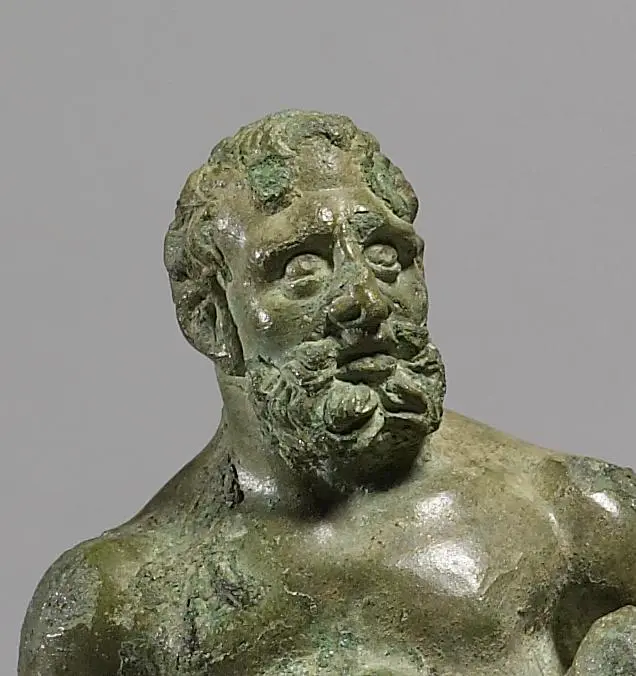
In Classical Greece, boxers wrapped their hands and wrists with leather thongs; without modern timed rounds or points, a contest ended when a fighter could no longer continue or conceded. Theagenes of Thasos became one of antiquity’s most celebrated combat athletes and an Olympic boxing champion. The image shows a detail of an ancient Greek bronze statuette of a boxer.
In 464 BCE, Diagoras of Rhodes is crowned Olympic boxing champion at Olympia. Celebrated for his achievements and his direct, honourable style of fighting, he becomes one of the emblematic figures of ancient Greek boxing and the patriarch of an extraordinary Olympic sporting dynasty.
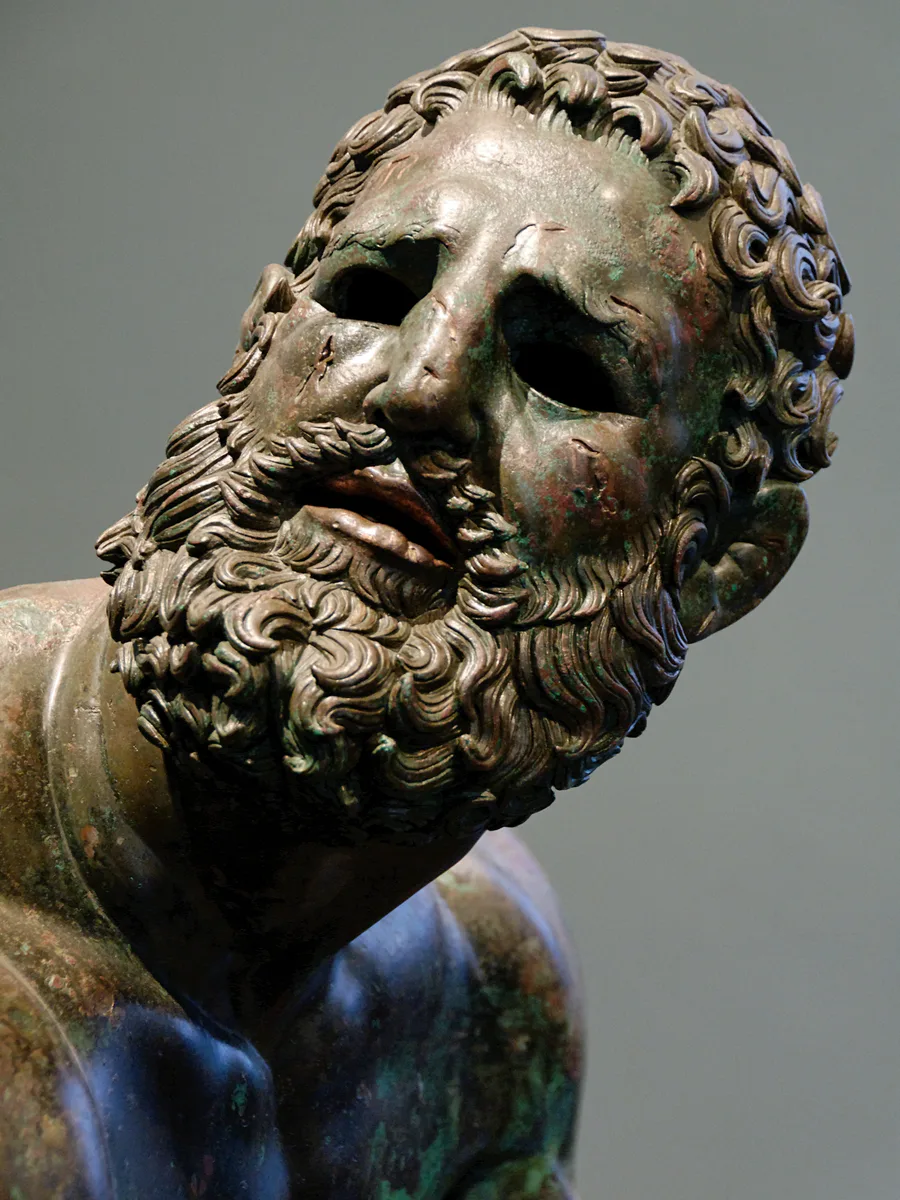
The bronze “Boxer at Rest,” rooted in the Hellenistic Greek tradition, portrays a seasoned fighter whose injuries and wear convey the physical severity of ancient boxing. The image shows the Hellenistic bronze sculpture “Boxer at Rest.”
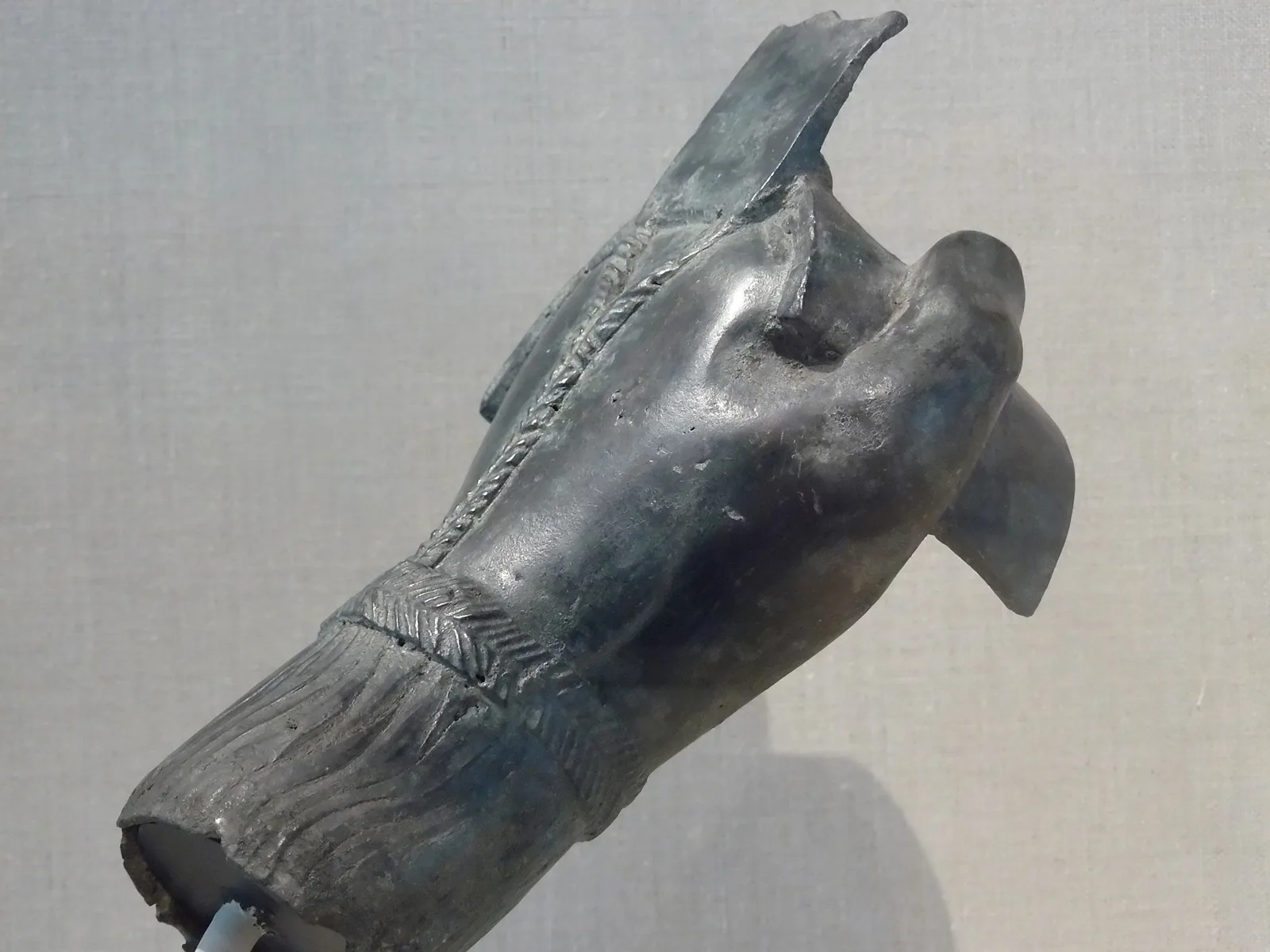
In the Roman era, the caestus developed into a much harsher hand apparatus, using leather bindings and reinforcements that pushed boxing further toward bloody public spectacle. The image shows a Roman bronze boxer’s hand wearing a caestus.
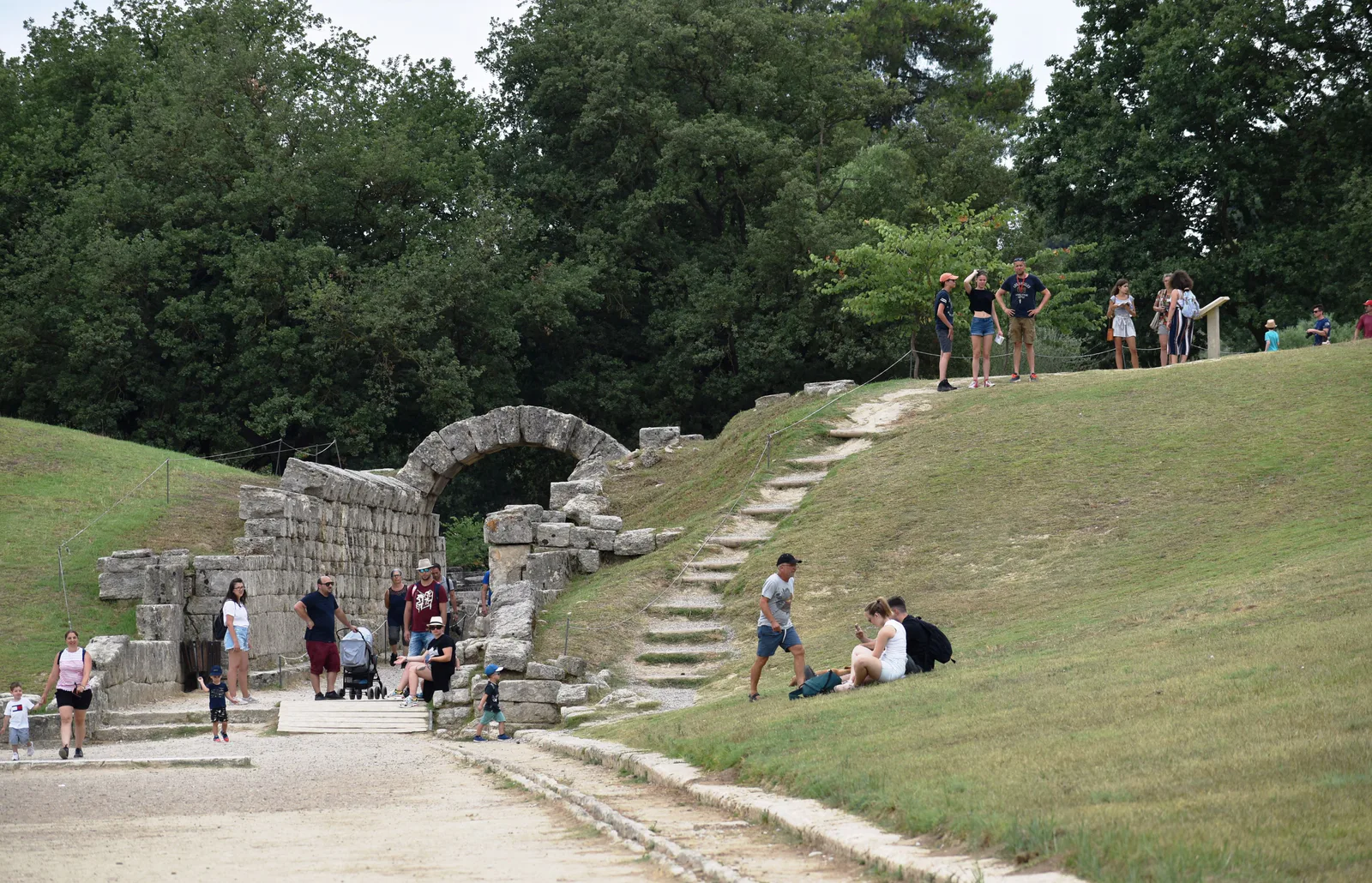
By the end of the fourth century CE, the ancient Olympic tradition ceased within the Christian Roman Empire, and organised Olympic boxing disappeared for centuries with it. The image shows the ancient stadium at Olympia.
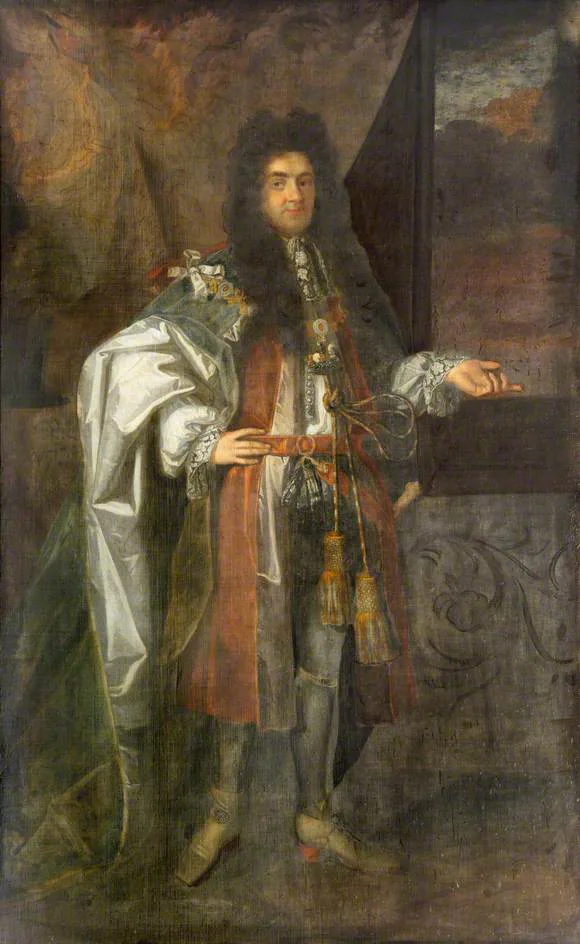
On 6 January 1681, one of the earliest published modern English prize fights is recorded, an early point in the line that would develop into British bare-knuckle boxing: Christopher Monck, 2nd Duke of Albemarle, arranges a bout between a member of his household staff and a butcher, who wins. The image shows a portrait of Monck.
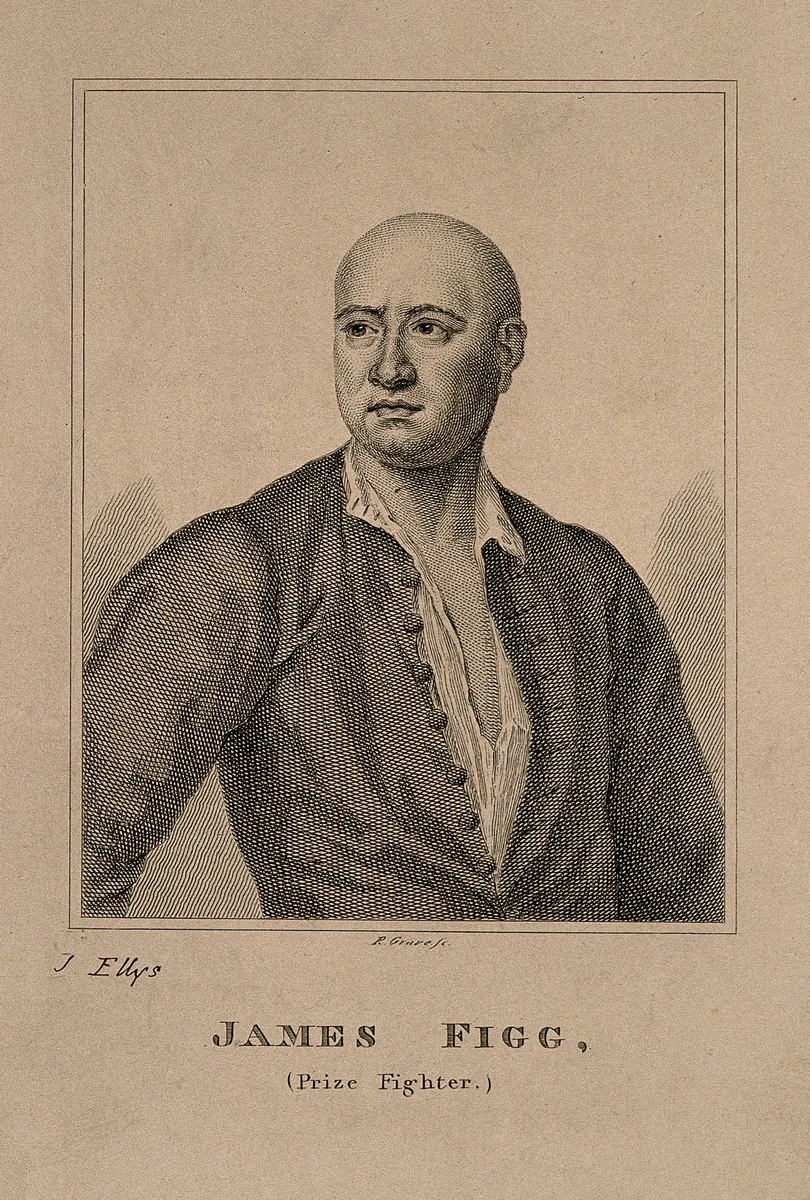
In the early eighteenth century, James Figg emerged as the dominant figure in English prizefighting and is widely recognised as the first great champion of the modern bare-knuckle era. The engraving in the image shows Figg himself.
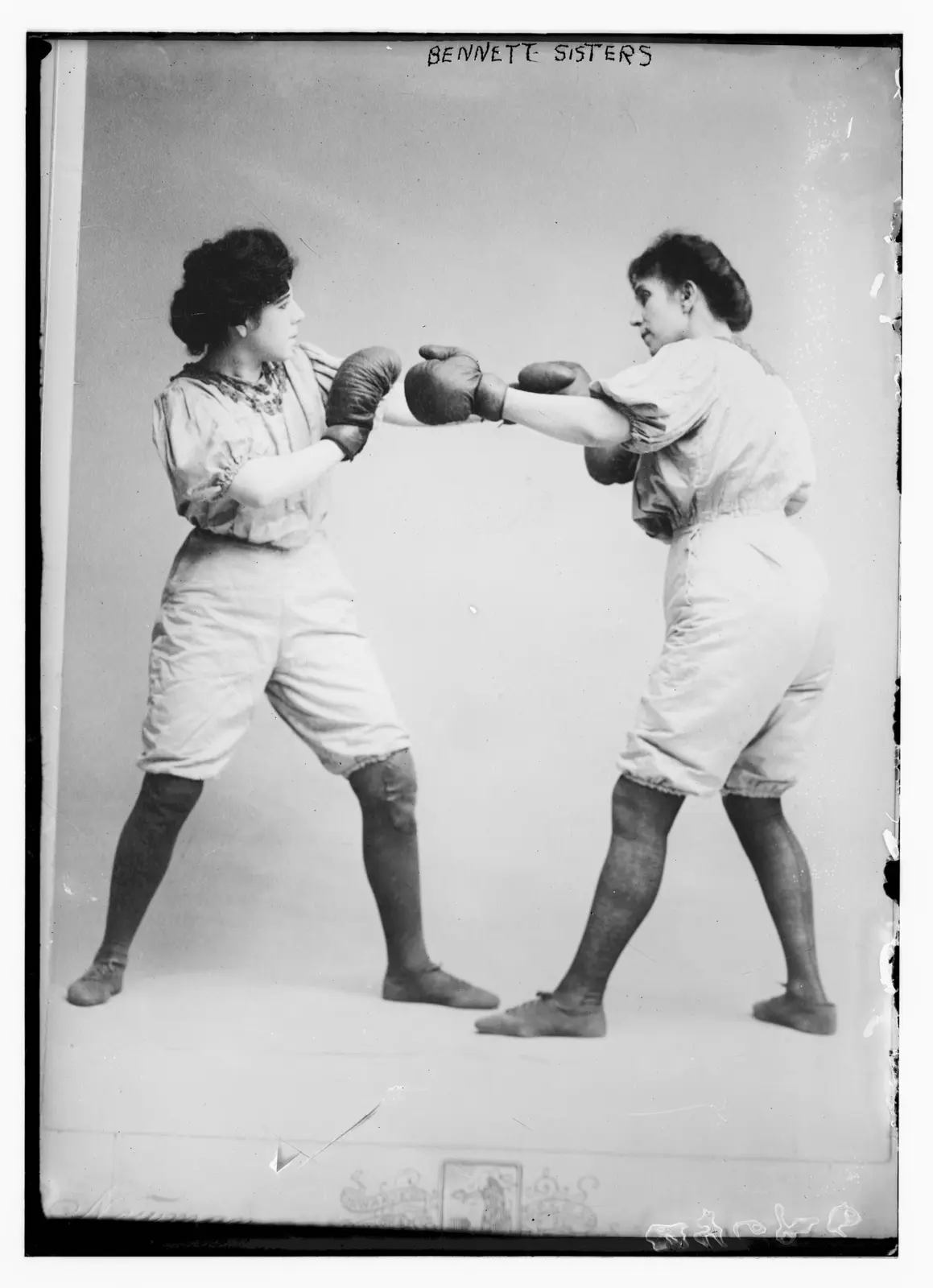
In the 1720s, women such as Elizabeth Wilkinson publish public challenges and take part in prize fights in London, showing that women’s boxing has a recorded history long before its modern institutional recognition. These contests develop within the same English prizefighting culture that is also shaping men’s bare-knuckle boxing in the period. The image shows the Bennett sisters boxing around 1910–1915.
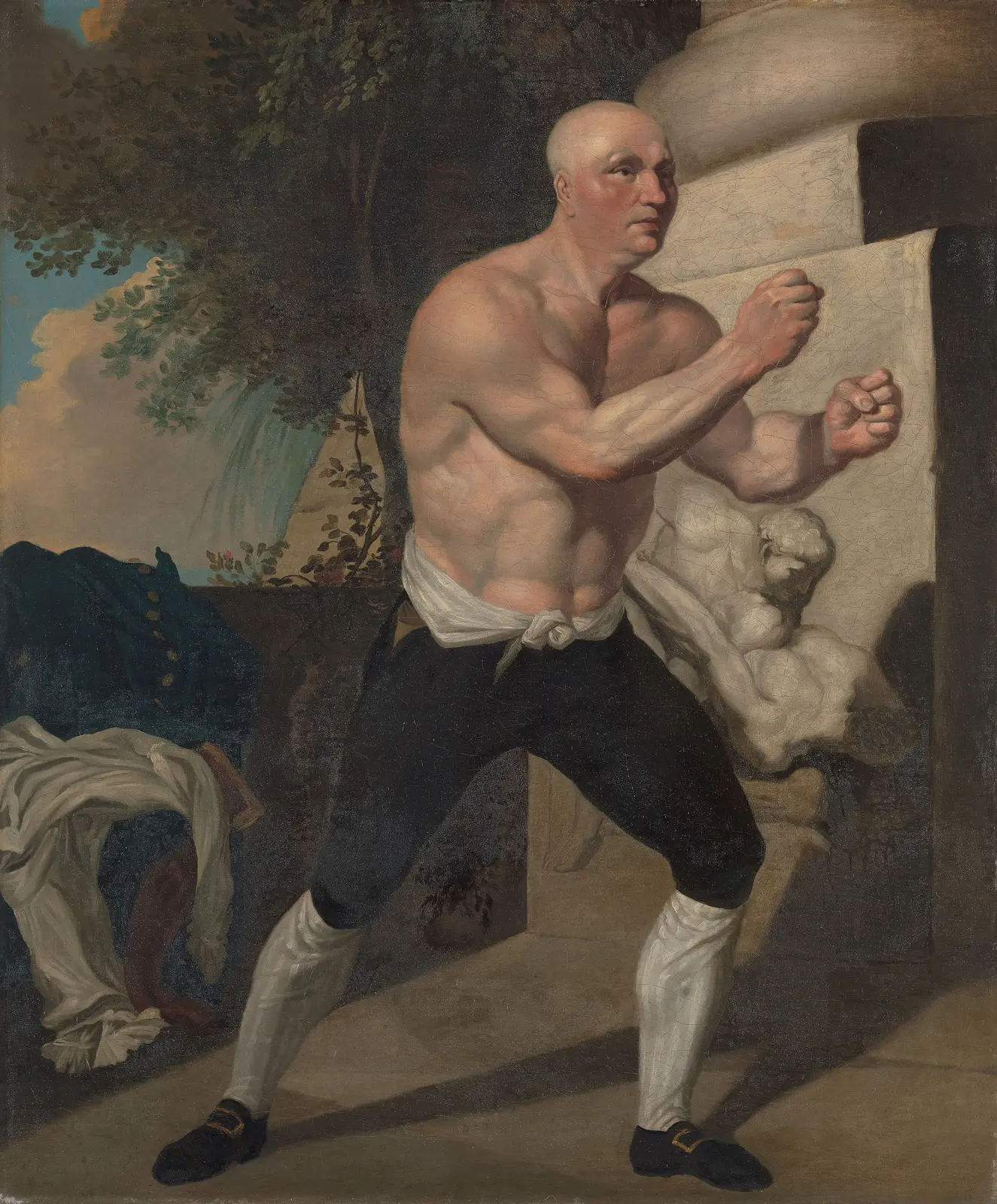
In 1743, Jack Broughton published one of the first genuinely influential codified rule sets in modern boxing, imposing clearer limits on a form of prizefighting that had previously been far less regulated. The image shows Jack Broughton in a work by John Hamilton Mortimer.
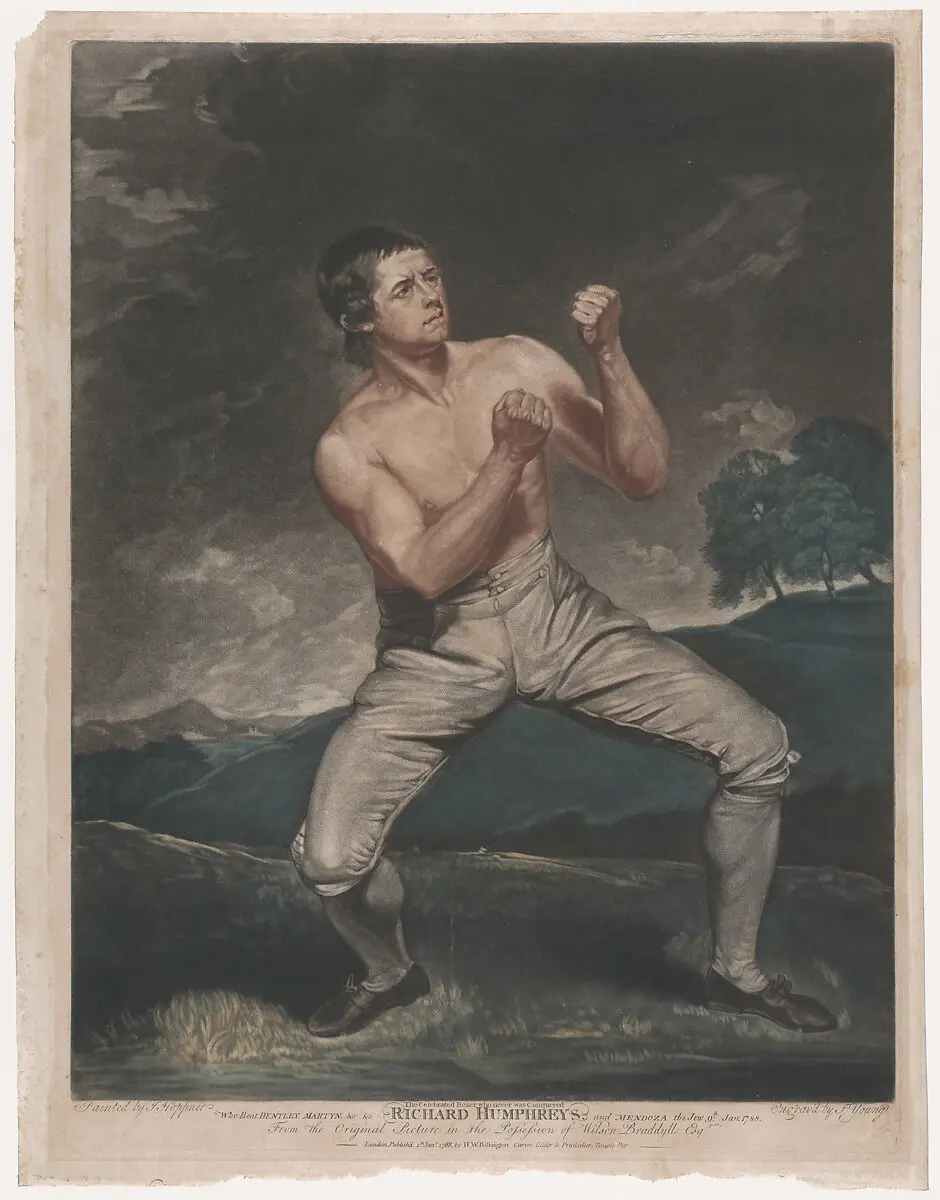
The Daniel Mendoza–Richard Humphries rivalry of the late 1780s helped popularise a more mobile, defensive and technically systematic approach to boxing, associated especially with Mendoza. The image shows a portrait of Richard Humphreys by John Young after John Hoppner.
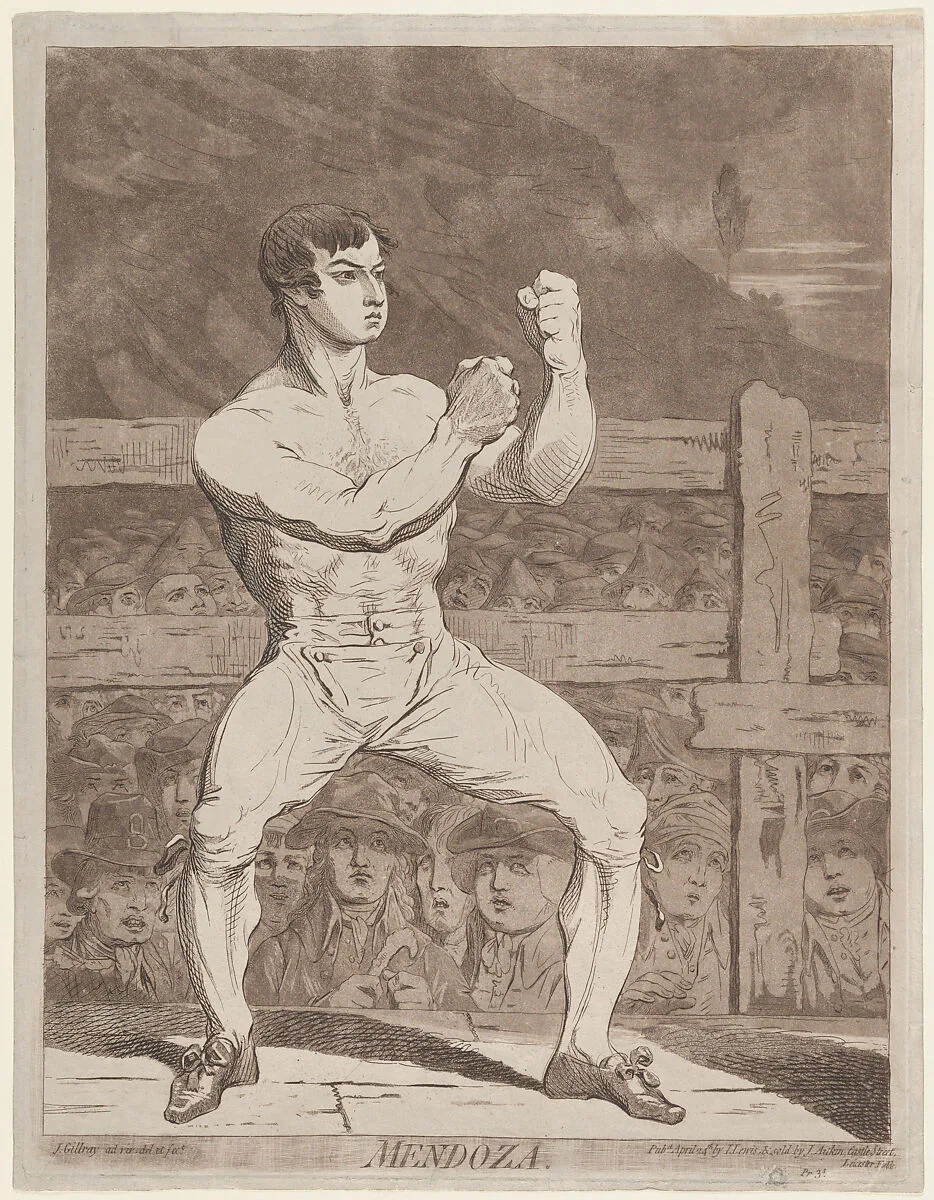
In 1789, Daniel Mendoza published *The Art of Boxing*, moving ideas about stance, movement, defence and tactics from oral practice into a systematic written manual. The image shows Daniel Mendoza in the ring in a 1788 engraving by James Gillray.
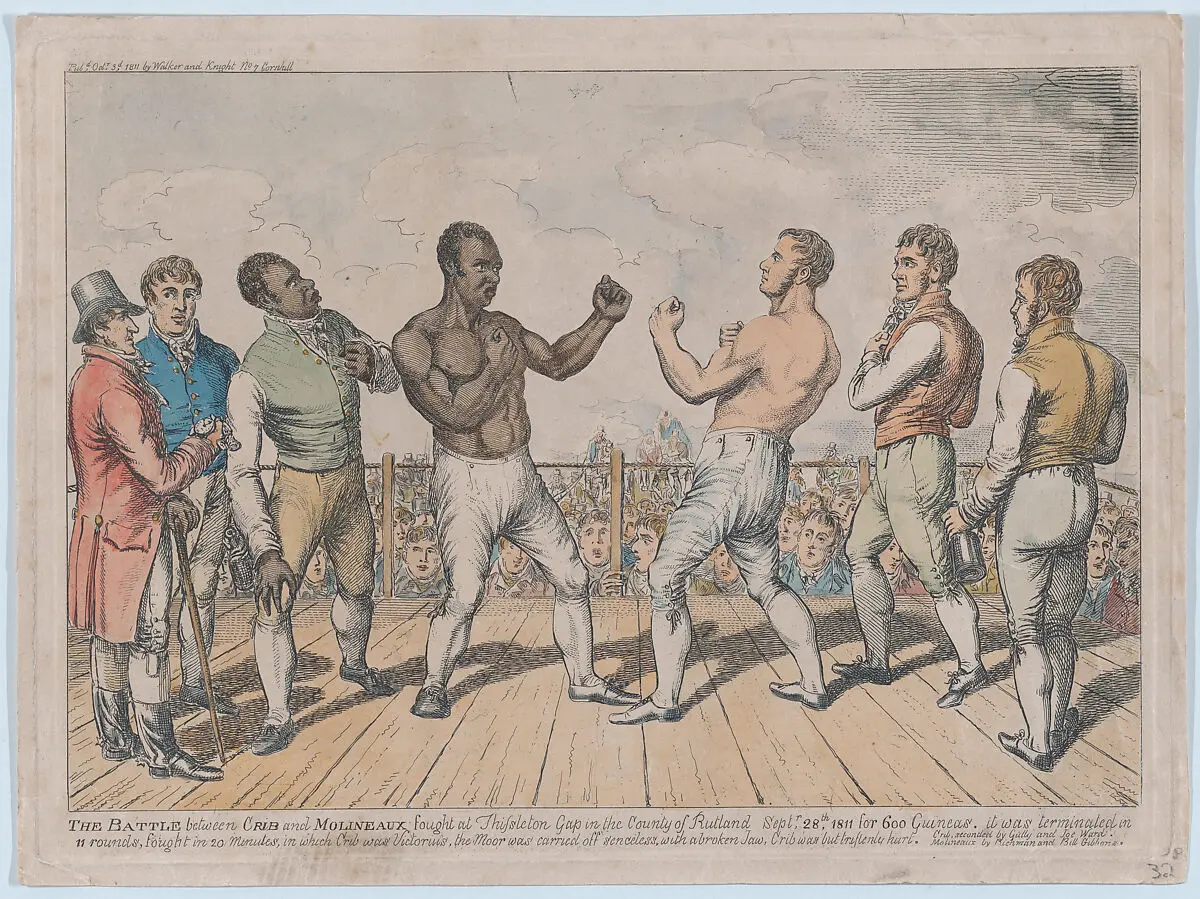
In 1810, English champion Tom Cribb faced the American formerly enslaved fighter Tom Molineaux in a contest that turned British bare-knuckle prizefighting into a transatlantic sporting sensation. The image shows the Cribb–Molineaux contest in an engraving attributed to George Cruikshank.
The London Prize Ring Rules of 1838 bring greater structure to bare-knuckle prizefighting, establishing more consistent procedures for the ring, the course of rounds and restarting after a fall. The code becomes a major reference point for British prizefighting before the later dominance of the Queensberry Rules and gloved boxing. The image shows a scanned cover of James Edward Sullivan’s 1893 book *Boxing*, which includes a reprint of the London Prize Ring Rules.
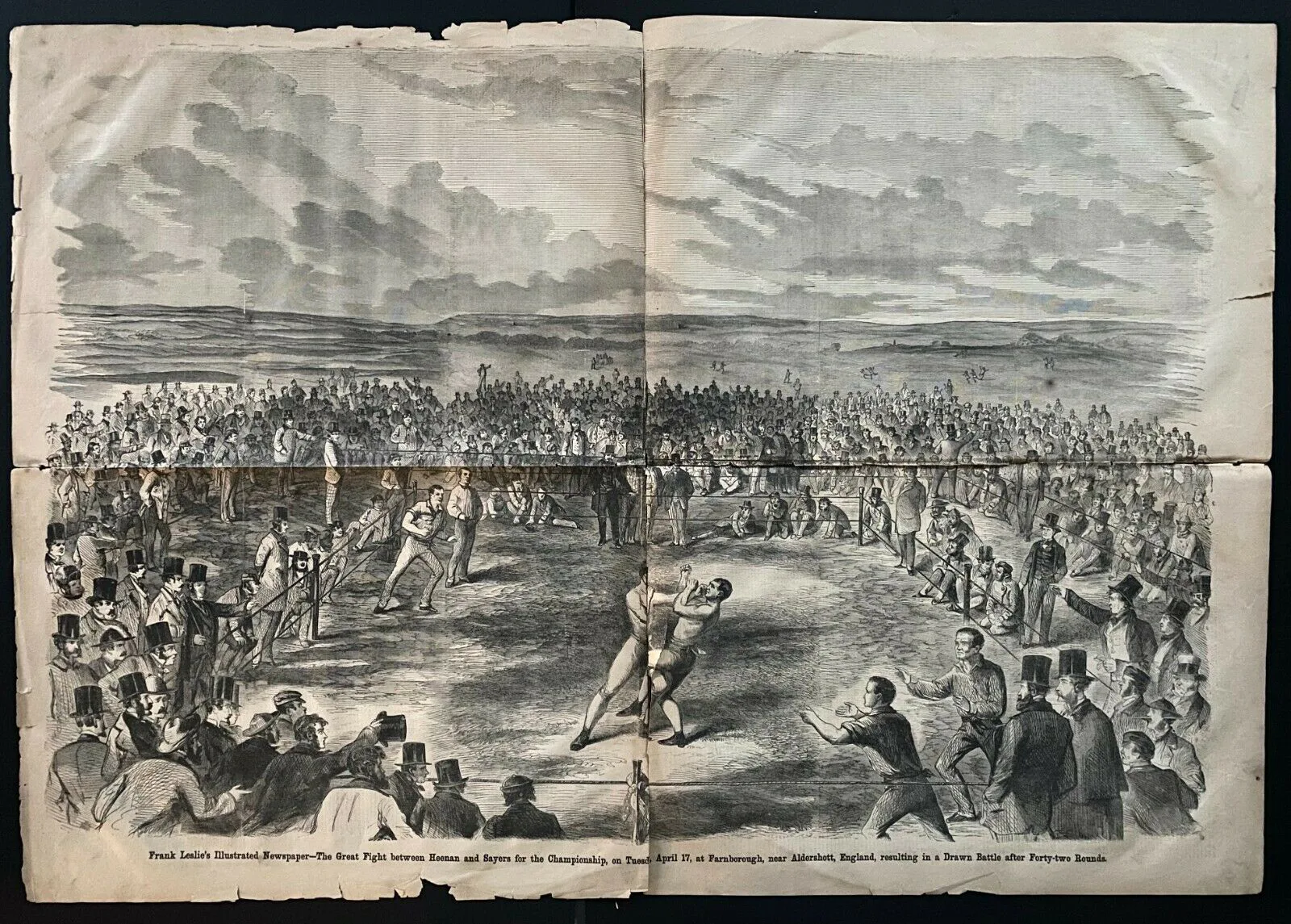
In 1860, Tom Sayers and American John C. Heenan met in a long, dramatic contest that attracted enormous attention and symbolised prizefighting’s growing international reach between Britain and the United States. The image shows an illustration of the Sayers–Heenan fight itself.
In 1865, John Graham Chambers drafted the code that would soon be published as the Marquess of Queensberry Rules, helping drive the transition from bare-knuckle prizefighting toward modern gloved boxing. The image shows an illustration of the Heenan–Sayers fight in 1860, a few years before the Queensberry Rules were published.
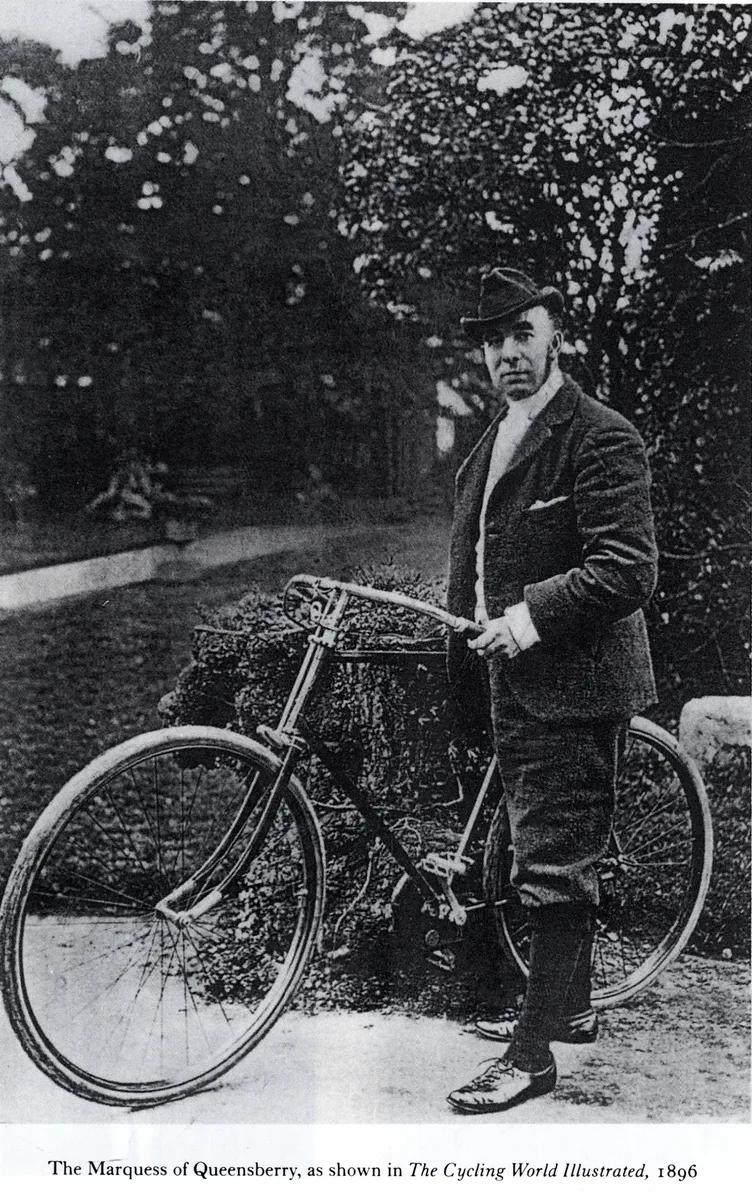
In 1867, the Marquess of Queensberry Rules were published, establishing gloves, three-minute rounds and a ten-second count after a knockdown as foundations of the modern contest. The image shows a portrait of the 9th Marquess of Queensberry.
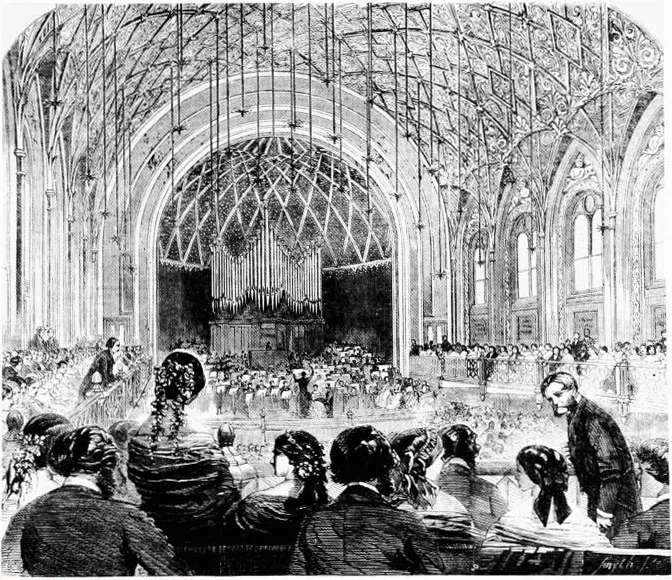
In 1880, England’s Amateur Boxing Association was founded, providing a common organisational framework for clubs and competitions and accelerating the development of amateur boxing as a distinct competitive system. The image shows a historical view of St James’s Hall in London.
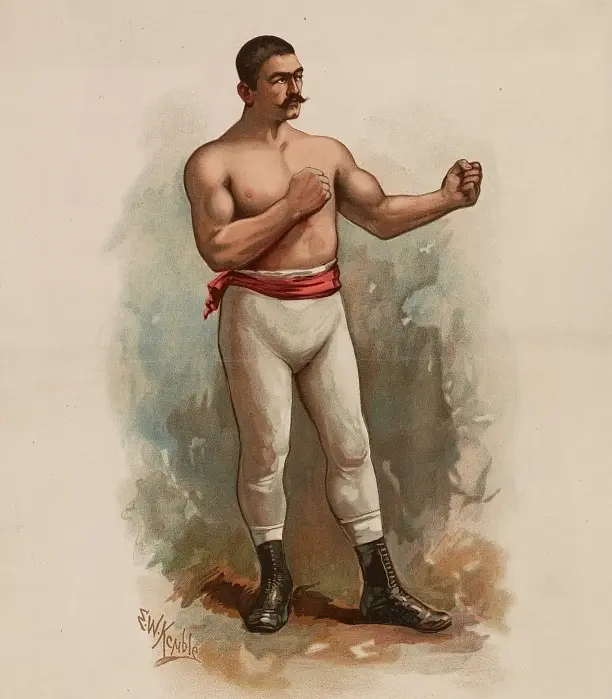
In 1882, John L. Sullivan defeated Paddy Ryan and emerged as the dominant American heavyweight figure at the very moment boxing was moving from the bare-knuckle tradition toward Queensberry rules. The image shows a historical image of John L. Sullivan.
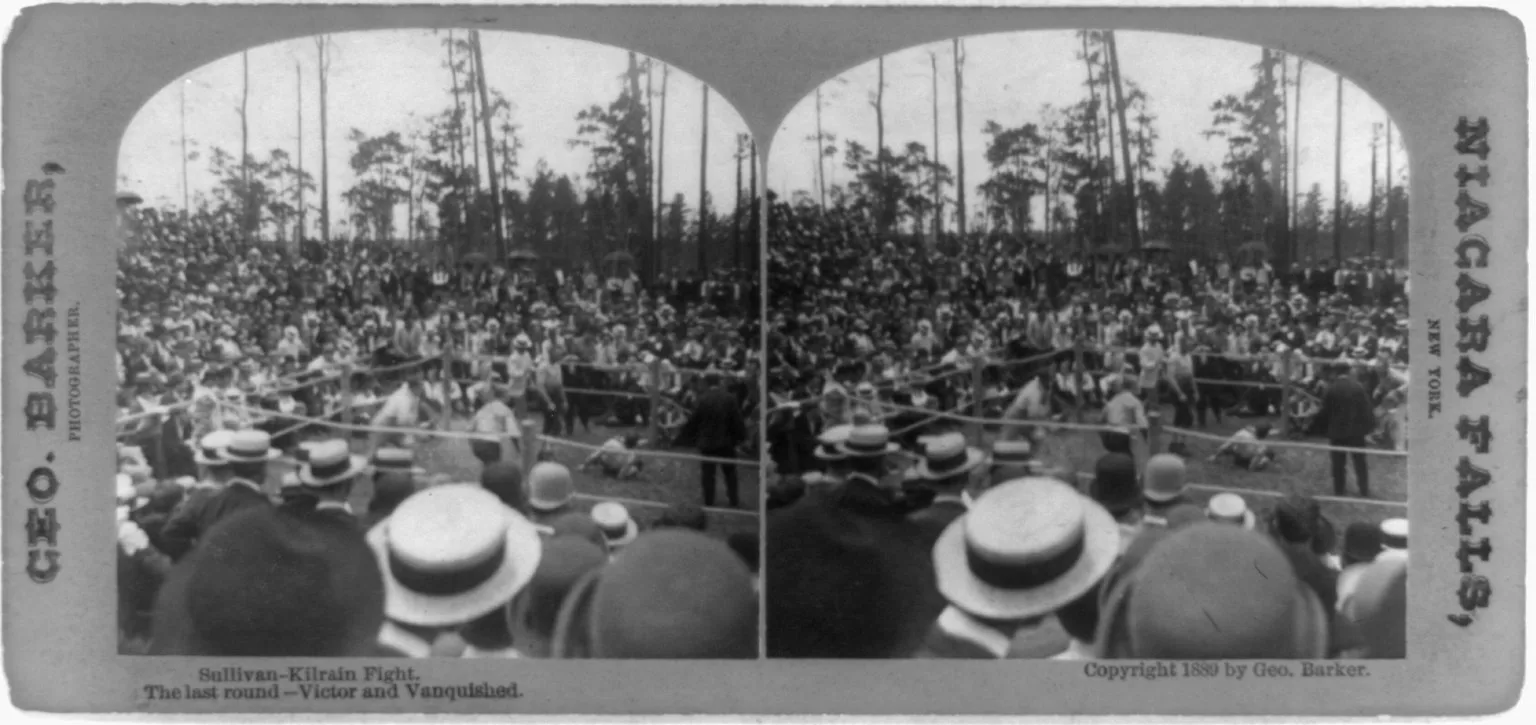
In 1889, John L. Sullivan faced Jake Kilrain in a 75-round contest, one of the last major heavyweight championship fights of the bare-knuckle era. The image shows the final stage of the Sullivan–Kilrain fight in 1889.
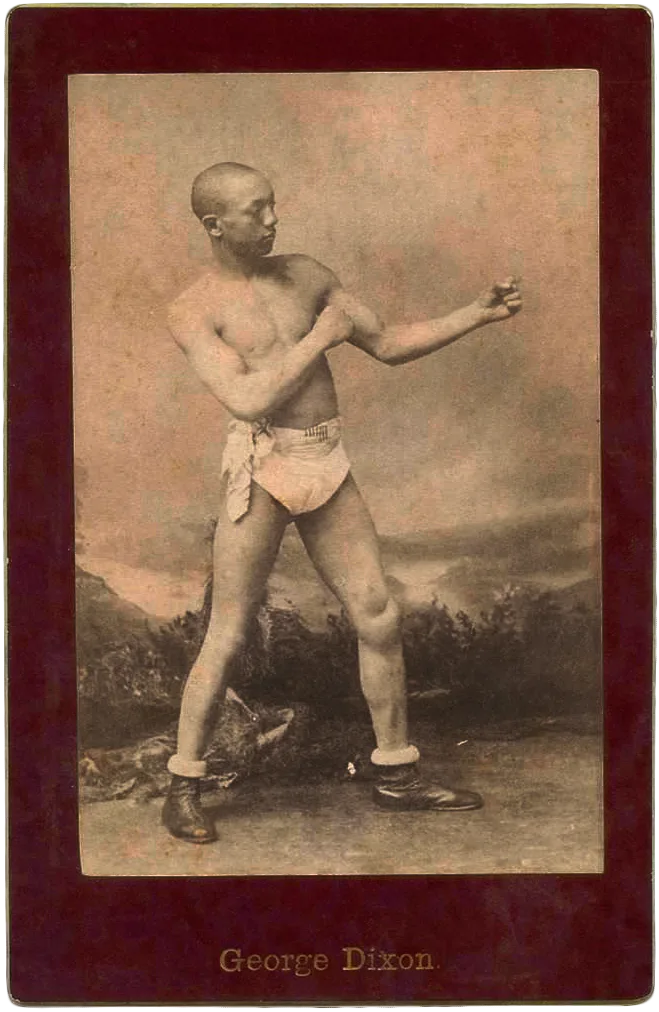
In 1890–1891, George Dixon became the first Black boxer widely recognised as a world champion, first at bantamweight and then at featherweight, during an era of entrenched racial discrimination. The image shows a photographic portrait of George Dixon around 1890.
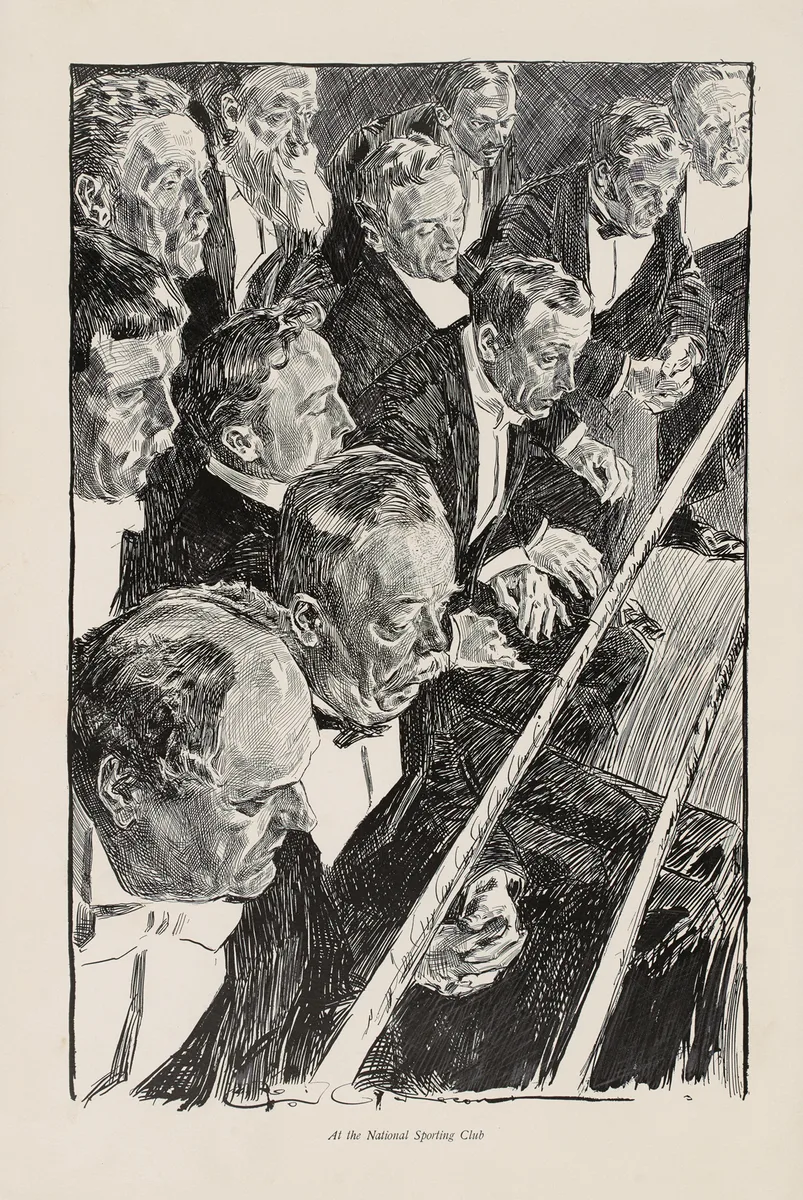
In 1891, London’s National Sporting Club was founded and developed into a major authority for rules, refereeing, title contests and the standardisation of weight divisions in British boxing. The image shows a sketch of the audience at the National Sporting Club in 1897.
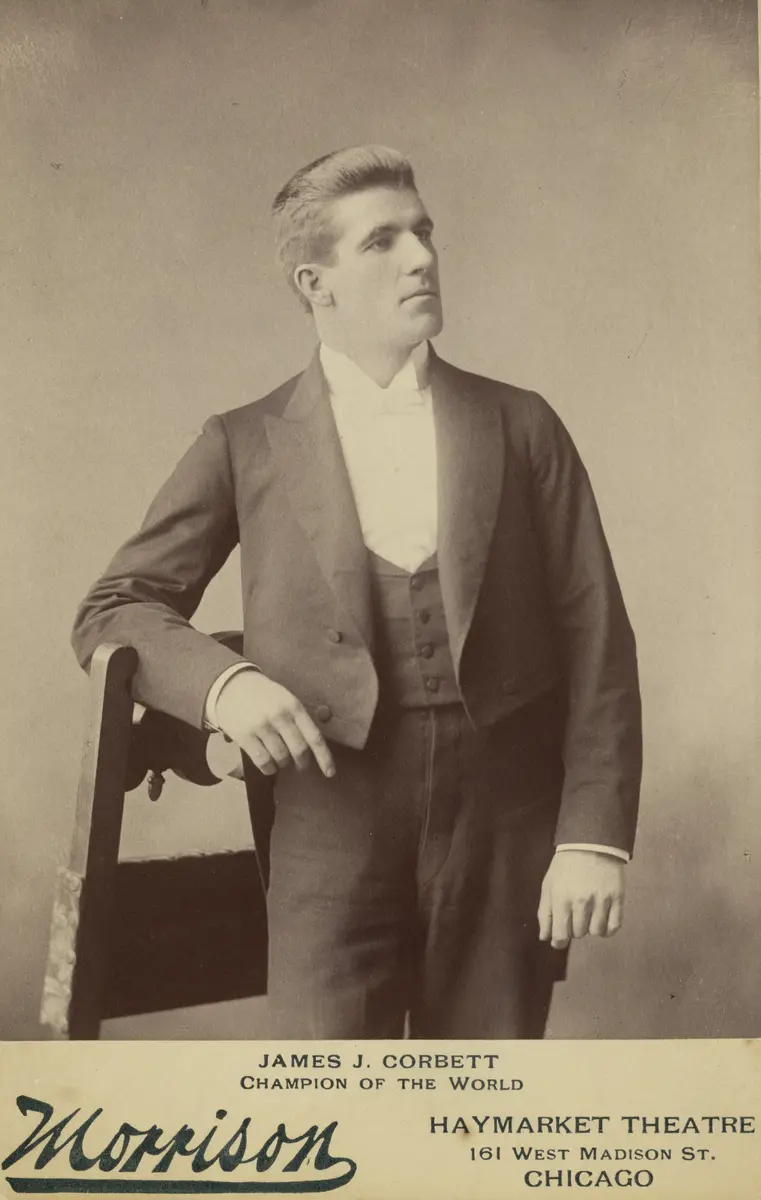
In 1892, James J. Corbett stopped John L. Sullivan in a gloved bout under Queensberry Rules to become heavyweight champion, symbolising elite boxing’s decisive shift toward its modern form. The image shows a photographic portrait of James J. Corbett around 1895.
In 1892, dentist Woolf Krause developed an early gutta-percha gum shield for boxers, beginning the evolution of the modern mouthguard as essential protective equipment. The image shows a boxing mouthguard. From these early designs, the protector evolved and was adopted more widely in boxing, which became one of the first professional sports to require mouthguard use.
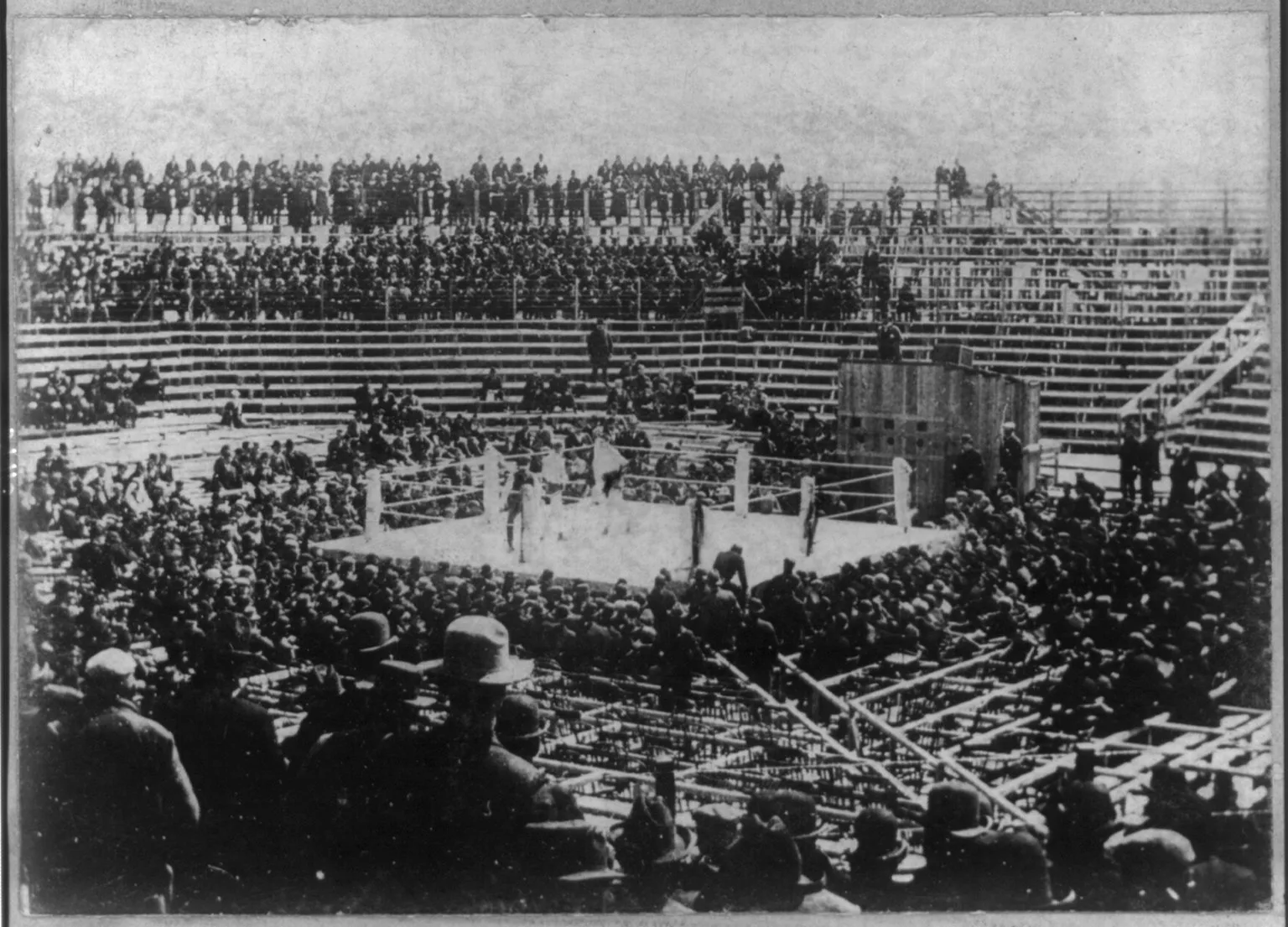
In 1897, the James J. Corbett–Bob Fitzsimmons fight was filmed at unprecedented length, producing a roughly 100-minute motion picture that became a milestone in both boxing and early commercial cinema. The image shows a frame from the filmed Corbett–Fitzsimmons fight.
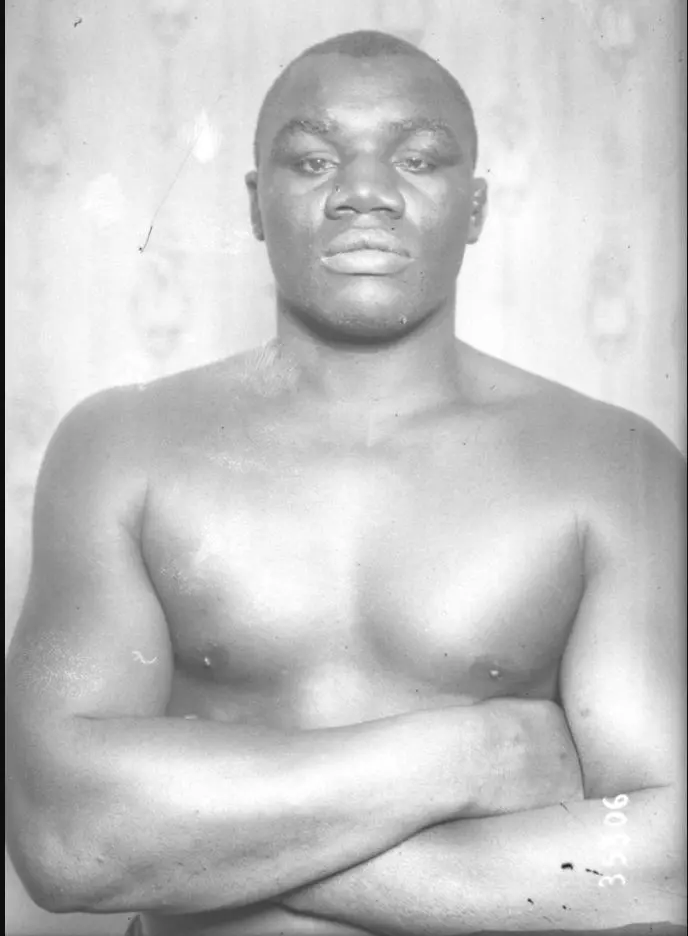
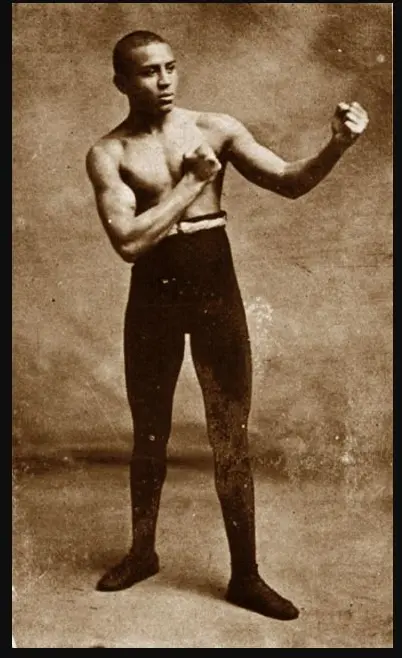
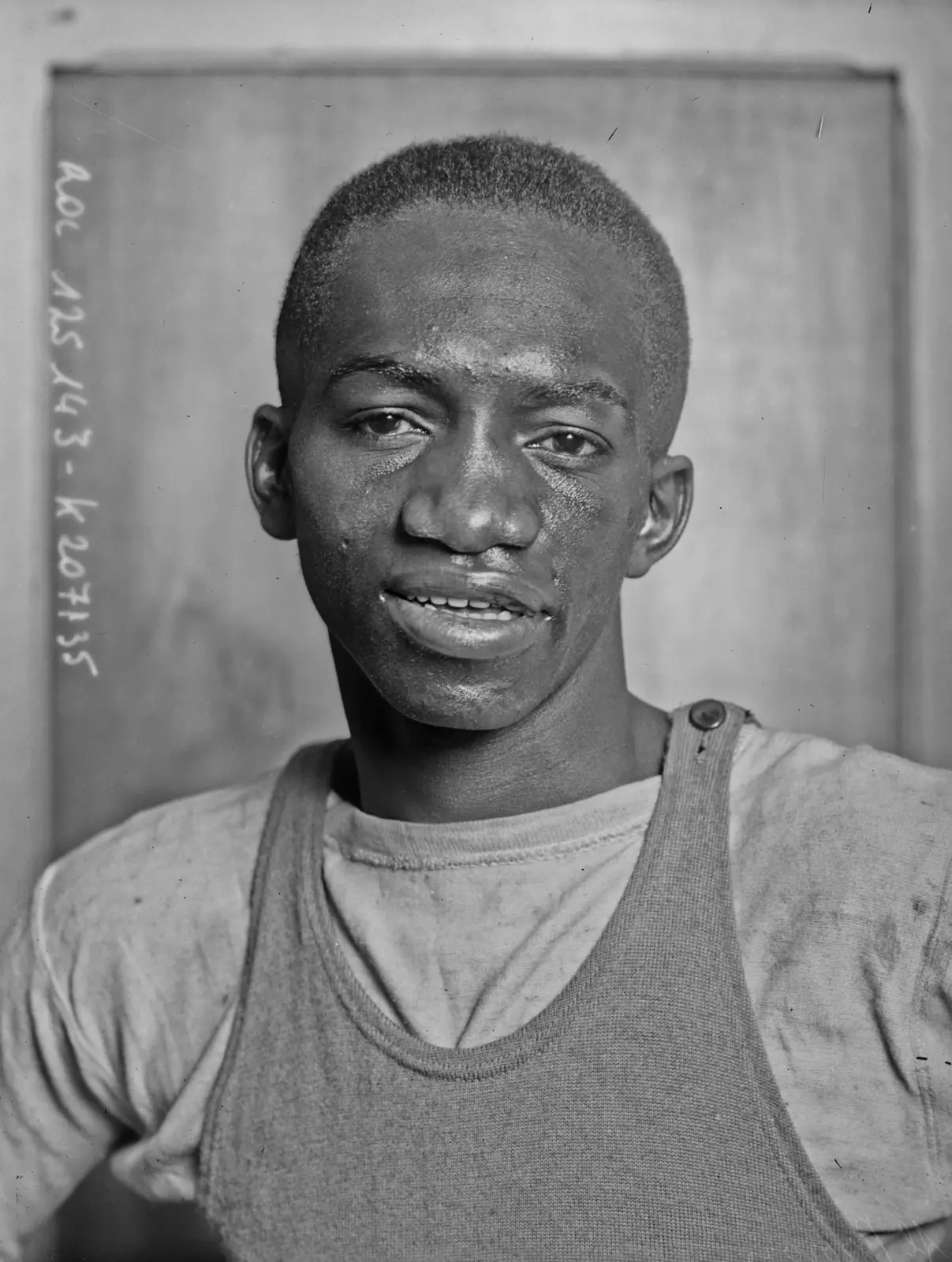
Sam Langford became one of the greatest boxers never to fight for a recognized world championship, despite facing elite opposition across an extraordinary range of weights. Boxing’s racial “color line” severely restricted opportunities for Black contenders during his era and was a central reason Langford never received the title opportunity his ability merited. The image shows Sam Langford in a 1913 photograph.
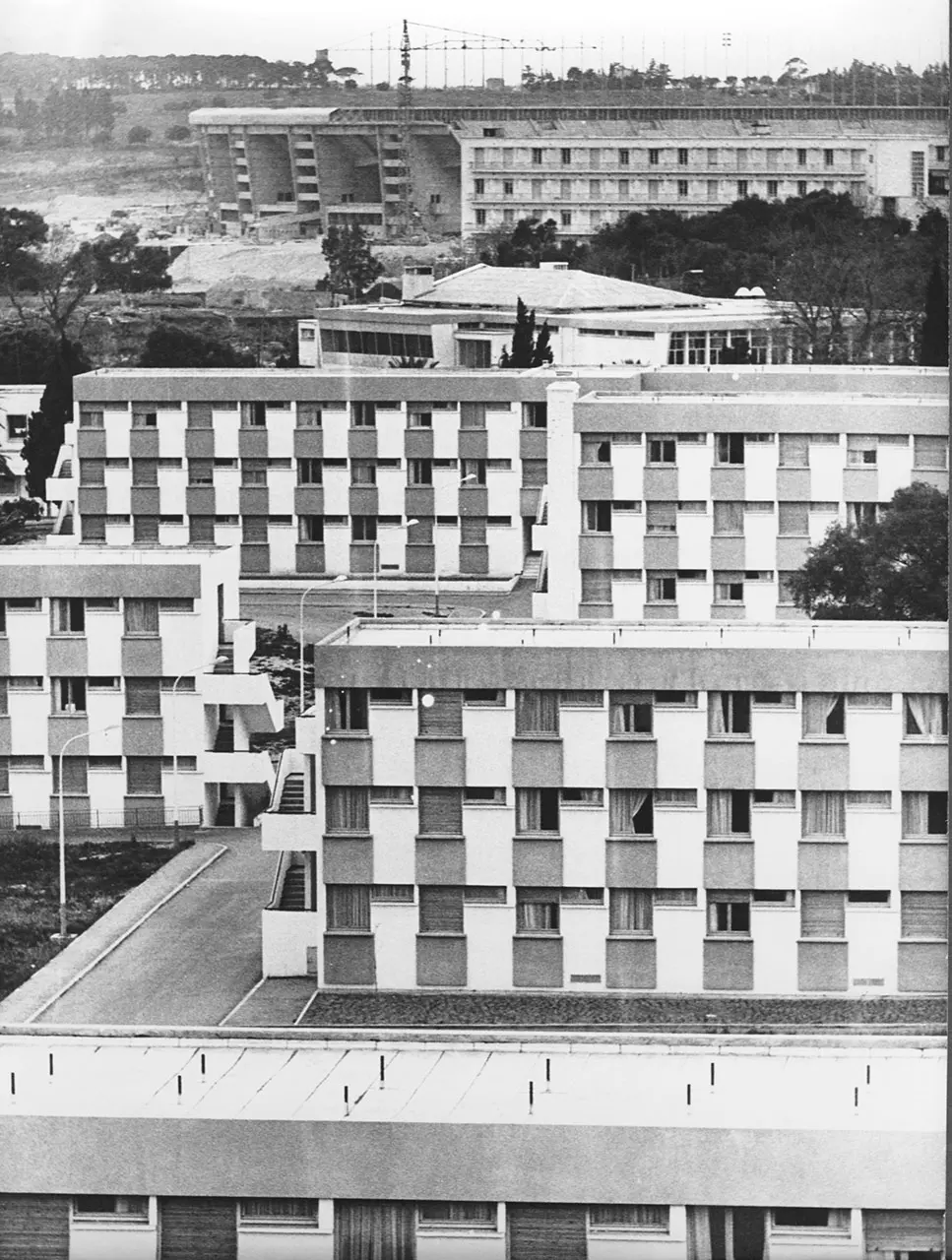
Agence Rol / Bibliothèque nationale de France ·Wikimedia Commons ·Public Domain
031
In 1902 Joe Gans captured the world lightweight championship and established himself as one of the foundational technicians of early professional boxing. Known as the “Old Master,” he built his reputation on precision, defense and tactical intelligence in an era very different from modern boxing. His first reign began in 1902, followed by another championship period from 1906 to 1908. The image shows Joe Gans in a historical portrait.
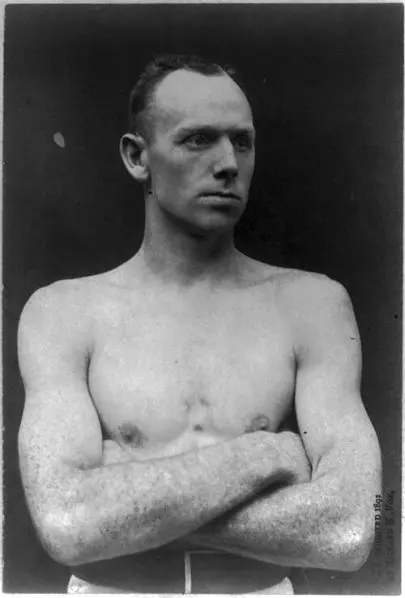
In 1903 Bob Fitzsimmons outpointed George Gardner over 20 rounds to win the world light-heavyweight title. Having already been world middleweight and heavyweight champion, he became the first boxer in history to win world titles in three weight divisions. The image shows Fitzsimmons in an 1891 portrait.
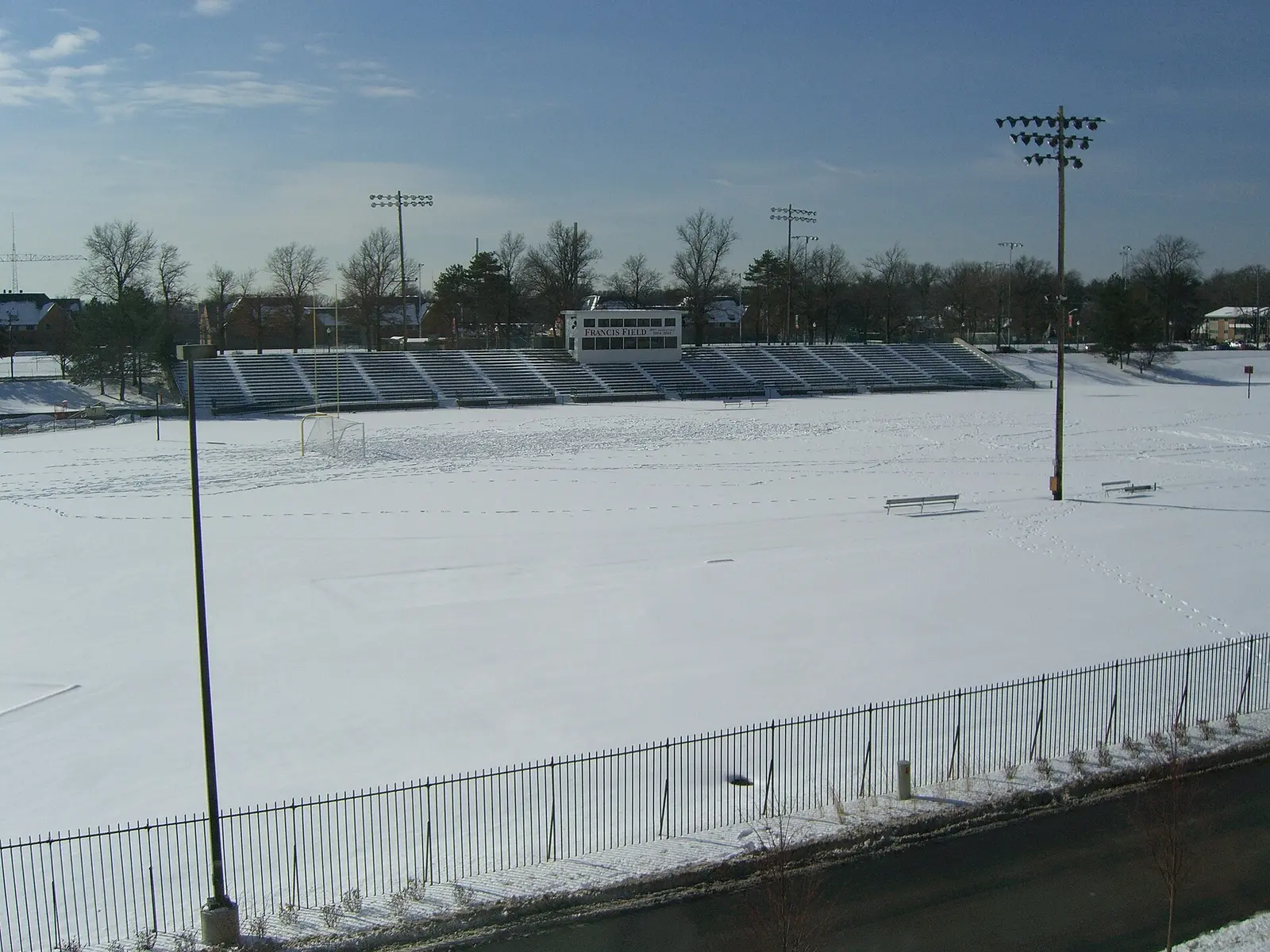
Boxing makes its debut at the modern Olympic Games in St. Louis in 1904 with seven weight divisions, beginning the distinct 20th-century history of Olympic boxing. From this edition the sport has a place within the modern Olympic framework, although it will be absent again at Stockholm 1912. The image shows Francis Field at Washington University, one of the principal venues of the St. Louis 1904 Games.
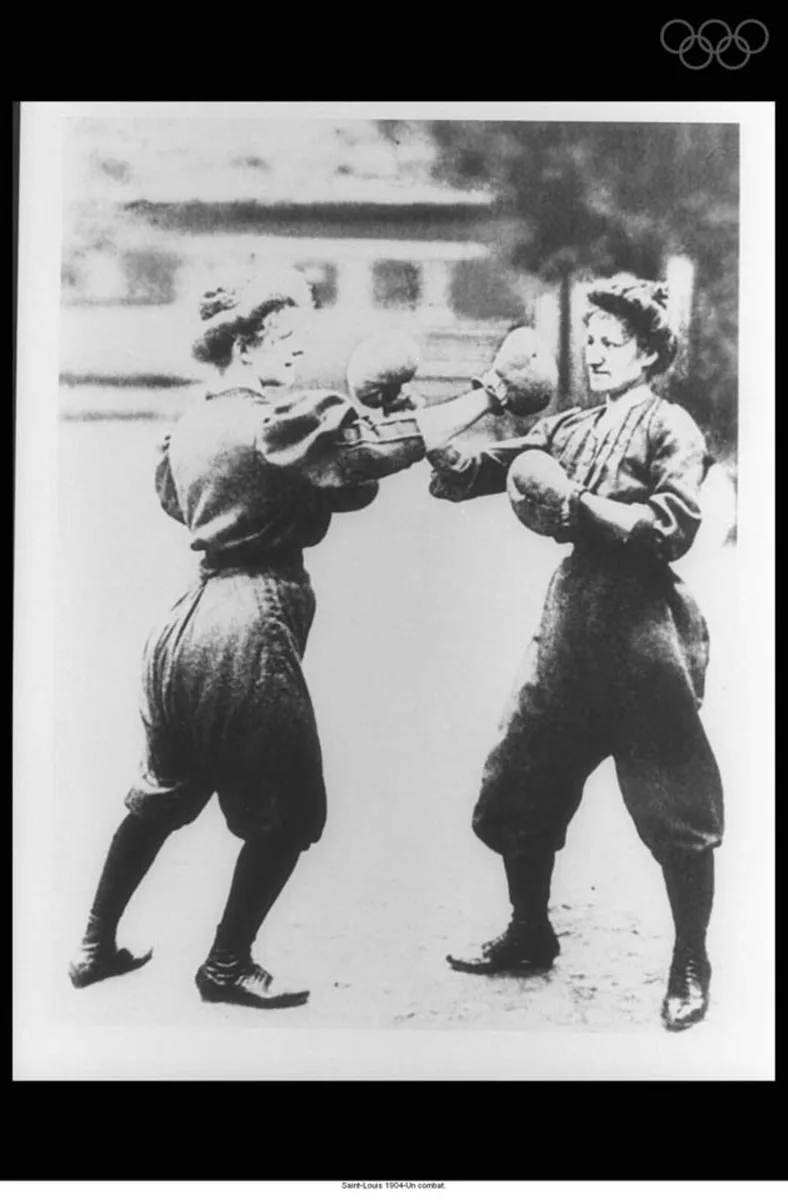
Women’s boxing is recorded at St. Louis 1904 as an exhibition/demonstration event, more than a century before women receive official Olympic weight divisions and medals. It is not yet a full Olympic medal event, but it shows how early women’s boxing appears within the environment of the modern Games. The image shows women's boxing at St. Louis in 1904.
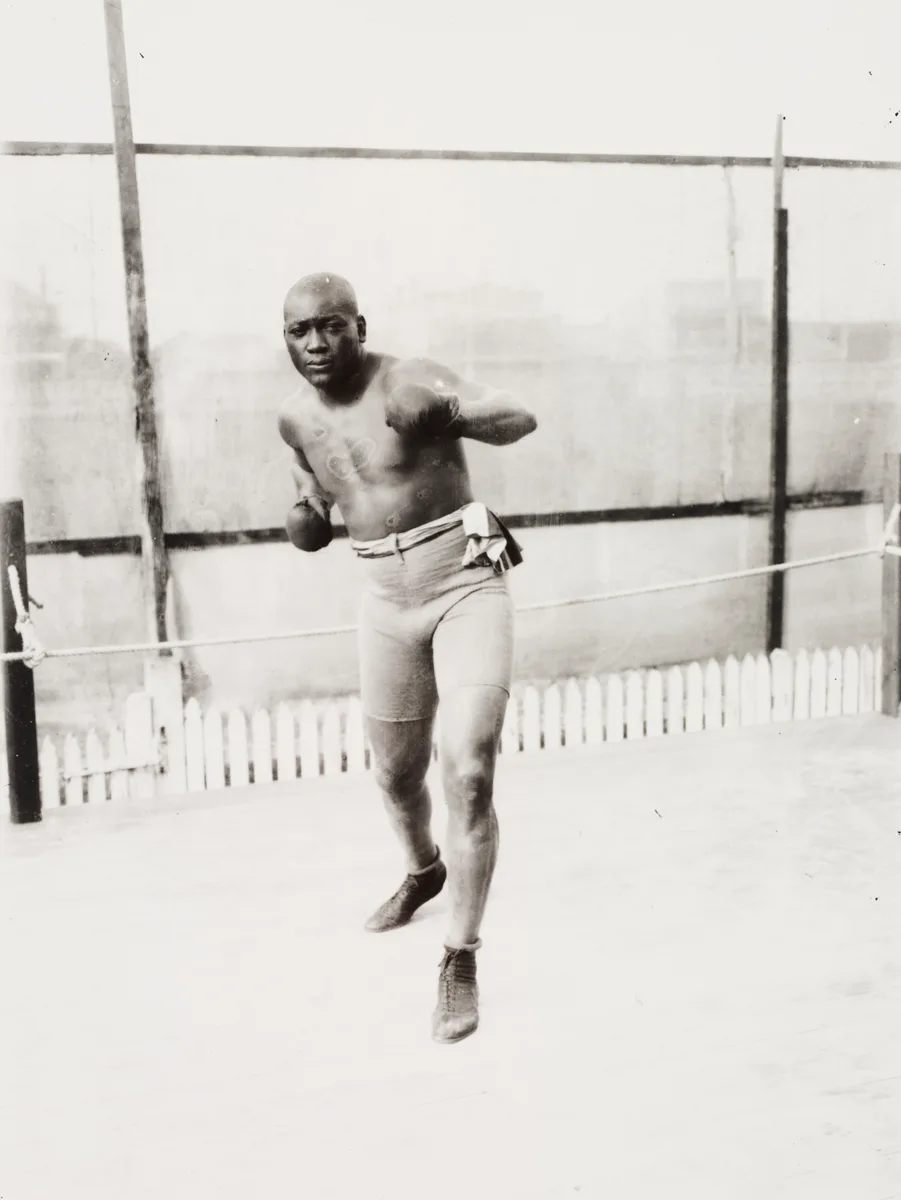
In 1908, Jack Johnson defeated Tommy Burns to become the first Black world heavyweight champion, an achievement of enormous sporting and social significance in the era of racial segregation. The image shows a photographic portrait of Jack Johnson around 1908.
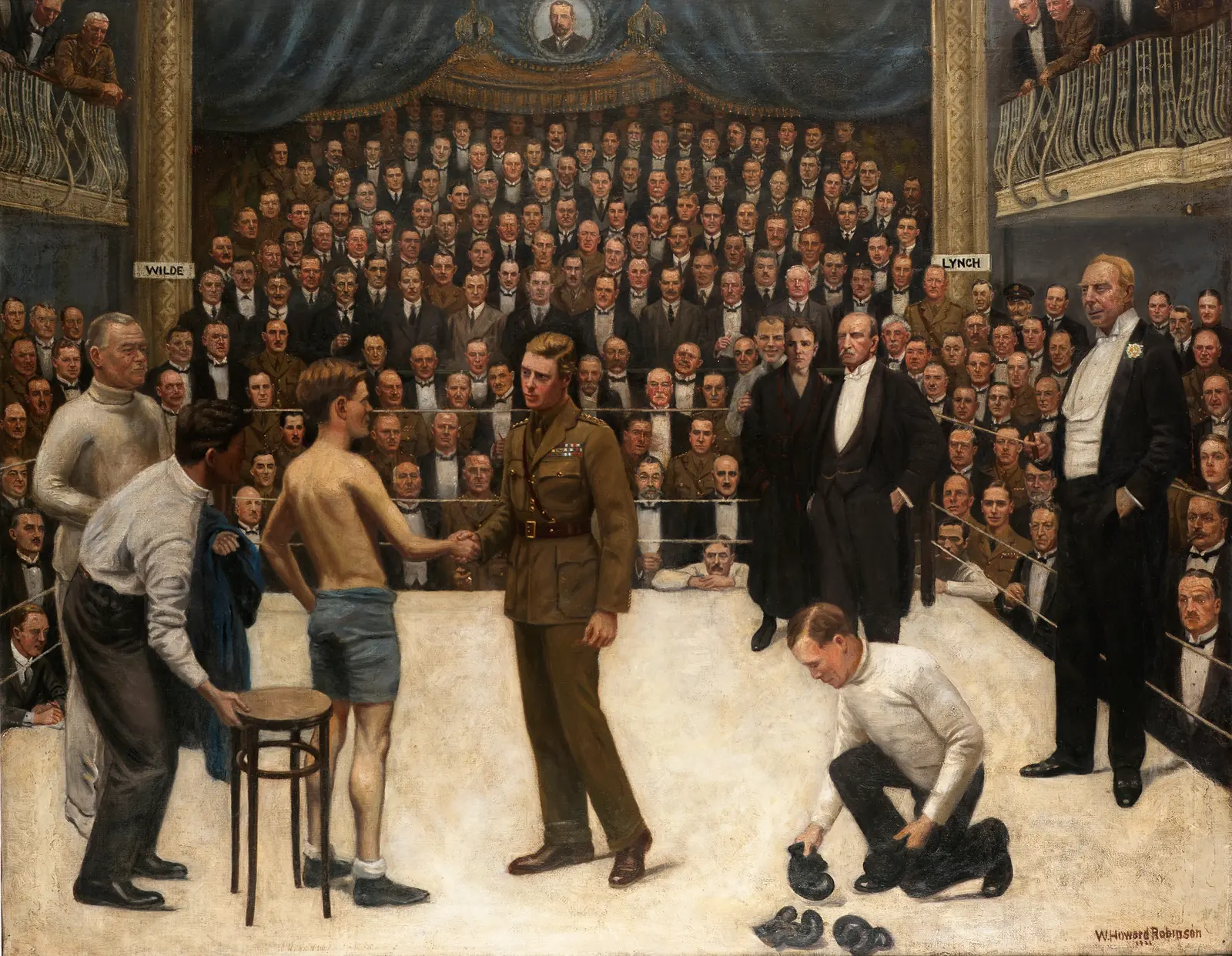
In 1909–1910, the National Sporting Club endorsed and applied the eight traditional professional weight divisions that would form boxing’s classic framework for decades. The image shows the work *A Welsh Victory at the National Sporting Club*.
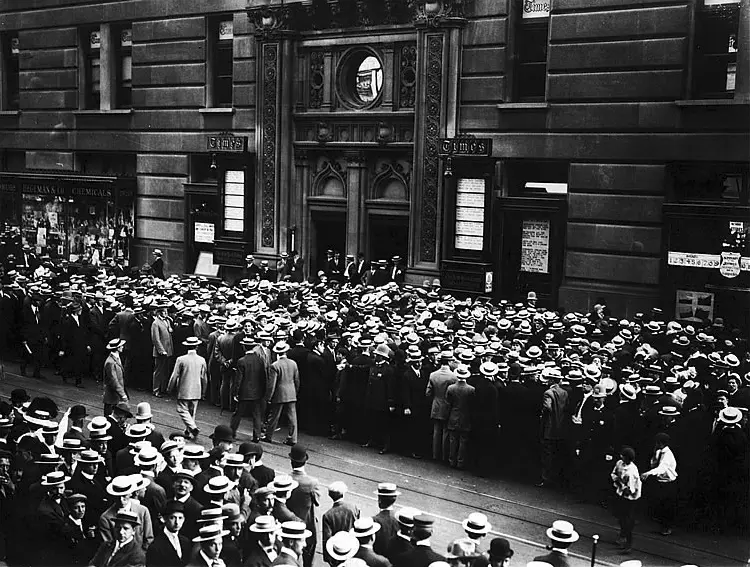
In 1910, Jack Johnson defends the world heavyweight title against Jim Jeffries in Reno, in a fight that connects boxing with race, mass culture and the emerging power of filmed sport. Johnson's victory triggers social reactions far beyond the ring, while circulation of the fight film later becomes subject to federal restriction in the United States. The image shows a crowd awaiting news of the fight outside Times Tower.
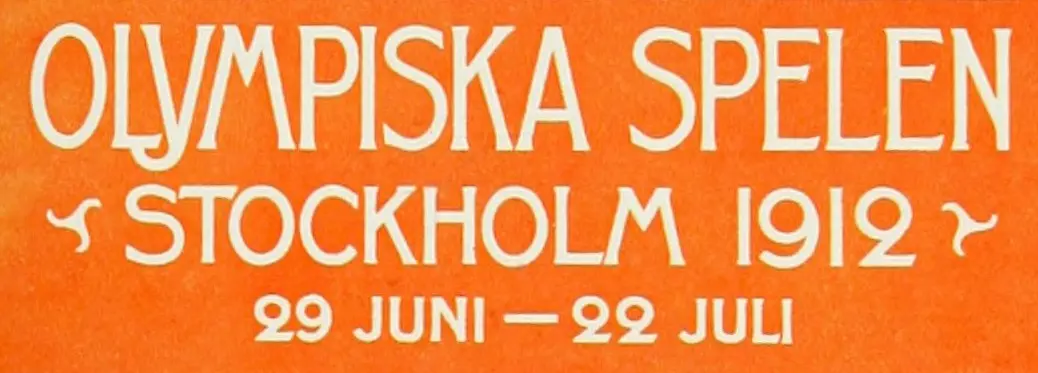
Boxing was absent from the Stockholm 1912 Olympic Games because Swedish law at the time prohibited the sport, showing that boxing’s place in the new Olympic programme was not yet secure. The image shows the poster for the Stockholm 1912 Olympic Games.
In 1912, Englishman John Cyril Campbell taught boxing at Panathinaikos, one of the earliest documented organised boxing activities within a Greek sports club. The image shows a historical Panathinaikos team photograph from 1912.
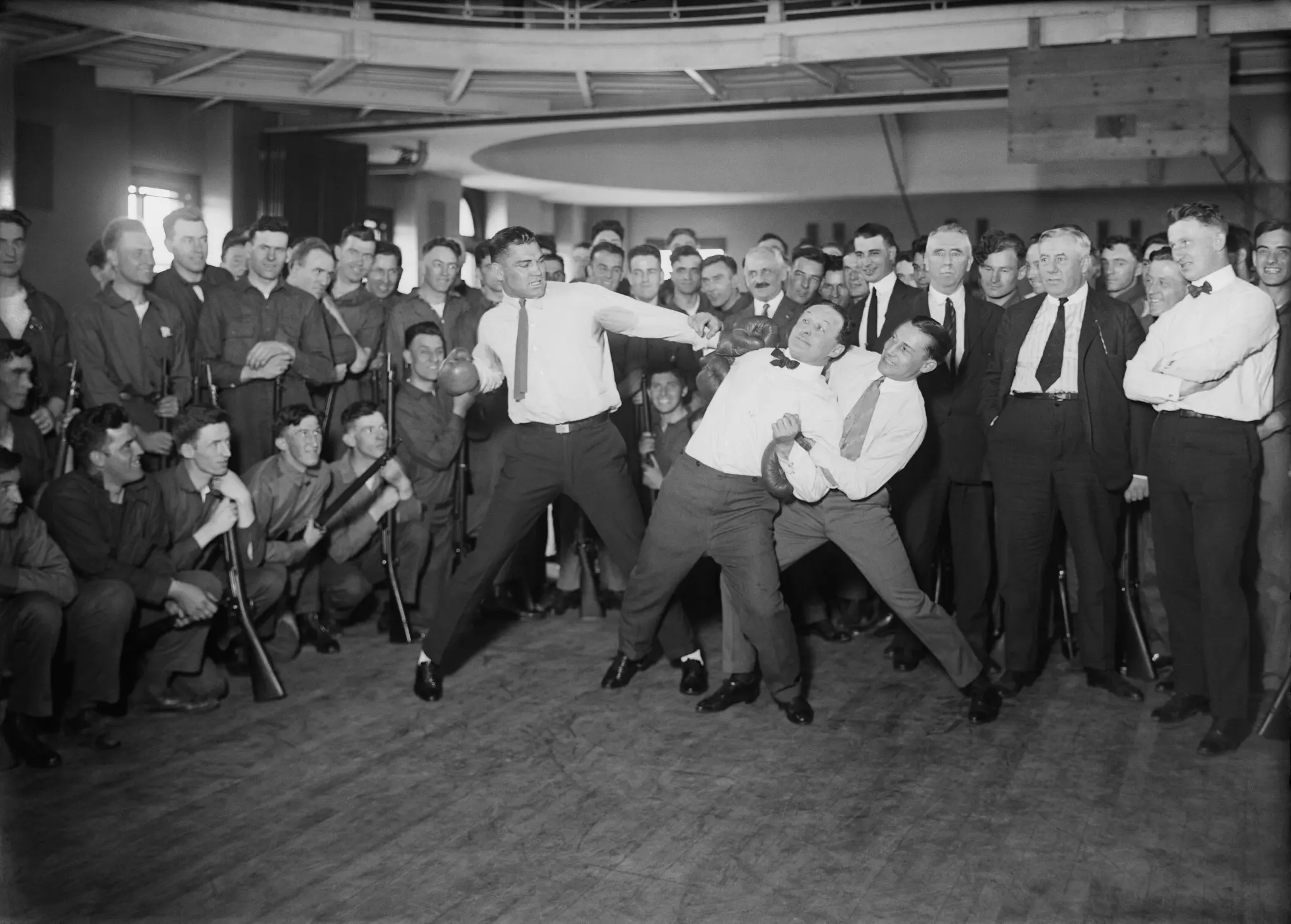
On May 28, 1917, Benny Leonard defeated Freddie Welsh to win the world lightweight championship. He retained the crown until his retirement in January 1925, completing the longest reign in the history of the division and leaving a major legacy as one of the outstanding technical boxers of his era. The image shows Leonard in a historical photograph with Jack Dempsey and Harry Houdini.
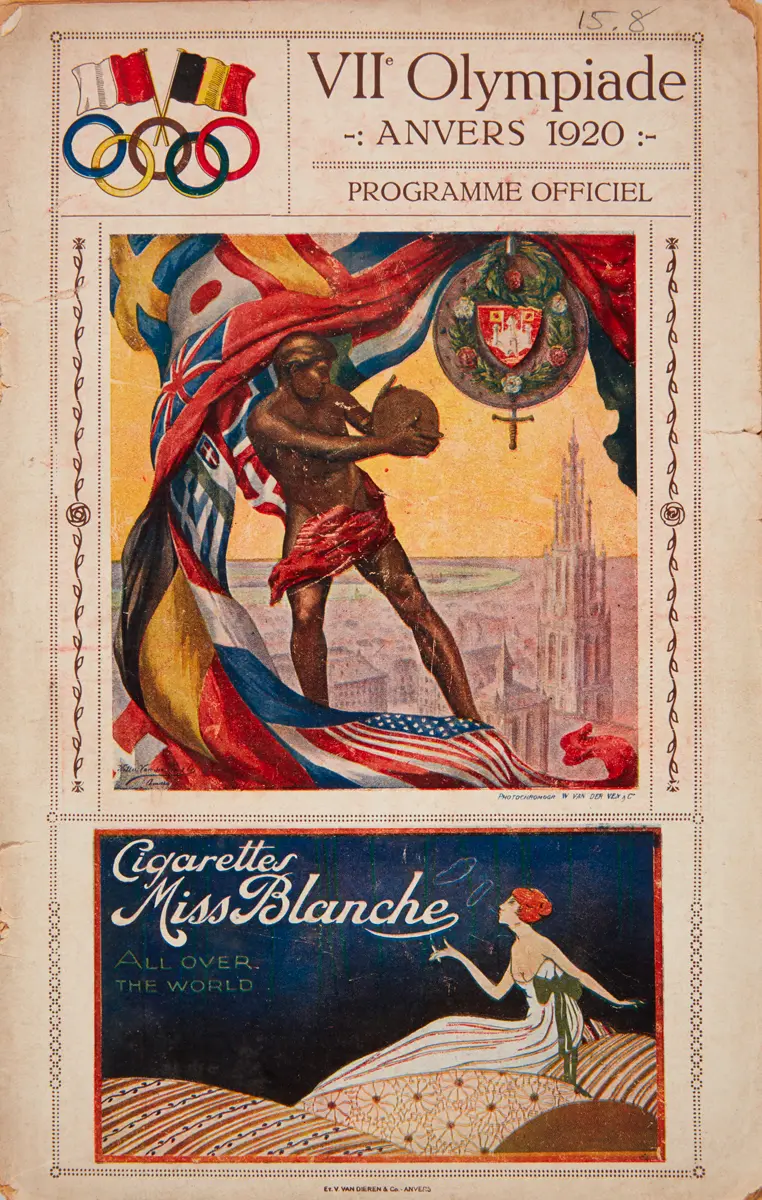
Boxing returns at the Antwerp 1920 Olympic Games after being absent at Stockholm 1912 and after the 1916 Games were cancelled because of the First World War. From Antwerp onward it remains a continuous part of the Olympic programme for more than a century. The image shows the cover of the programme for the Antwerp 1920 Olympic Games.
In 1920 the Fédération Internationale de Boxe Amateur — FIBA — is founded as an effort to unify amateur boxing and its rules internationally after the First World War. FIBA becomes the principal international organisational predecessor of the post-war AIBA, which replaces it in 1946.
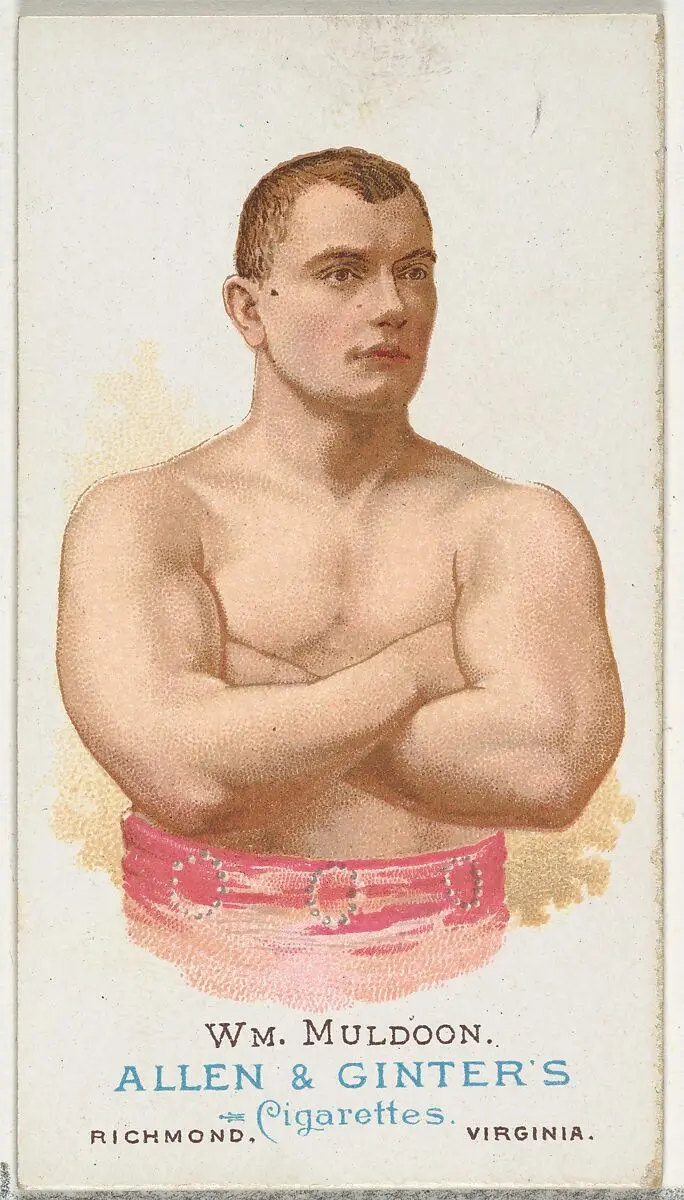
In 1920 the Walker Law legalises professional boxing again in New York and restores a stronger system of licensing and state oversight through an athletic commission. New York thereby develops into one of the most important regulatory centres of American professional boxing. The image shows William Muldoon on an 1887 trade card; Muldoon was appointed to the reconstituted New York State Athletic Commission in 1921.
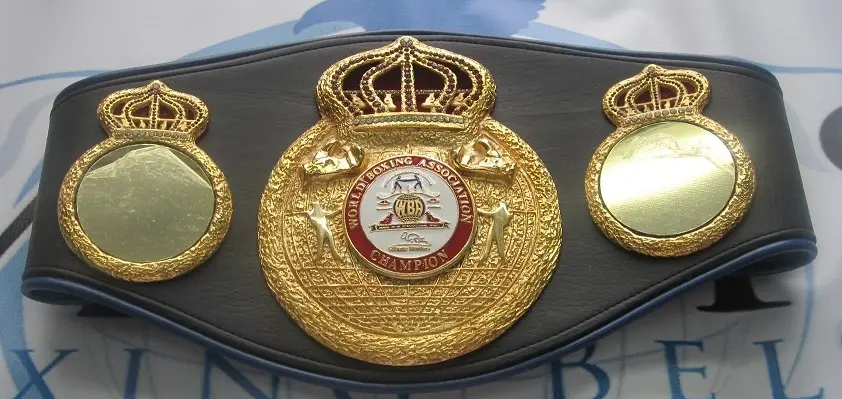
In 1921 the National Boxing Association is founded in the United States by representatives of state boxing commissions, creating a new body for recognising and regulating professional titles. As its reach expands internationally, it is renamed the World Boxing Association — WBA — in 1962. The image shows a WBA world championship belt.
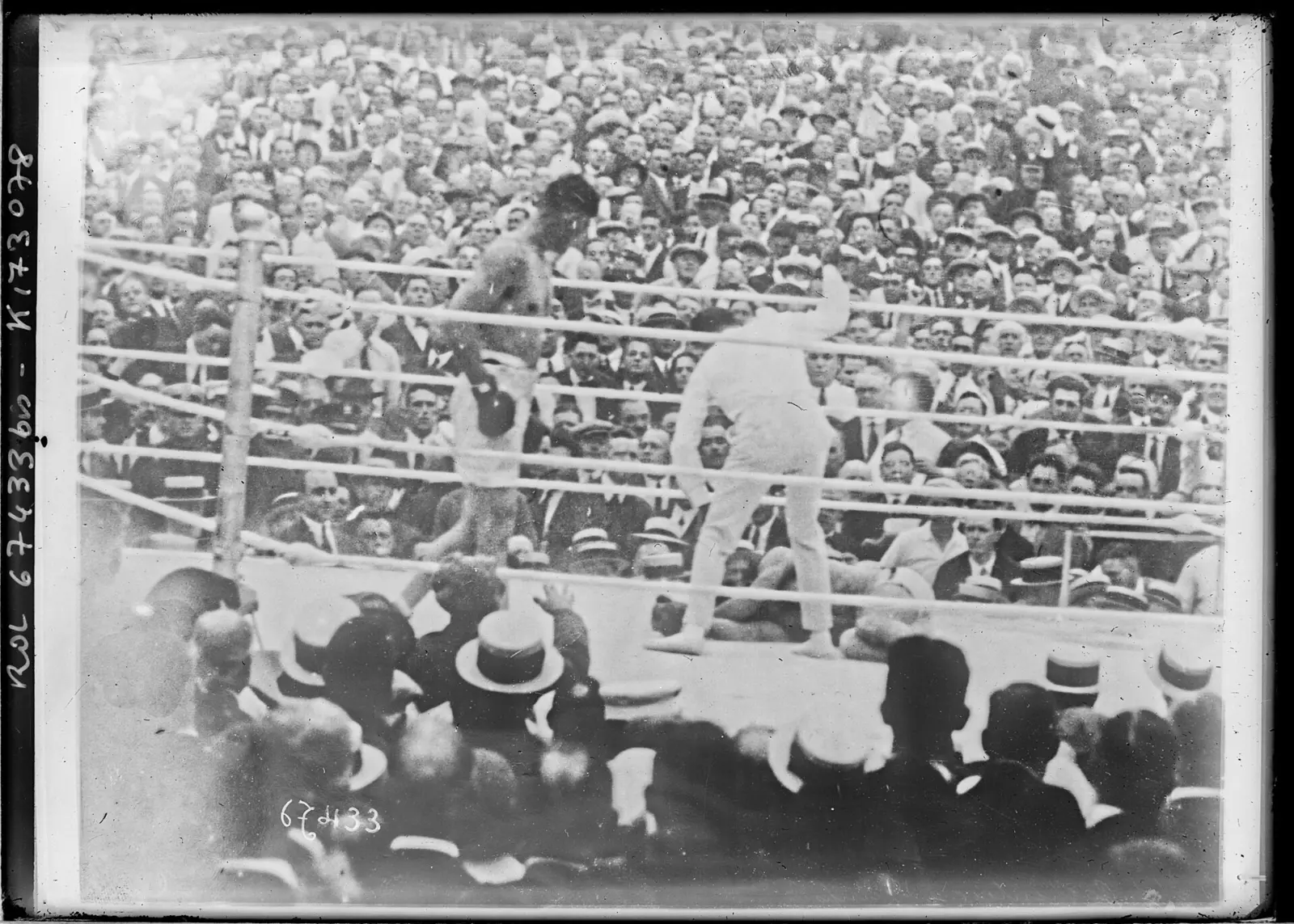
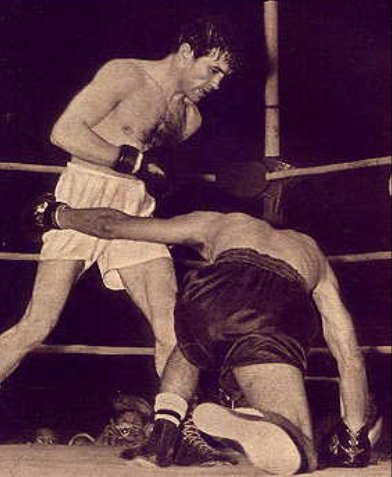
The 1921 Jack Dempsey–Georges Carpentier fight becomes the first boxing event to generate more than one million dollars in ticket revenue and is closely associated with the early boom in live radio sports broadcasting. The bout shows how quickly professional boxing is becoming a mass commercial spectacle in the new media age. The image shows Georges Carpentier down in the ring as the referee counts during the fight with Dempsey.
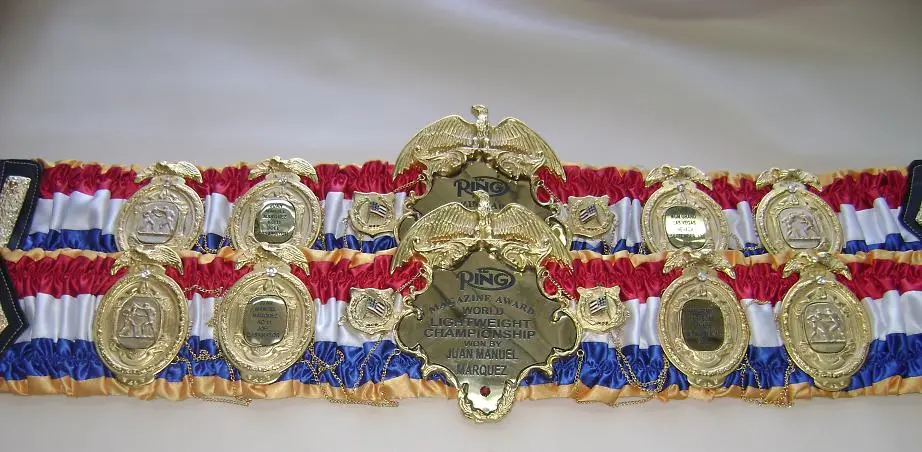
In 1922 Nat Fleischer founds *The Ring*, which develops into one of boxing’s most influential independent publications through rankings, titles and long-term documentation of the sport. Its influence extends beyond journalism as *The Ring* rankings and championship belts acquire particular prestige in professional boxing. The image shows two *The Ring Magazine* championship belts.
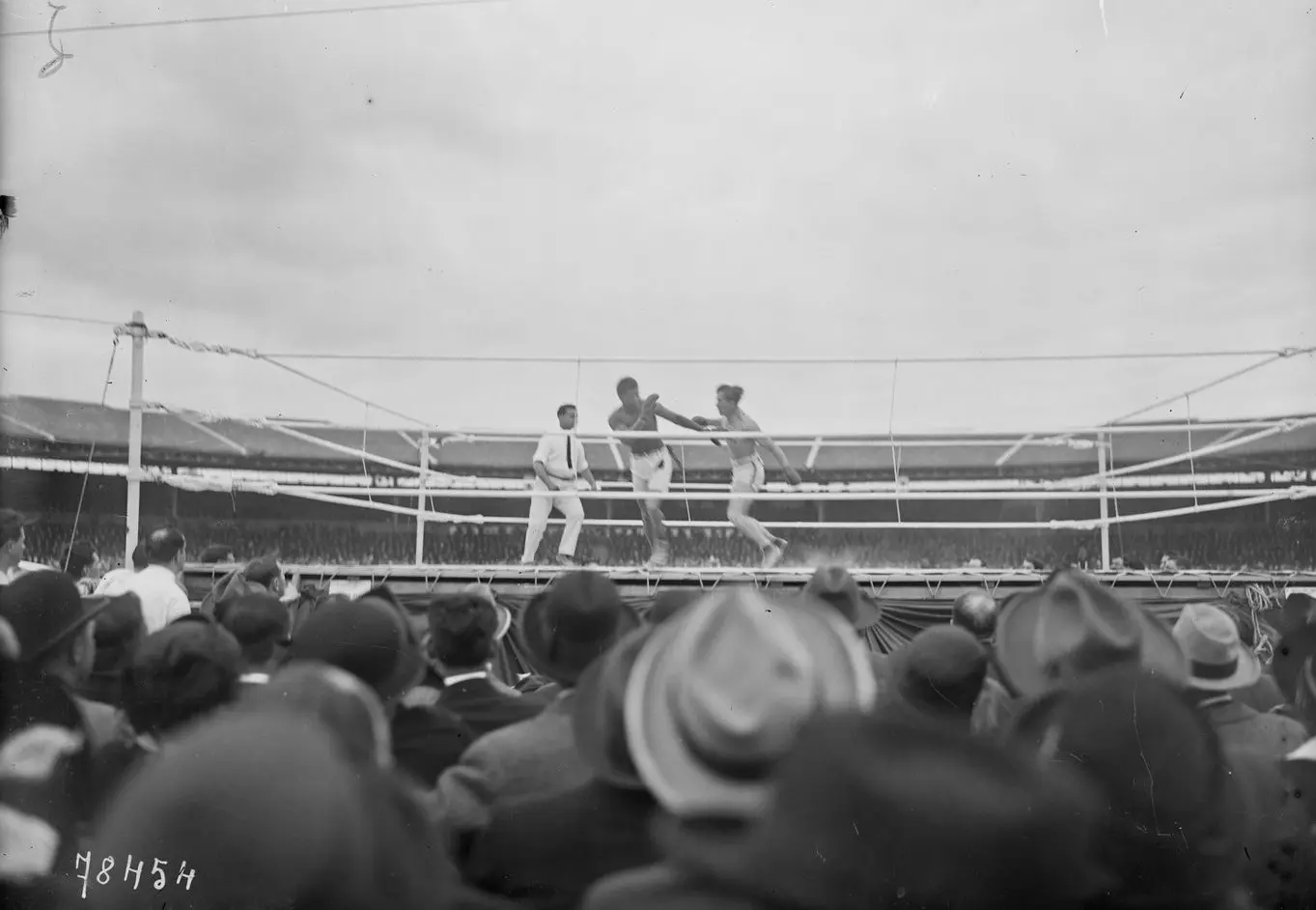
Senegal-born Battling Siki defeats Georges Carpentier in Paris to win the world light-heavyweight championship. He becomes the first Africa-born boxer to win a world title, opening a new chapter in the global geography of professional boxing. The image shows Carpentier and Siki fighting at Stade Buffalo on 24 September 1922.
Harry Greb remains the only boxer to defeat Gene Tunney, scoring that victory in 1922 before Tunney went on to become world heavyweight champion. In 1923 Greb defeated Johnny Wilson to win the world middleweight championship, confirming his place among the most important fighters of the early professional era. Because no boxer photograph with sufficiently clear licensing is being used here, the flag of Pennsylvania serves as an explicitly contextual visual.
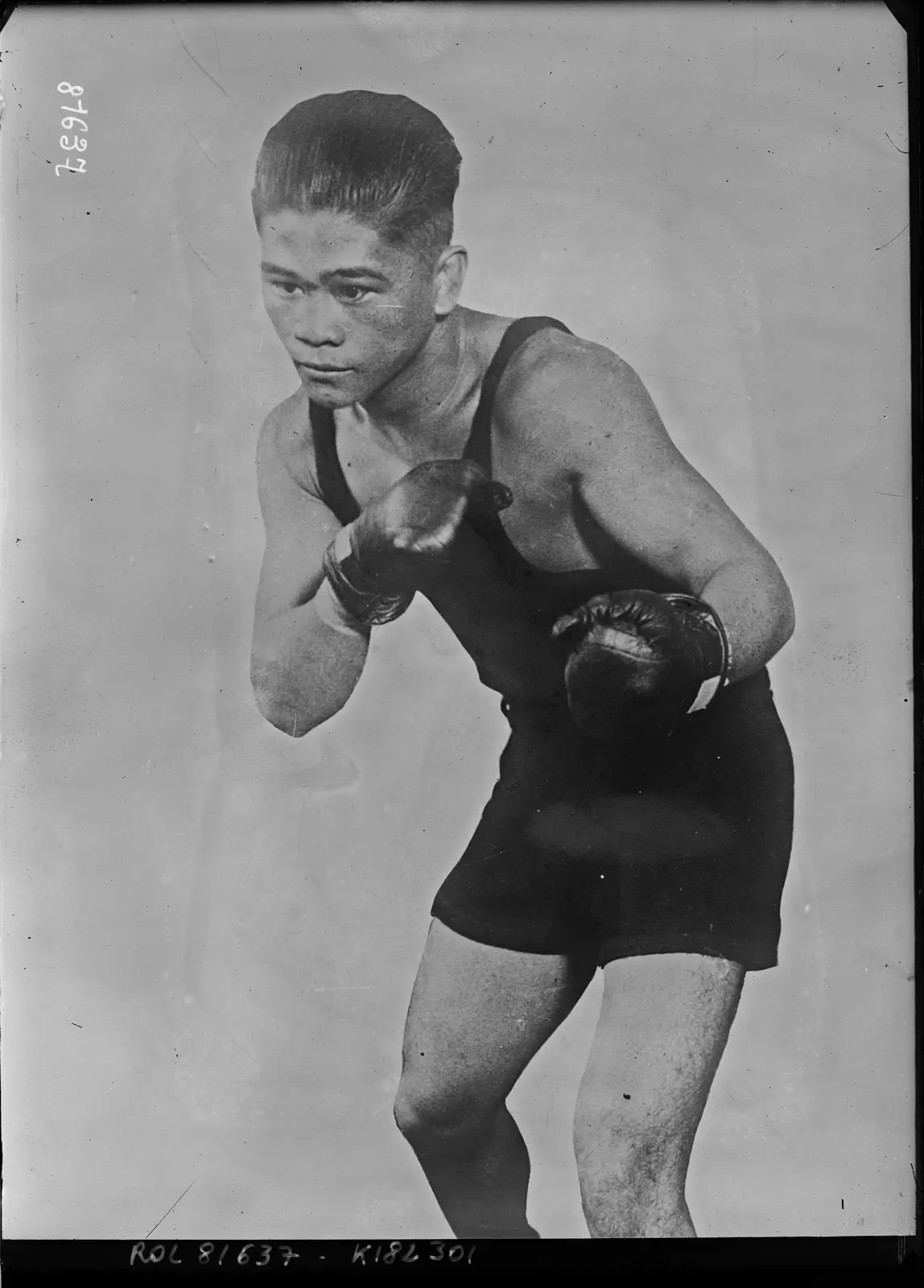
Filipino boxer Pancho Villa defeats Jimmy Wilde at New York’s Polo Grounds to win the world flyweight championship. He becomes boxing’s first Asian world champion, placing the Philippines and Asia firmly on the global professional boxing map. The image shows a 1923 portrait of Pancho Villa.
In 1923 heavyweight world champion Jack Dempsey faced Argentina's Luis Ángel Firpo at New York's Polo Grounds. The opening round became one of the most chaotic and iconic scenes in early professional boxing, with repeated knockdowns and Firpo sending Dempsey through the ropes and out of the ring. The champion returned, recovered control and ultimately won by knockout in the second round. The image of Dempsey outside the ring became part of boxing's enduring historical iconography.
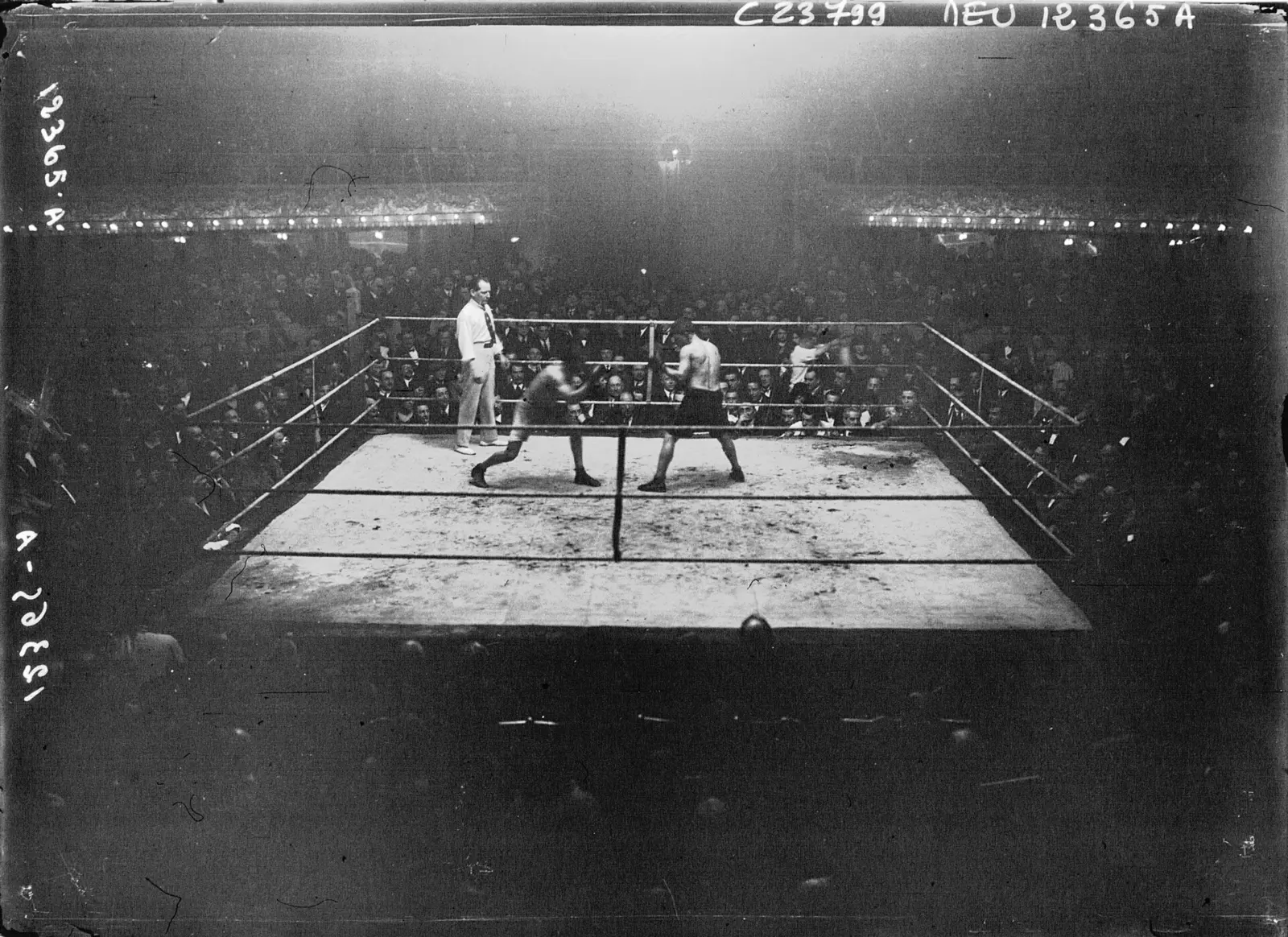
At the Paris 1924 Olympic Games, Emmanouil Gneftos becomes the first Greek boxer to represent the country in modern Olympic boxing, competing at welterweight. His appearance begins Greece’s Olympic boxing history, on which later participations and achievements will build. The image shows the Mascart–Ledoux bout at the Cirque de Paris in 1924.
The first European amateur boxing championships are held in Stockholm in 1925, creating a permanent continental reference point for Europe’s leading boxers. The event adds a regular level of international competition between national championships and the Olympic Games.
On 6 May 1925, Boston hosts the inaugural Pan-American Boxing Championships. With 32 boxers from five countries competing across eight weight classes, the tournament adds a new continental structure to international amateur boxing in the same year that Stockholm stages the first European Boxing Championships.
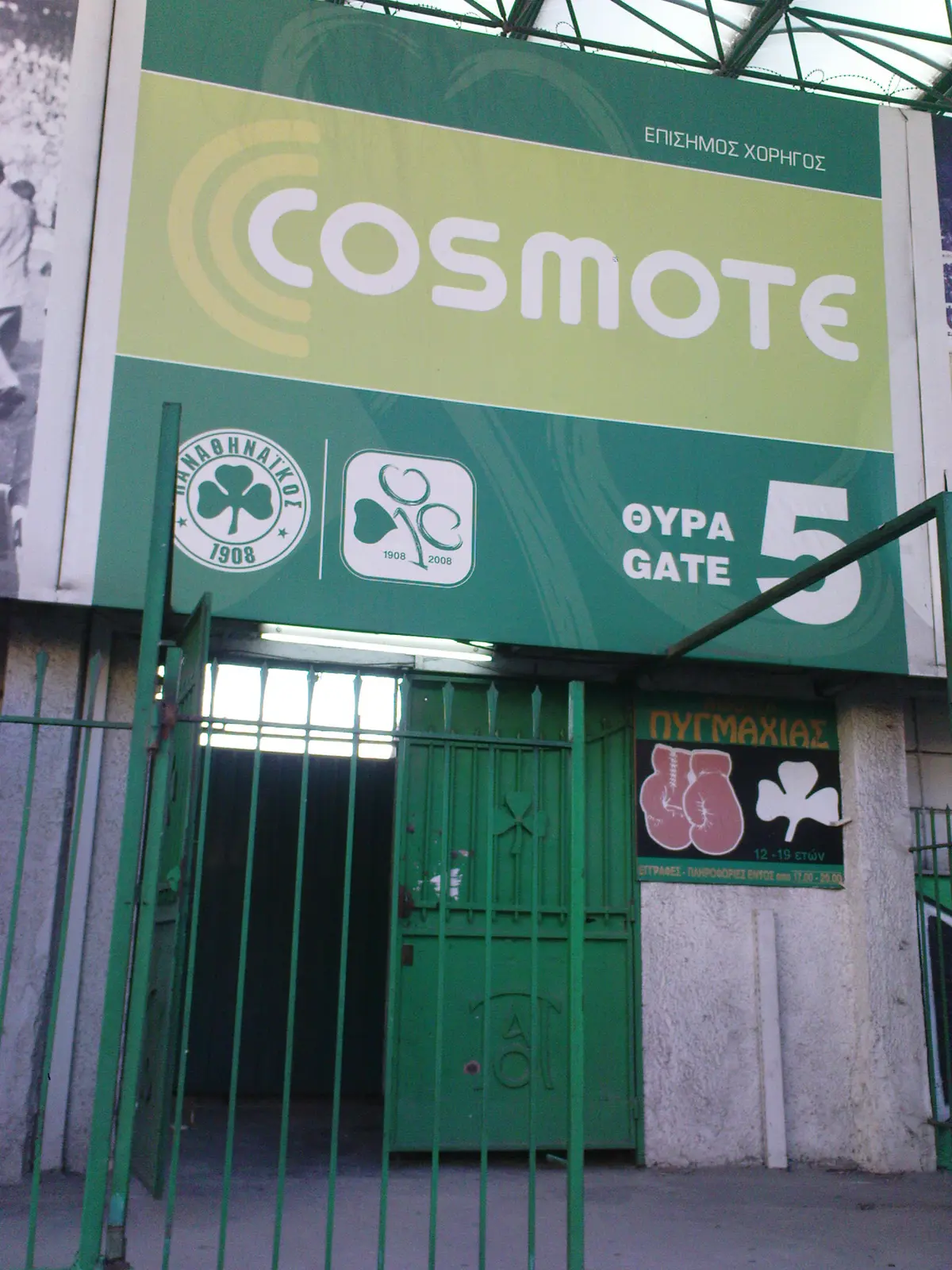
In 1926 the Panathinaikos boxing section is reorganised under Kostas Perlatos, while the same period documents the development of more systematic boxing competition in Athens. This forms part of Greek boxing’s gradual transition from isolated activity to more stable club sections and organised events. The image shows the entrance to the Panathinaikos boxing gym.
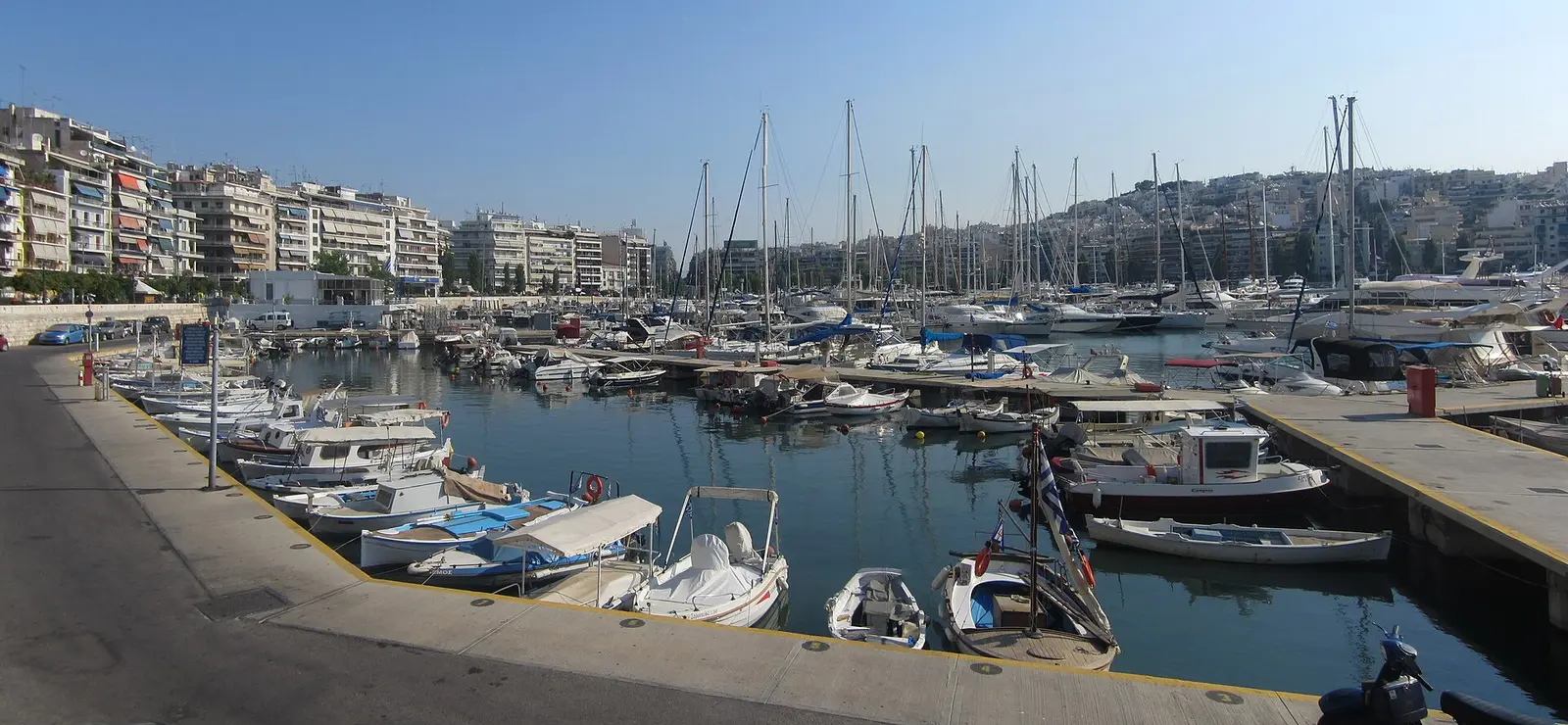
In 1927 the Piraeus Boxers’ Association is founded, showing that Greek boxing is developing a more stable organisational base beyond the earliest Athens clubs. The creation of a boxing body in Piraeus illustrates the sport’s geographic spread shortly before a nationwide federation structure emerges. The image shows Zea harbour in Piraeus.
The New York Golden Gloves begins in 1927 and becomes one of the major pathways for developing amateur boxers in the United States for decades. Through the Golden Gloves, grassroots boxing gains broad public visibility and a recognisable competitive stage before elite amateur or professional careers.
On 22 September 1927 at Chicago’s Soldier Field, Gene Tunney defends the heavyweight championship against Jack Dempsey. After Dempsey drops Tunney in round seven but fails to retreat promptly to a neutral corner, the referee delays the count as required by the new rules. Tunney rises at the official count of nine and ultimately wins on points. The “Long Count” becomes one of boxing’s most famous examples of a rules change directly shaping championship history. The bout also produces the first $2 million gate in U.S. history.
At the Amsterdam 1928 Olympic Games, Nikolaos Fexis recorded the first documented bout victory by a Greek boxer at the Olympics, moving Greece one step beyond its first participation in 1924. The image shows the Hall–Walther boxing match at the 1928 Olympic Games.
In 1928 an official boxing federation structure is established in Greece and the first Panhellenic Championship is held across eight weight divisions, creating a unified national competitive framework. This development moves boxing from the activity of individual clubs toward an organised nationwide championship with a common administrative base. The image shows American Olympic boxers training during the Amsterdam 1928 Games.
Panama’s Al Brown defeats Gregorio Vidal in New York to win the world bantamweight championship. He becomes the first Latin American boxer to win a world title, opening the door for the great boxing traditions that would later develop across Latin America. The image shows Panama Al Brown in a 1927 portrait.
On 11 February 1929, the British Boxing Board of Control is established as the National Sporting Club’s authority declines. The new Board assumes organised oversight of British professional boxing, initially centred on championship recognition and later expanding into licensing, officials, regulation, discipline and medical protection.
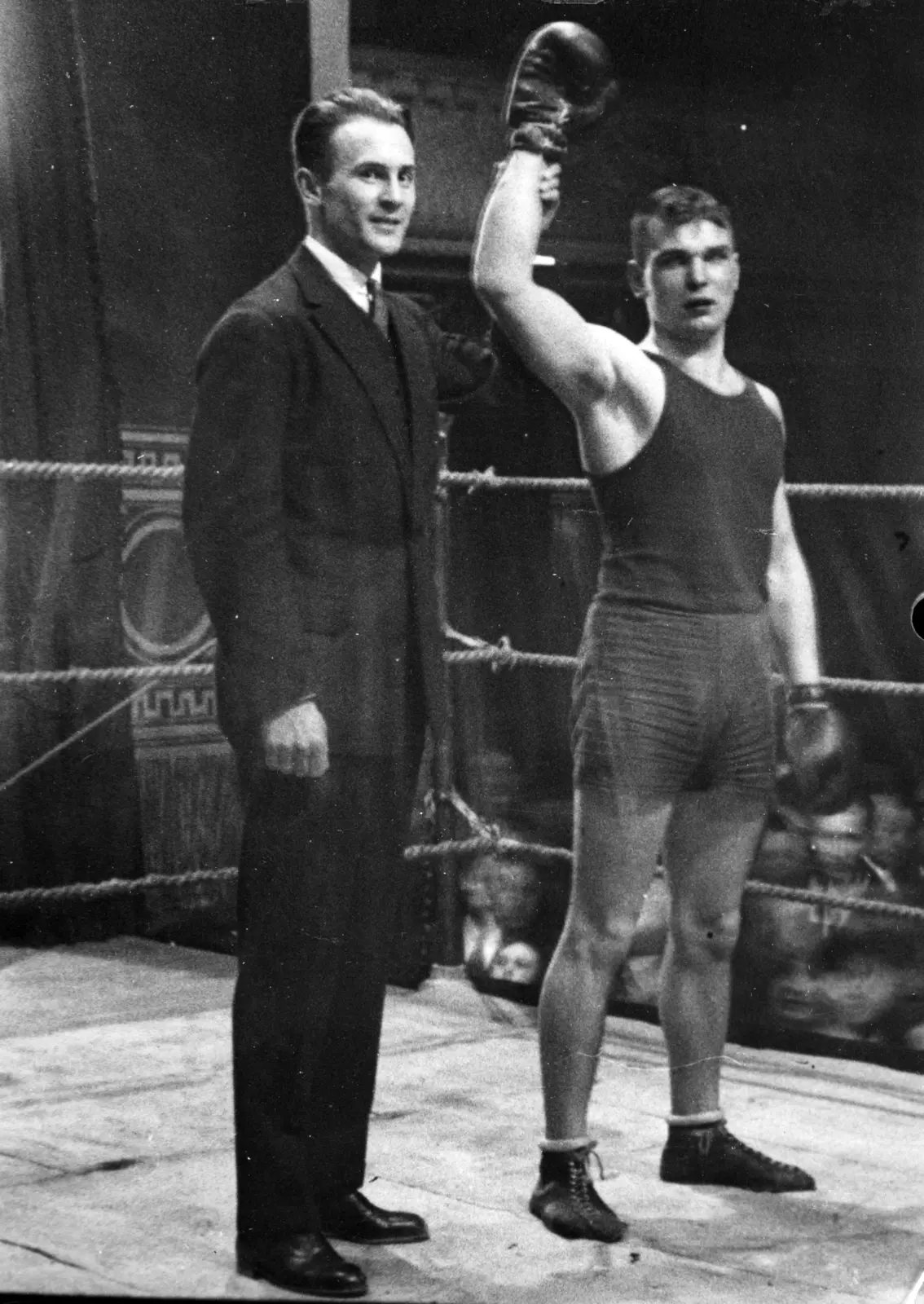
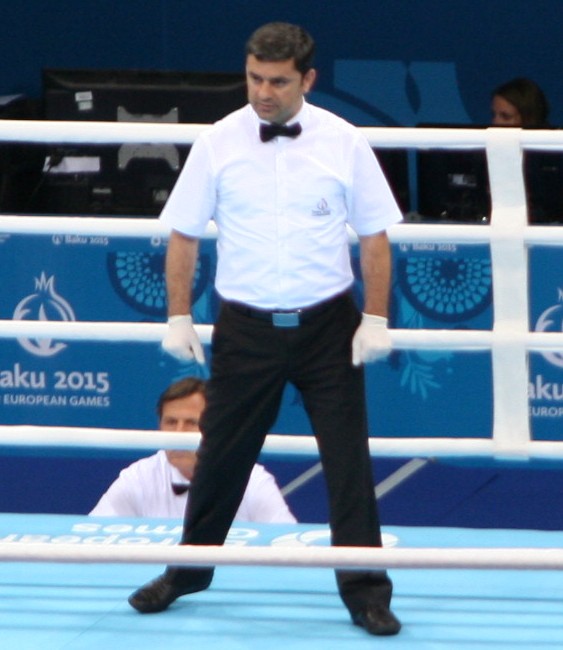
In 1931, international amateur rules moved the referee inside the ring, strengthening direct control of the action and bout safety. The image shows K. Laskowski refereeing a boxing match in 1930.
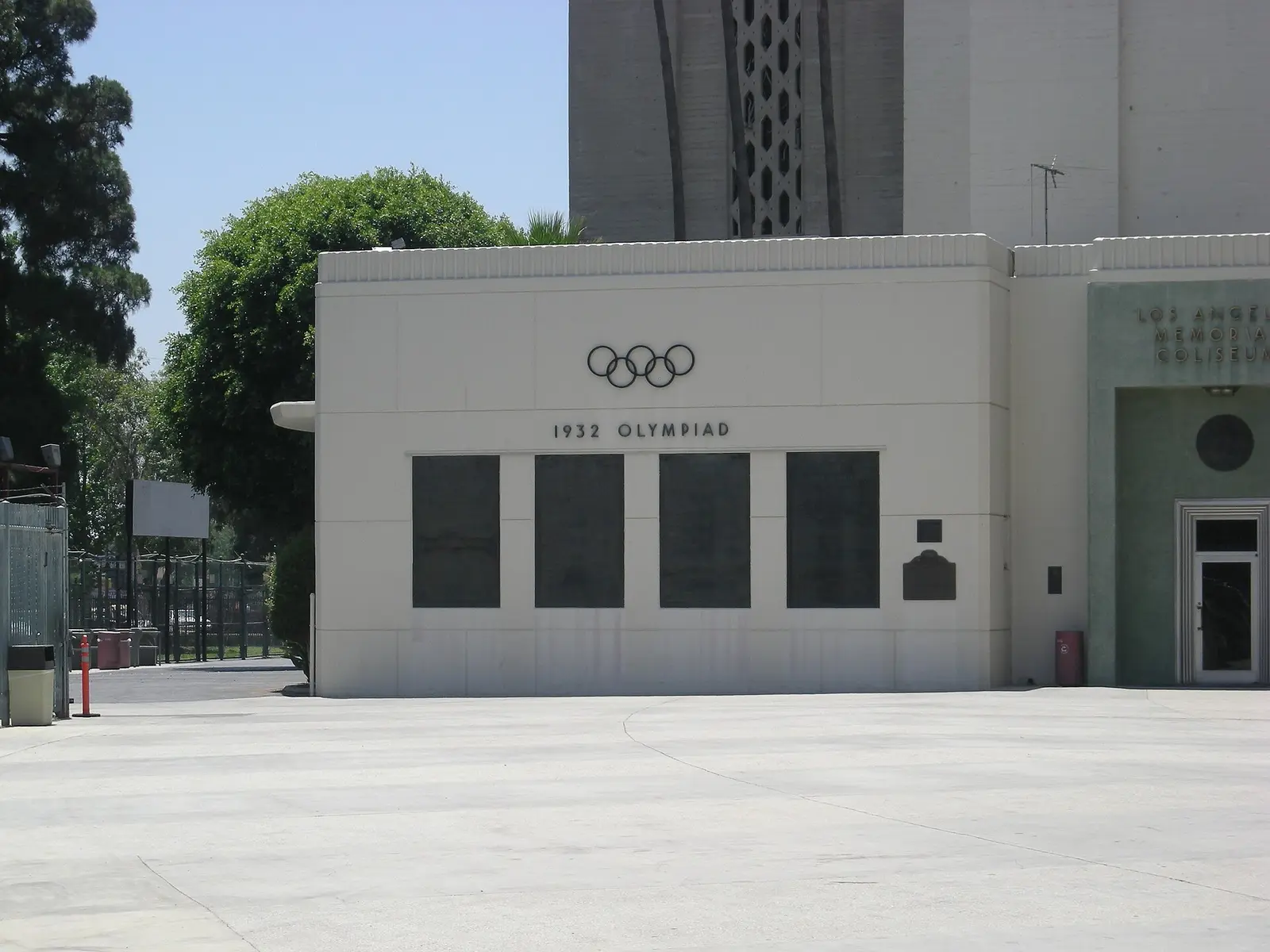
At the Los Angeles 1932 Olympic Games, Nikolaos Mastoridis competes at light-heavyweight and is recorded in fifth place, one of Greece’s earliest high finishes in Olympic boxing. His appearance continues the country’s early Olympic boxing path that began with Gneftos in 1924 and Fexis’s bout win in 1928. The image shows part of the Los Angeles Memorial Coliseum façade with the Olympic rings and the inscription “1932 Olympiad”.
In 1933, the BBC conducts an experimental television broadcast of a boxing match, extending the sport's media journey from filmed fights and radio to live pictures. The experiment anticipates the central role boxing would come to play in twentieth-century television sport.
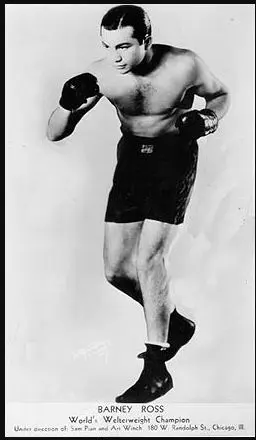
In 1933 Barney Ross defeated Tony Canzoneri to capture the world lightweight and junior welterweight championships. On May 28, 1934, he defeated Jimmy McLarnin for the world welterweight crown, reaching the remarkable position of holding three world titles and establishing himself as one of the defining multi-division champions of pre-war boxing. The image shows Barney Ross in a historical portrait.
On 26 June 1934 in Montreal, Sixto Escobar knocks out Rodolfo “Baby” Casanova in the ninth round and becomes the first Puerto Rican boxer recognised as a world champion. His breakthrough opens one of professional boxing’s major national traditions: Puerto Rico’s extraordinary lineage of world champions.
In 1935 boxing is incorporated into the official EΟΦΠΠΑΒ federation structure, which at the time groups wrestling, boxing, weightlifting and related sports before Greek boxing later gains an independent federation. This strengthens the sport’s administrative position and creates continuity between the early Panhellenic championships and post-war federation autonomy. The image shows Greek boxer Antonis Christoforidis training in 1938, as a period reference for Greek boxing.
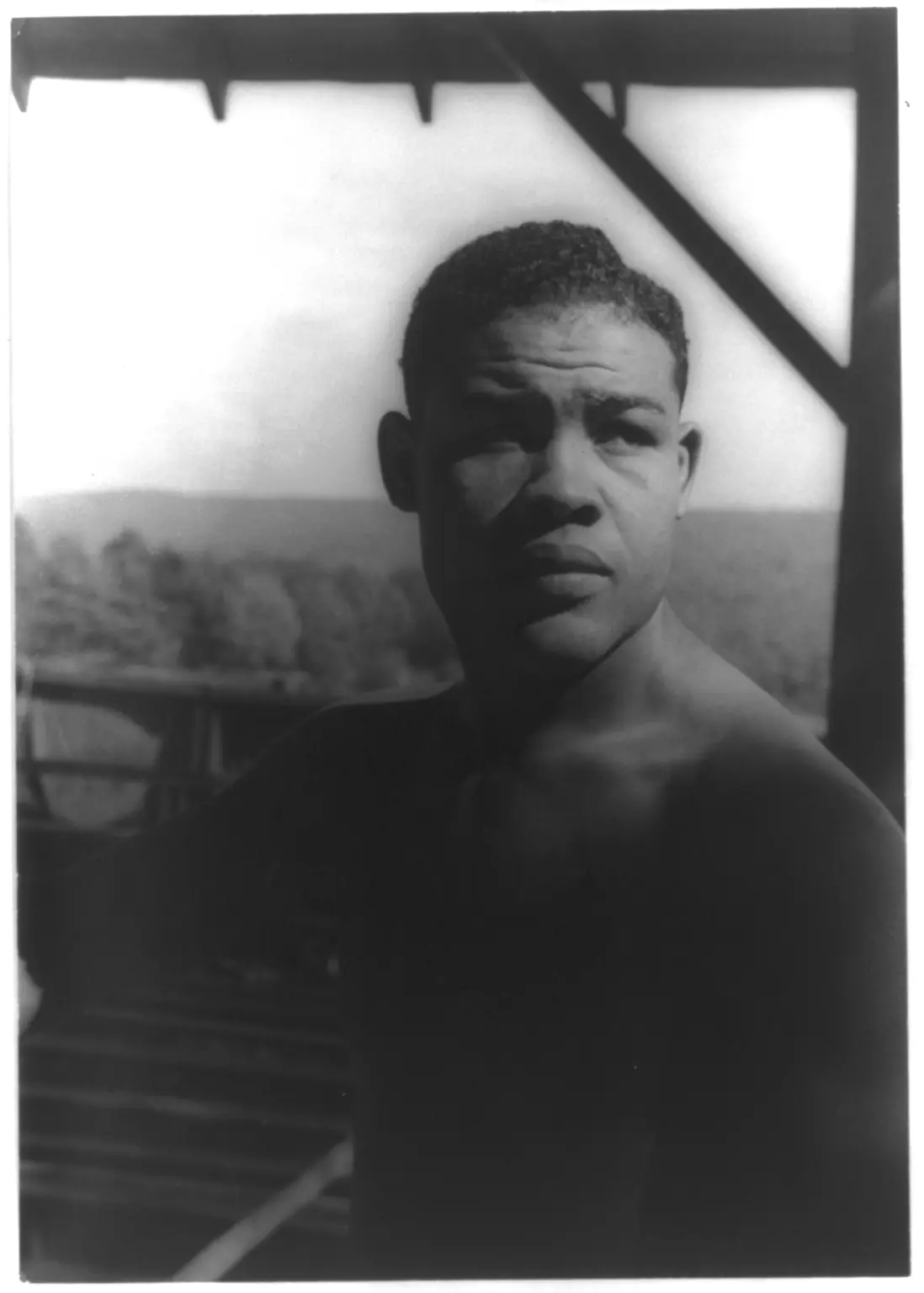
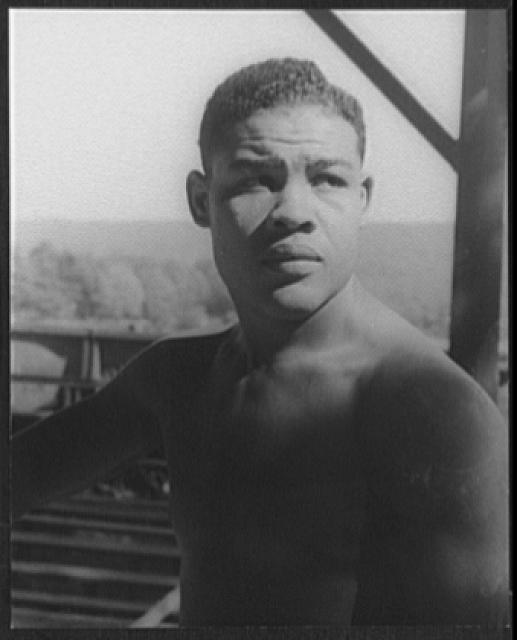
In 1937, Joe Louis won the world heavyweight championship and began a long reign that made him one of the most influential figures in boxing history. The image shows a black-and-white photographic portrait of Joe Louis by Carl Van Vechten.
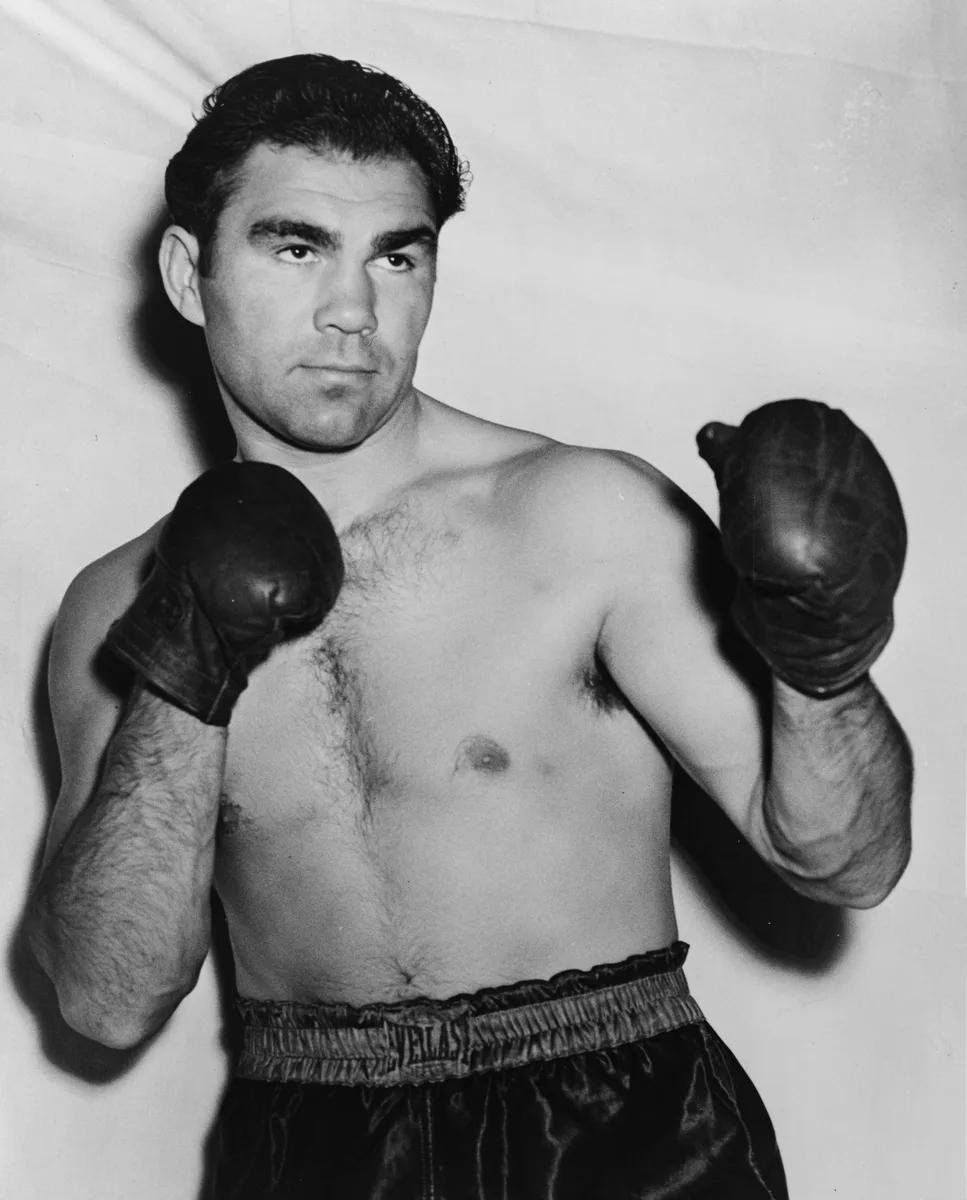
The 1938 Joe Louis–Max Schmeling rematch went far beyond a heavyweight fight, becoming a global event charged with the political and racial tensions of its era. The image shows a photographic portrait of Max Schmeling.
In 1938, the Greek federation entrusts Maccabi Thessaloniki with organising the local championship, recording the important role of the Jewish sports club in the pre-war development of Greek boxing. Maccabi's presence places boxing within the vibrant sporting culture of Thessaloniki's Jewish community shortly before that community was devastated during World War II. The image shows the logo of Maccabi Thessaloniki.
In 1938–1939 Solomon/Salamo Arouch becomes Greek champion and then Balkan champion, making him one of the notable figures of pre-war Greek boxing. His later life is tragically bound to the persecution of Thessaloniki’s Jewish community and the experience of the Holocaust.
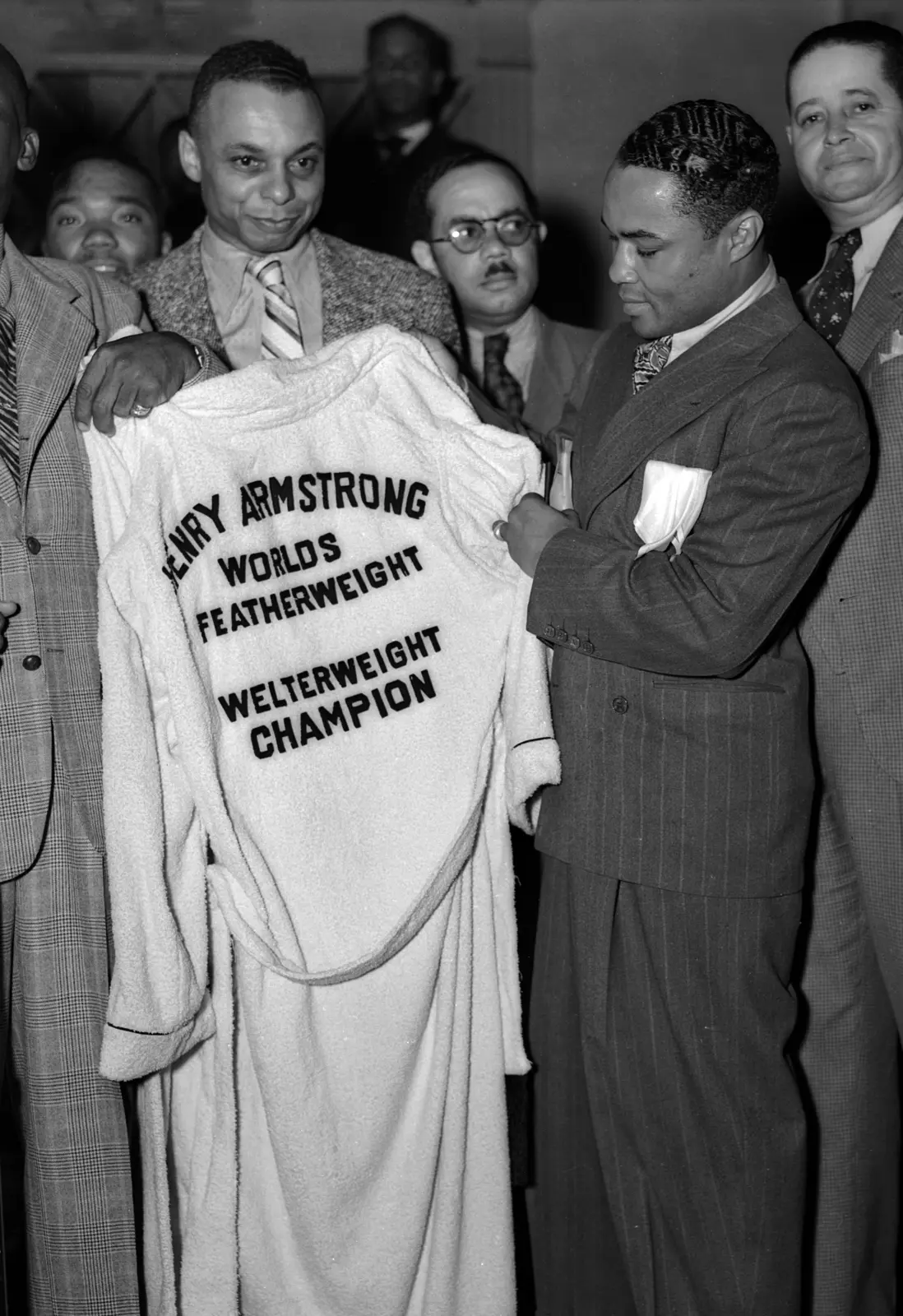
Henry Armstrong completes a unique achievement by defeating Lou Ambers for the lightweight championship while already holding the featherweight and welterweight world titles. He remains the only boxer to have held world championships in three different weight divisions simultaneously. The image shows Armstrong in 1938 wearing a robe commemorating his world titles.
On 14 November 1938 in Rotterdam, Anton Christoforidis defeats Dutch champion Bep van Klaveren on points over 15 rounds to win the European middleweight championship. The victory becomes one of the landmark international achievements of Greek professional boxing, three years before his NBA light-heavyweight world title.
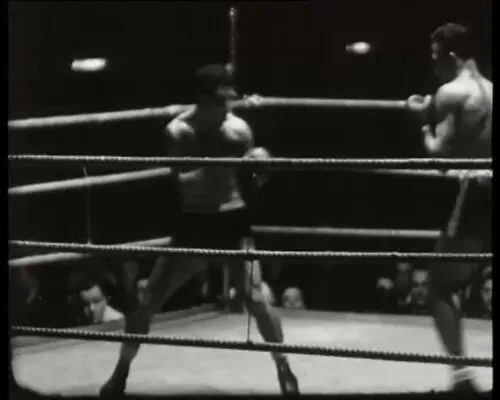
In 1941 Anton Christoforidis wins the NBA light-heavyweight world title and becomes the first Greek world champion in professional boxing. His achievement remains a foundational international milestone for Greek boxing at a time when world titles are concentrated mainly in the major US and European markets. The image shows Christoforidis boxing Bep van Klaveren in archival footage from 1938.
On 8 March 1944 in Los Angeles, Juan Zurita defeats Sammy Angott by unanimous decision to win the world lightweight championship. The World Boxing Council identifies him as Mexico’s first world boxing champion, a landmark in the emergence of one of professional boxing’s great national traditions.
AIBA is founded in 1946 after the Second World War, replacing the earlier FIBA and taking the central international role in amateur boxing. For the following decades AIBA organises the global system of Olympic-style boxing, from international rules to world championships. The image shows Lucas van Dam in a boxing match in April 1946.
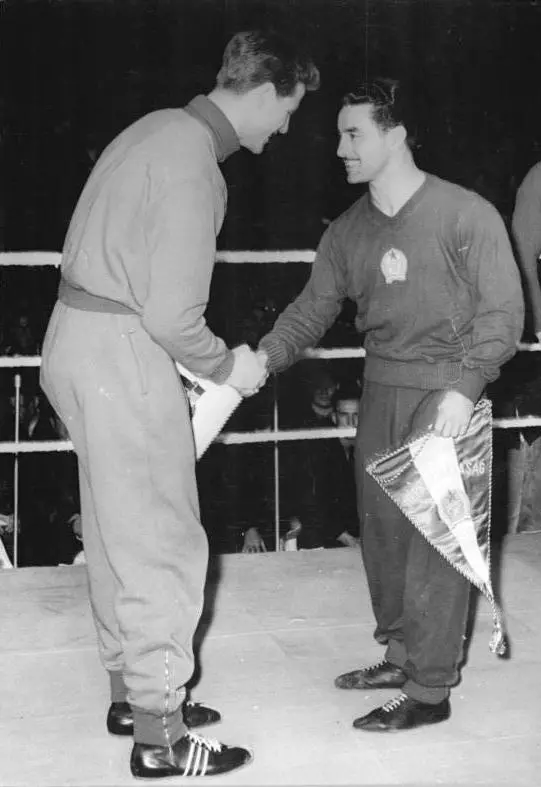
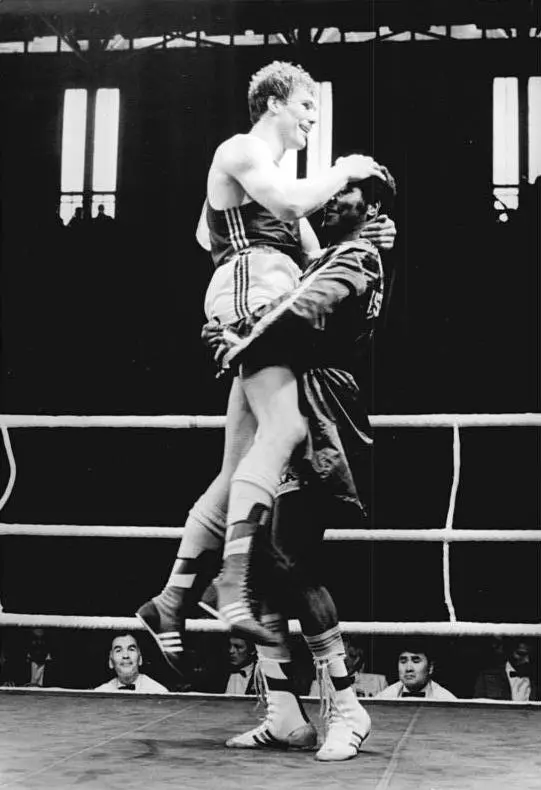
At the London 1948 Olympic Games, Hungary’s László Papp won the first of three consecutive gold medals, beginning one of Olympic boxing’s most historic careers. The image shows Ullrich Nitzschke and László Papp in 1955.
On 28 June 1948 at Villa Park, Dick Turpin defeats Vince Hawkins on points over 15 rounds to win the British middleweight championship. Until shortly beforehand, British boxing rules had excluded non-white fighters from domestic British titles. Turpin becomes the first Black British boxer to win such a championship, symbolising the end of an institutional racial barrier in the sport.
On 25 June 1948, Joe Louis stops Jersey Joe Walcott in the eleventh round at Yankee Stadium. The rematch also makes media history as its television signal is presented on cinema screens through emerging theatre-television systems, becoming a foundational early step in the closed-circuit distribution model that would eventually lead to pay-per-view.
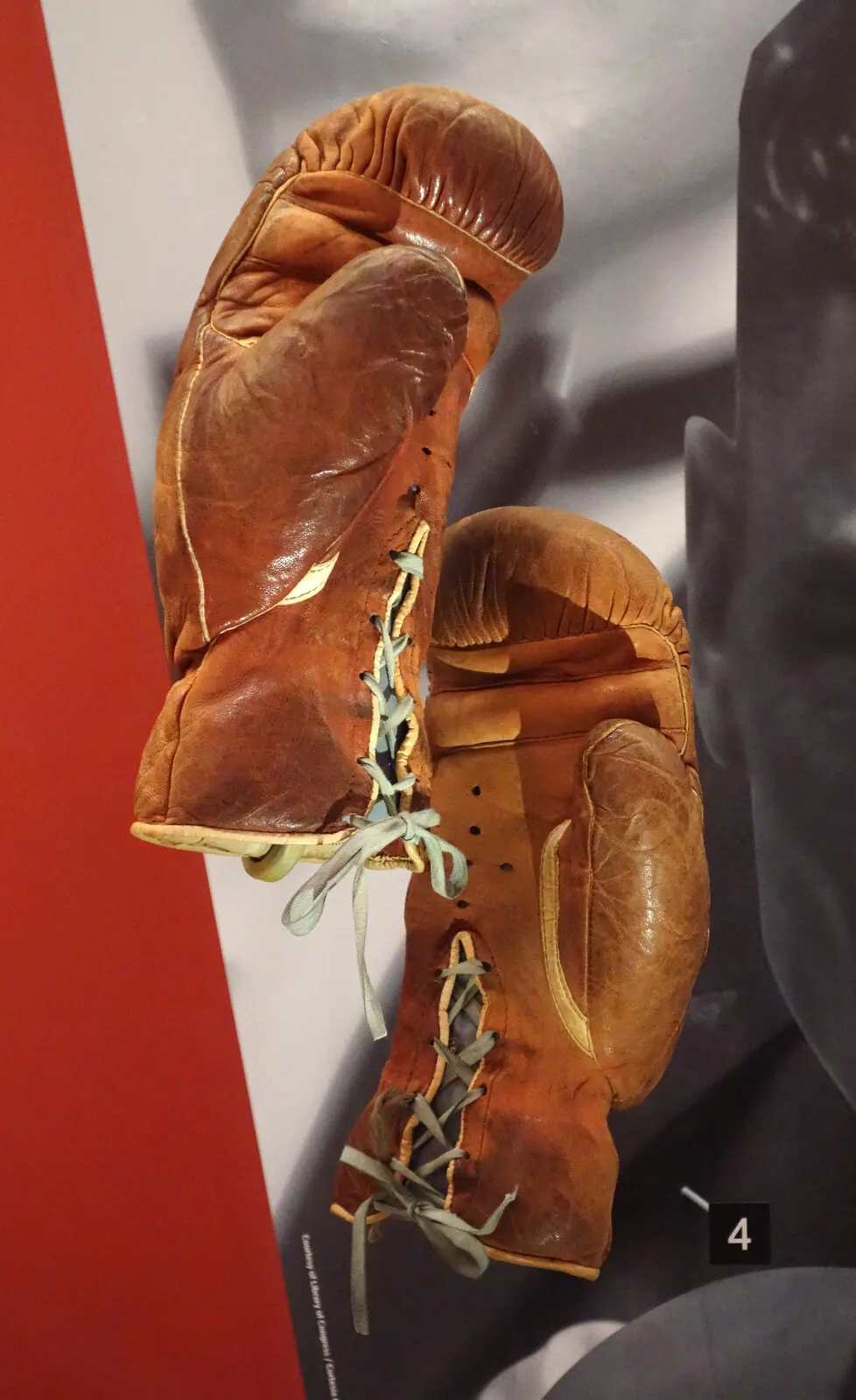
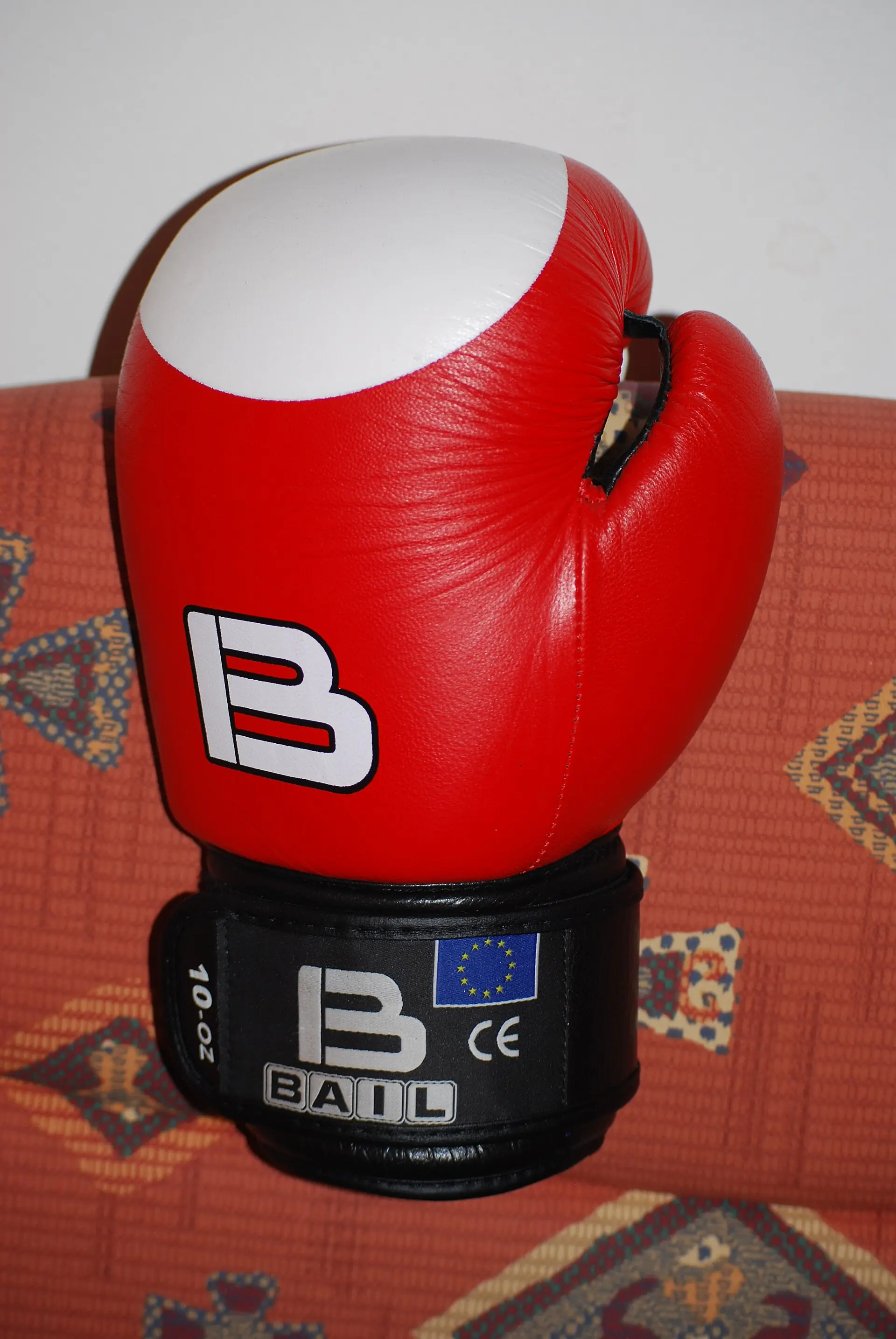
Willie Pep was already established as one of history’s great featherweights when he met Sandy Saddler in 1948. Saddler stopped him in the fourth round to take the title, Pep regained it by decision in their 1949 rematch, but Saddler won their final two meetings by stoppage in 1950 and 1951. Their four-fight series became one of the great rivalries of the lighter divisions. A pair of boxing gloves is used as a neutral contextual visual.
In 1949, organised Greek boxing returns strongly after the war and Panathinaikos wins the first Panhellenic boxing championship in the club's history. The title marks the post-war rebuilding of the boxing department and the return of club championships to a more stable competitive structure. The image shows the modern entrance to Panathinaikos' boxing gym.
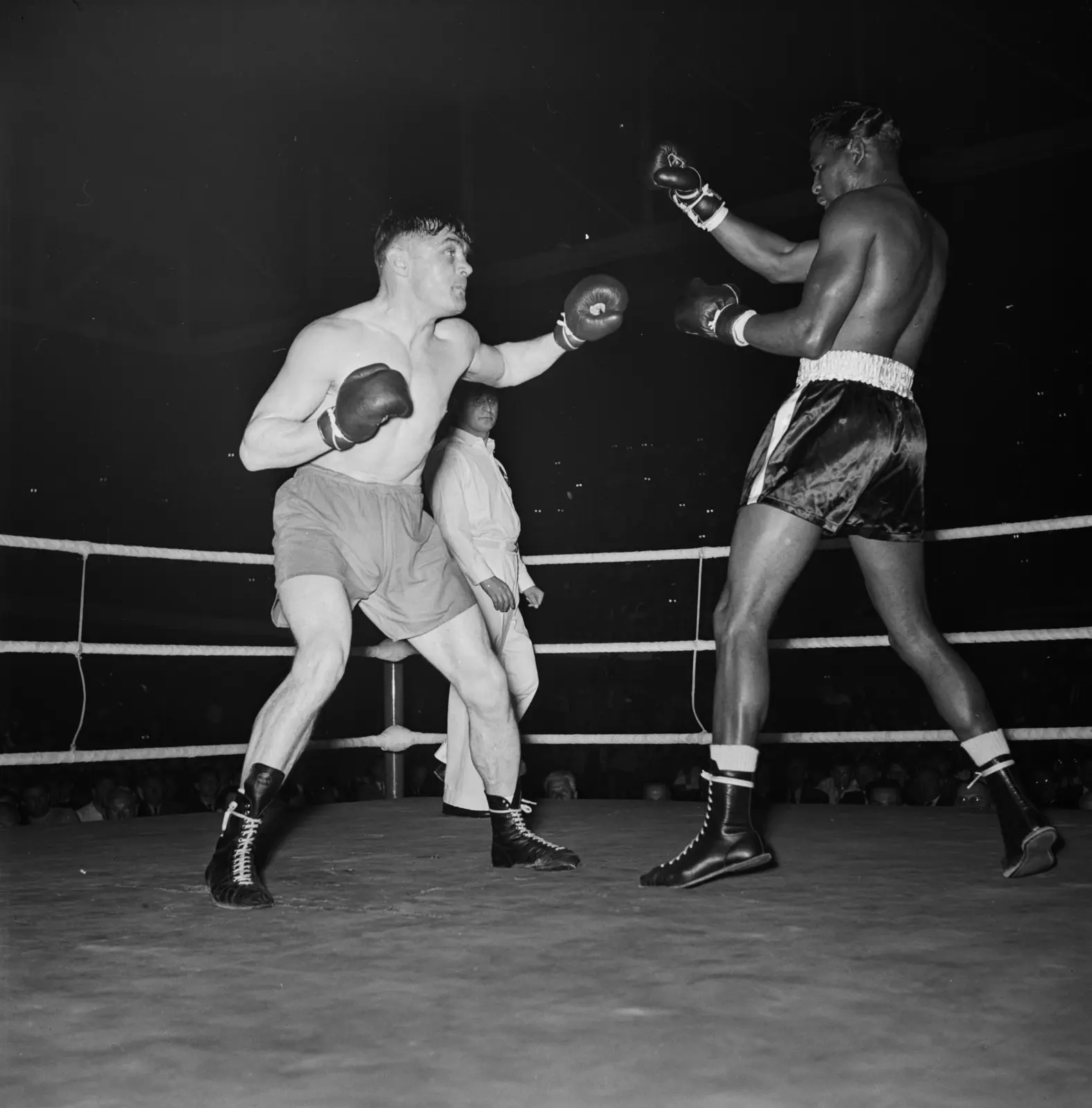
On 14 February 1951, Sugar Ray Robinson stops Jake LaMotta in the 13th round in Chicago to win the world middleweight championship, in the sixth and final meeting of one of boxing's most famous rivalries. The bout becomes known as the “St. Valentine's Day Massacre” and further cements Robinson's place among the greatest pound-for-pound fighters in boxing history. The image shows Robinson boxing Jean Wanes in Zurich later that same year.
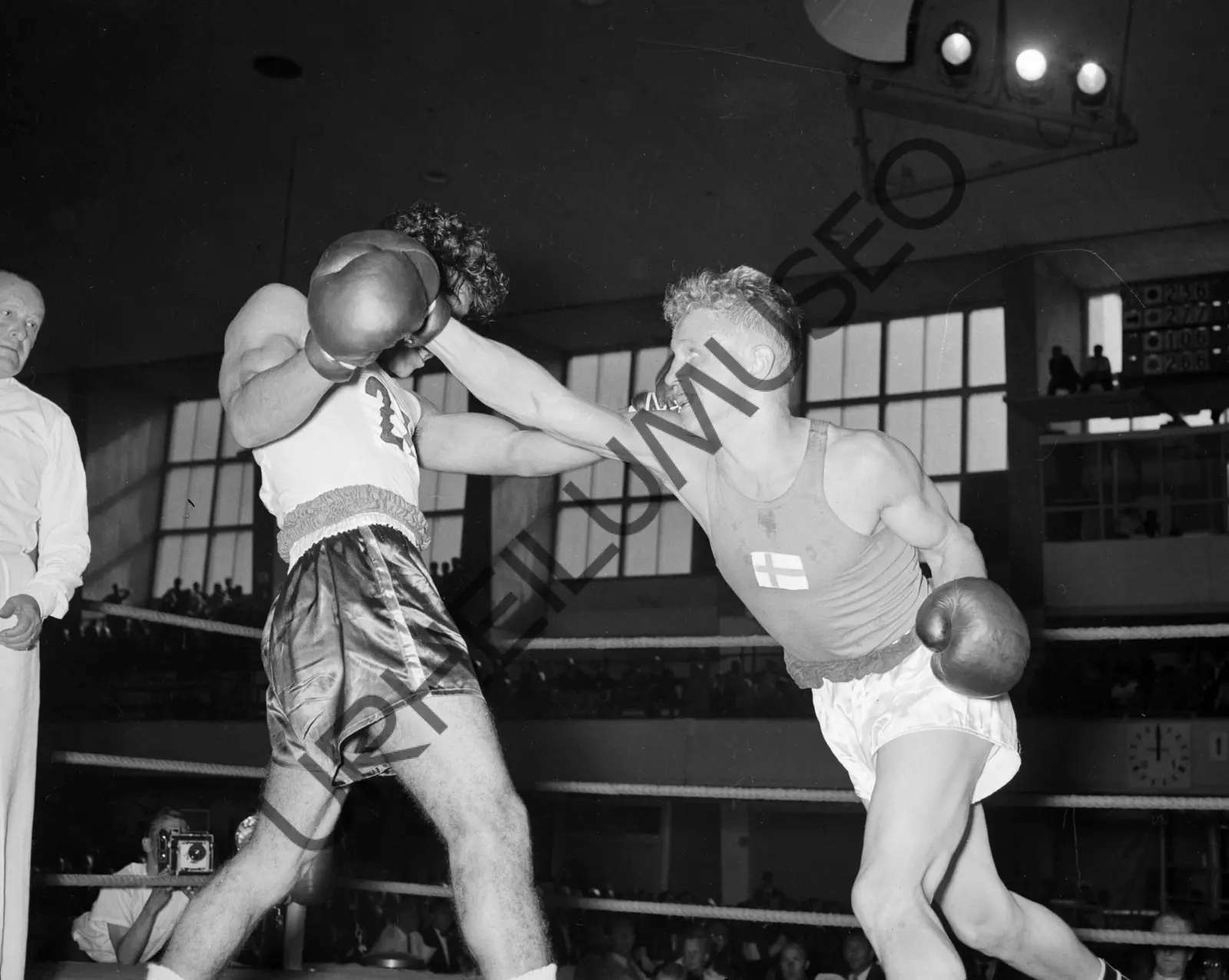
At the 1952 Olympic Games, boxing eliminated the separate bronze-medal contests, after which both losing semi-finalists received bronze and the sport adopted its familiar four-medallist Olympic structure. The image shows Vicente Matute and Erkki Pakkanen boxing at the 1952 Olympic Games.
In 1952 the Hellenic Boxing Federation is formally recorded as an independent national sports federation, completing the sport’s institutional separation from earlier combined federation structures. From this point boxing has its own national administrative base for championships, national teams and international representation.
At Helsinki 1952, László Papp won a second consecutive Olympic gold, confirming that London 1948 had not been an isolated success but the beginning of an unprecedented run. The image shows László Papp in a 1956 photograph.
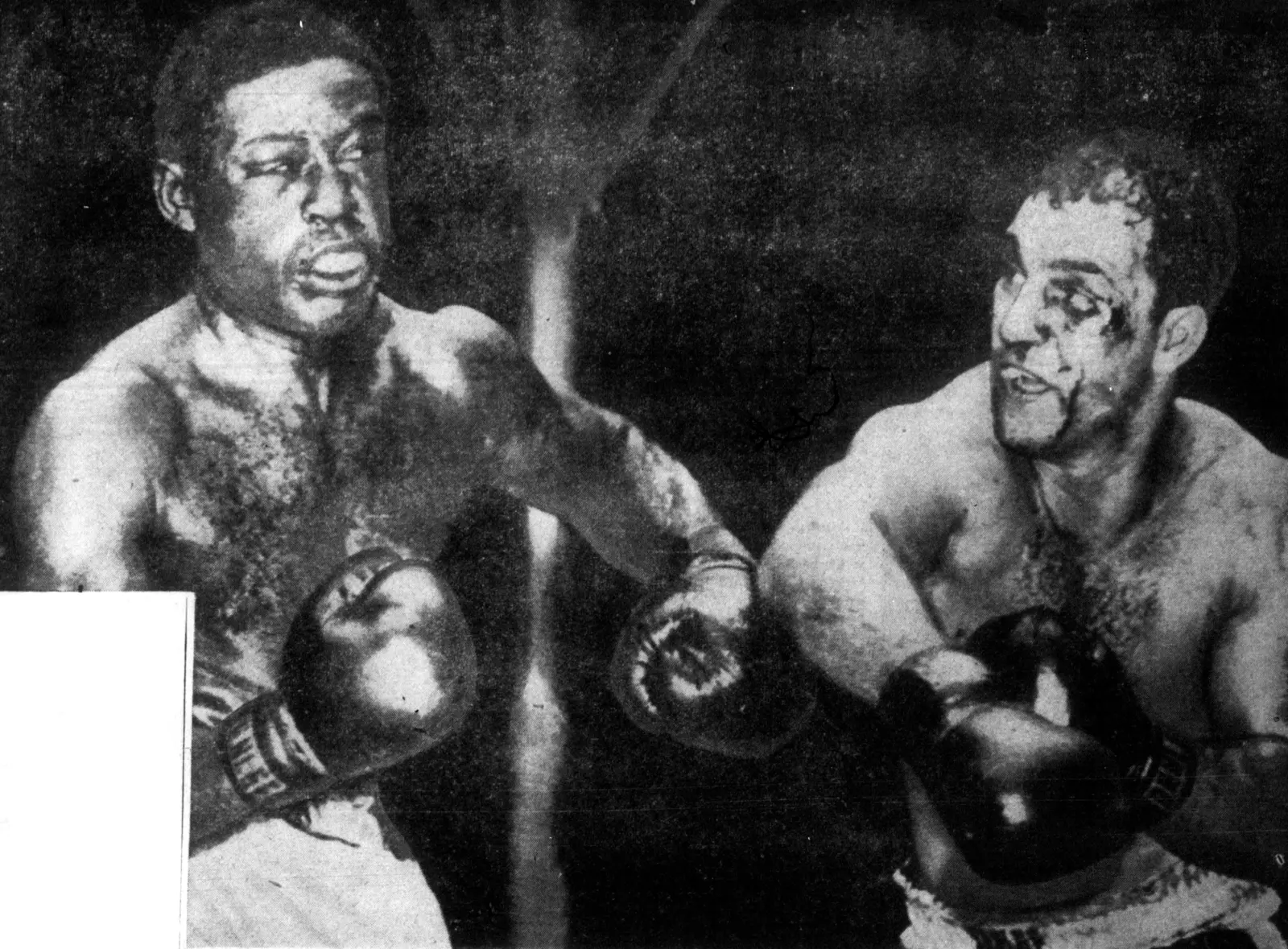
In 1952 the undefeated Rocky Marciano challenged heavyweight champion Jersey Joe Walcott in Philadelphia. Despite being knocked down in the opening round, Marciano fought on and scored the decisive 13th-round knockout that made him world heavyweight champion. An undefeated reign at the top of the heavyweight division followed, and in 1956 he retired with a professional record of 49–0, completing one of the most famous unbeaten heavyweight careers in boxing history.
On 19 May 1952, before a crowd of about 40,000 at Tokyo’s Korakuen Stadium, Yoshio Shirai defeats Dado Marino on points to become Japan’s first boxing world champion. With the Japan Boxing Commission also established that year, Shirai’s victory becomes a foundation stone for one of professional boxing’s major national traditions.
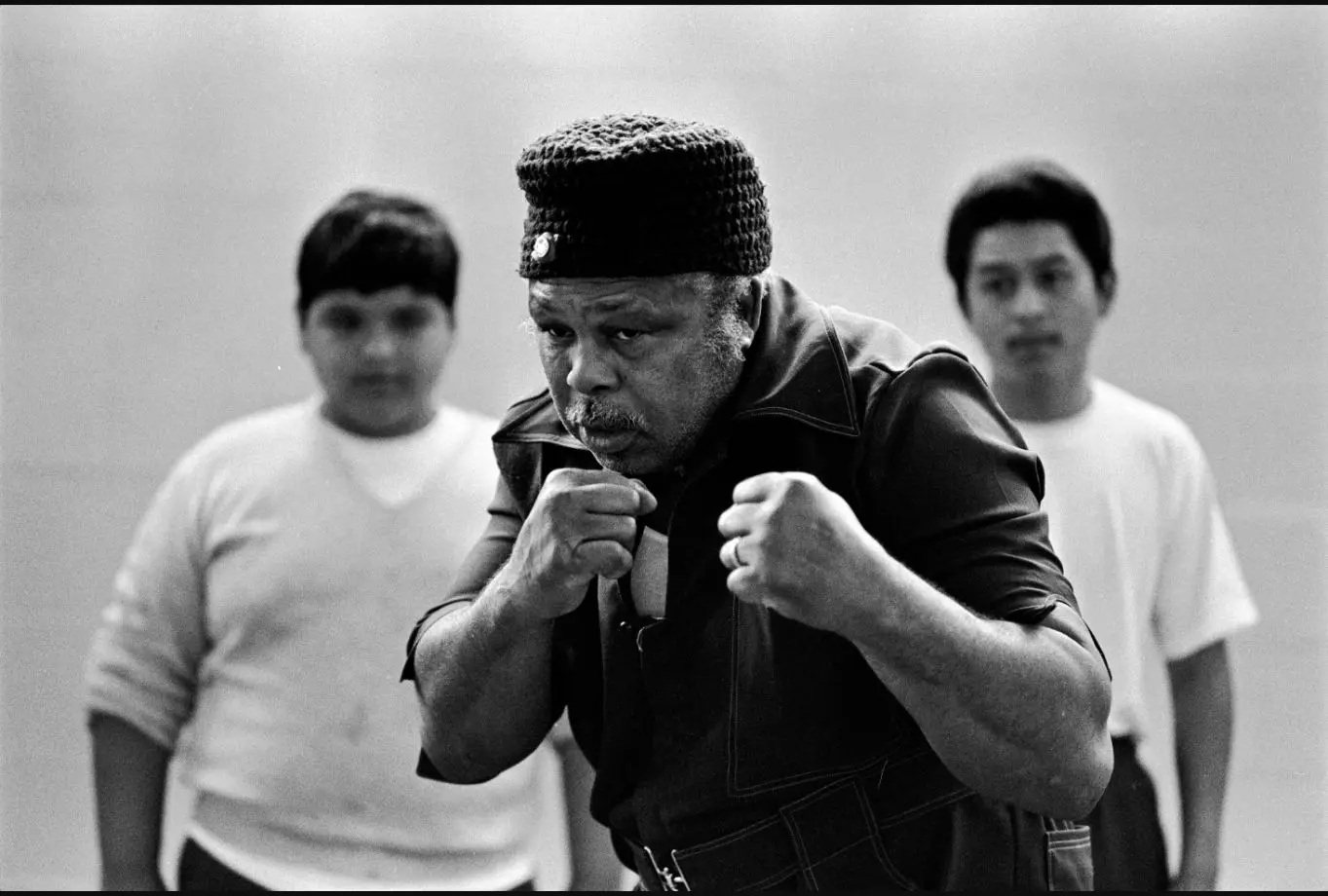
In 1952, after years of waiting near the top of the rankings, Archie Moore defeated Joey Maxim by decision to win the world light-heavyweight championship. He remained at the top for nearly a decade and completed a 27-year career with 141 recorded knockouts, a total the International Boxing Hall of Fame lists as the highest in boxing history. The image shows Moore in a later photograph from 1982.
At Melbourne 1956, László Papp won a third consecutive Olympic gold and became the first boxer to achieve the feat, setting a benchmark only a handful of fighters would later match. The image shows a photographic portrait of László Papp.
In 1957 Barbara Buttrick wins a women’s bantamweight world title and becomes a central figure in post-war women’s professional boxing. Her career is especially significant because it develops at a time when women still face major institutional and social barriers to competing. Her appearances in early television broadcasts also helped increase the public visibility of women's boxing.
By the late 1950s, sports-medicine literature was increasingly systematising pre-bout examinations, ringside physician coverage and procedures aimed at preventing serious injury in boxing. As early as 1948, New York State had created a Medical Advisory Board, an important precursor to later formal medical-examination and ringside-physician systems.
At the 1959 Mediterranean Games in Beirut, Greek boxing reaches the podium for the first time in the competition’s history. Dimitrios Mikhail wins bronze at 67 kg and Vyron Stoimenidis takes bronze at 81 kg, giving Greece its first two Mediterranean Games boxing medals.
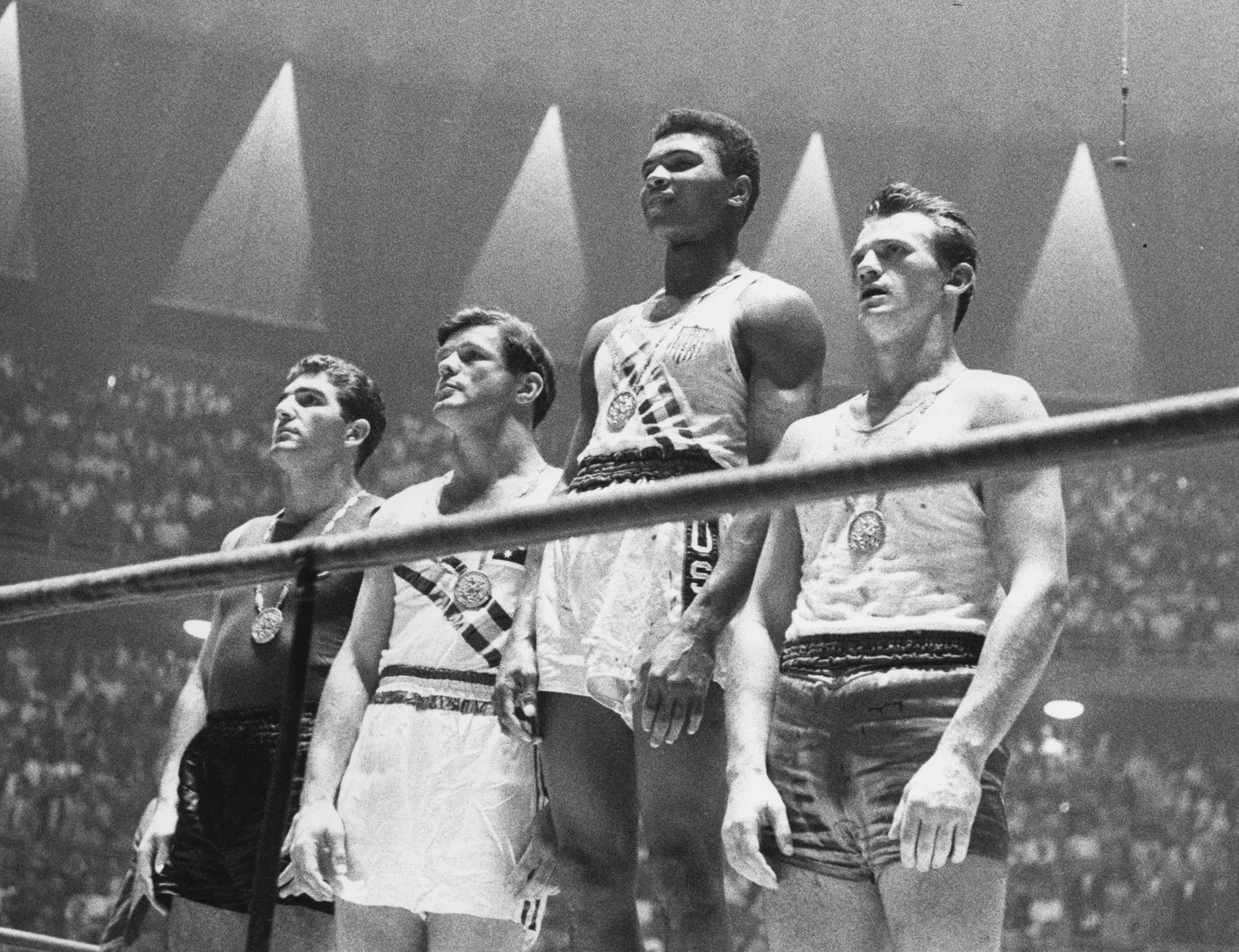
At the Rome 1960 Olympic Games, 18-year-old Cassius Clay won light-heavyweight gold before turning professional and eventually becoming Muhammad Ali. The image shows Cassius Clay boxing at the 1960 Olympic Games.
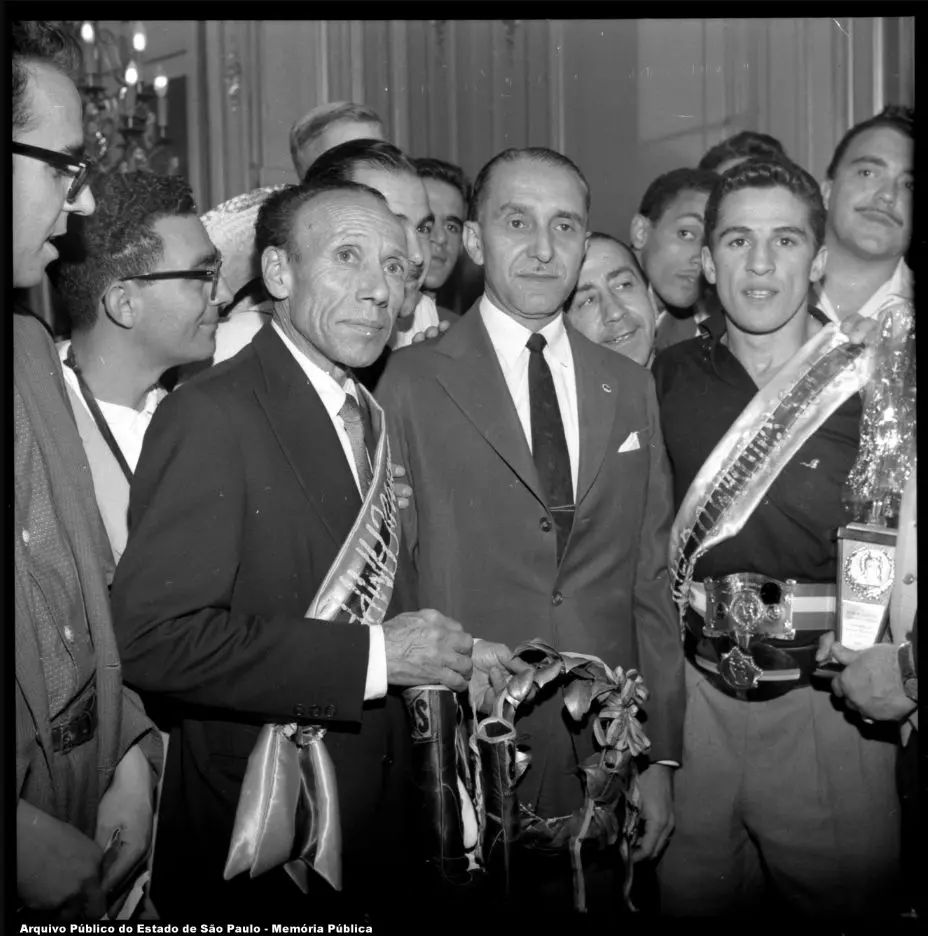
Éder Jofre became world bantamweight champion in 1960 and remained unbeaten through his first 50 professional bouts. The only two defeats of his career came against Fighting Harada in title fights in 1965 and 1966. Returning to the top later in his career, Jofre captured the WBC featherweight title in 1973 at the age of 37 and completed his journey as one of boxing’s greatest lighter-weight champions. The image shows Jofre in 1960 with his father and trainer.
Gabriel “Flash” Elorde captured the world junior-lightweight / super-featherweight championship in 1960 and remained at the top of the division for approximately seven years and three months, creating one of its longest championship reigns. He became one of the defining figures of Philippine boxing and an important reference point in the growth of professional boxing in Asia. The Elorde Sports Center in the Philippines is used as a directly connected contextual visual.
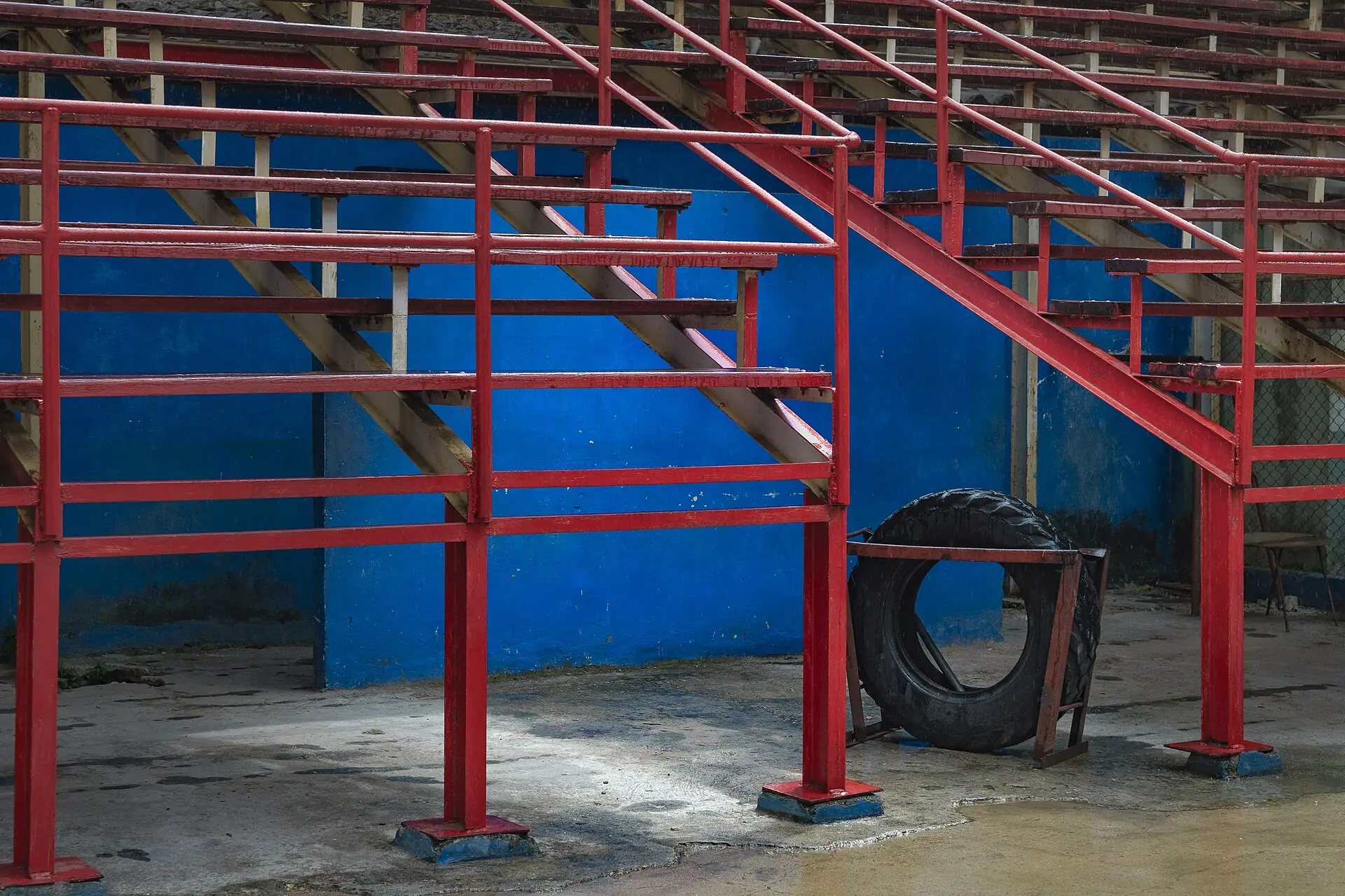
In 1961, revolutionary Cuba halts professional sport and boxing is channelled into a state amateur system. The decision fundamentally reshapes Cuban boxing, driving investment into national development and Olympic competition and helping create the powerhouse later represented by champions such as Teófilo Stevenson and Félix Savón. The full prohibition on professional boxing would finally be lifted in 2022.
On March 24, 1962, Emile Griffith stopped Benny “Kid” Paret in the 12th round of a nationally televised world welterweight title fight at Madison Square Garden. Paret fell into a coma and died ten days later. The tragedy became one of boxing’s defining reference points in the public debate over risk, referee protection and medical safety. The image shows Griffith in a later portrait.
In 1962, the National Boxing Association was renamed the World Boxing Association—WBA—so that the organisation’s name reflected its expansion beyond the United States and the increasingly international nature of professional boxing. The image shows a WBA championship belt.
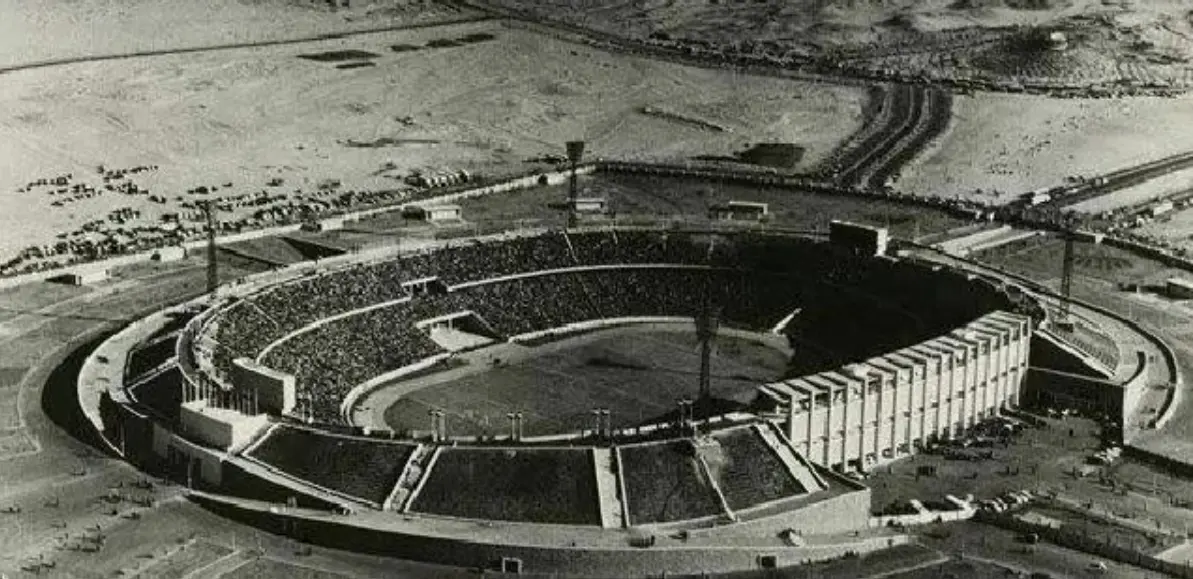
In 1962, Cairo hosted the first African Boxing Championships, creating an official continental championship for African national teams. The image shows Cairo Stadium in 1960.
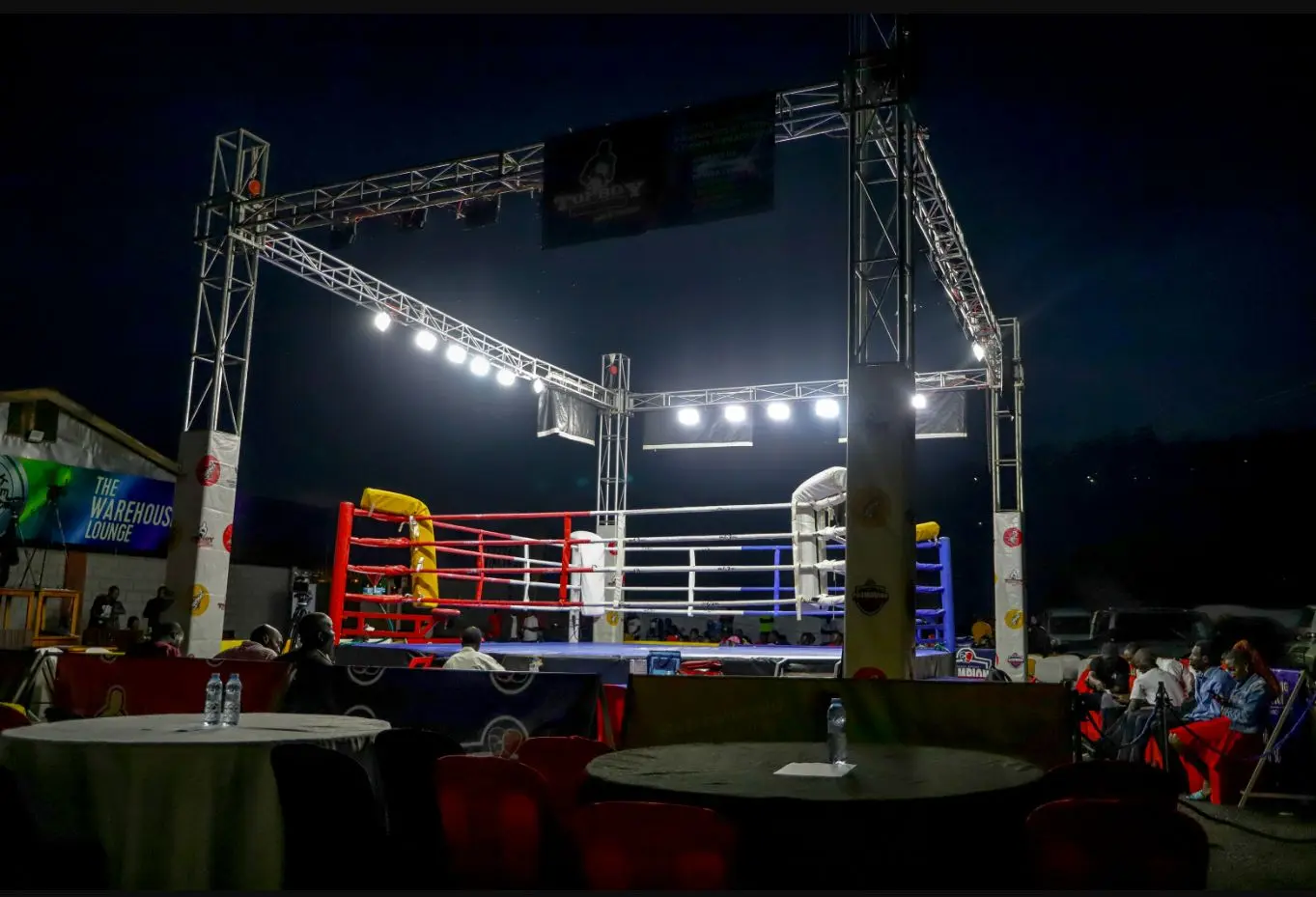
On October 10, 1962, Masahiko “Fighting” Harada knocked out Pone Kingpetch in the 11th round to win the world flyweight title. In 1965 he moved to bantamweight and defeated the previously unbeaten Éder Jofre by split decision, then defeated the Brazilian again in their 1966 rematch. With world championships in two divisions, Harada became one of the foundational figures of post-war Japanese boxing. A boxing ring is used as a neutral contextual visual.
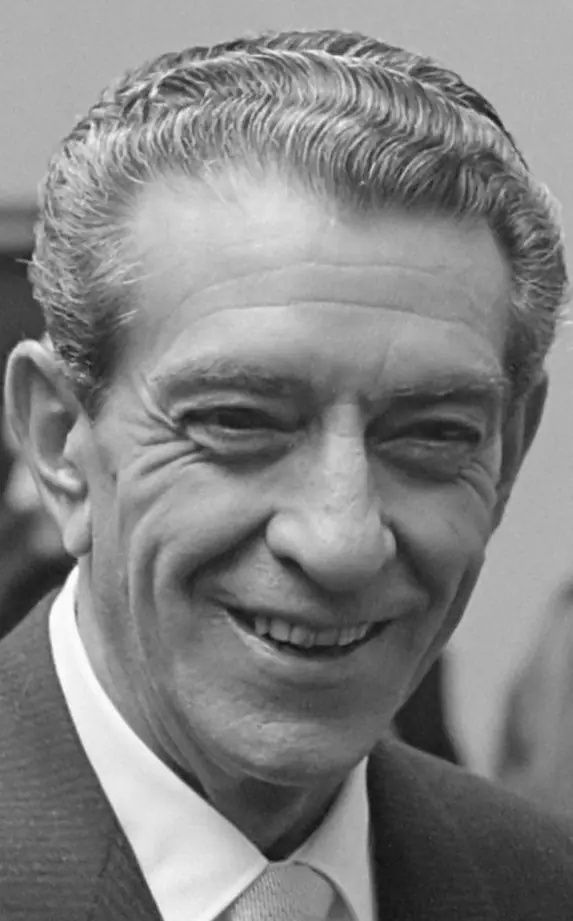
In 1963 the World Boxing Council — WBC — is founded in Mexico City by representatives of eleven countries, adding a new international organisation to professional boxing governance. Its creation strengthens the multi-body sanctioning system that will characterise professional world titles in the decades that follow. The image shows Adolfo López Mateos, President of Mexico at the time of the WBC's creation and a central figure in the institutional context surrounding the founding meeting held in Mexico City in 1963.
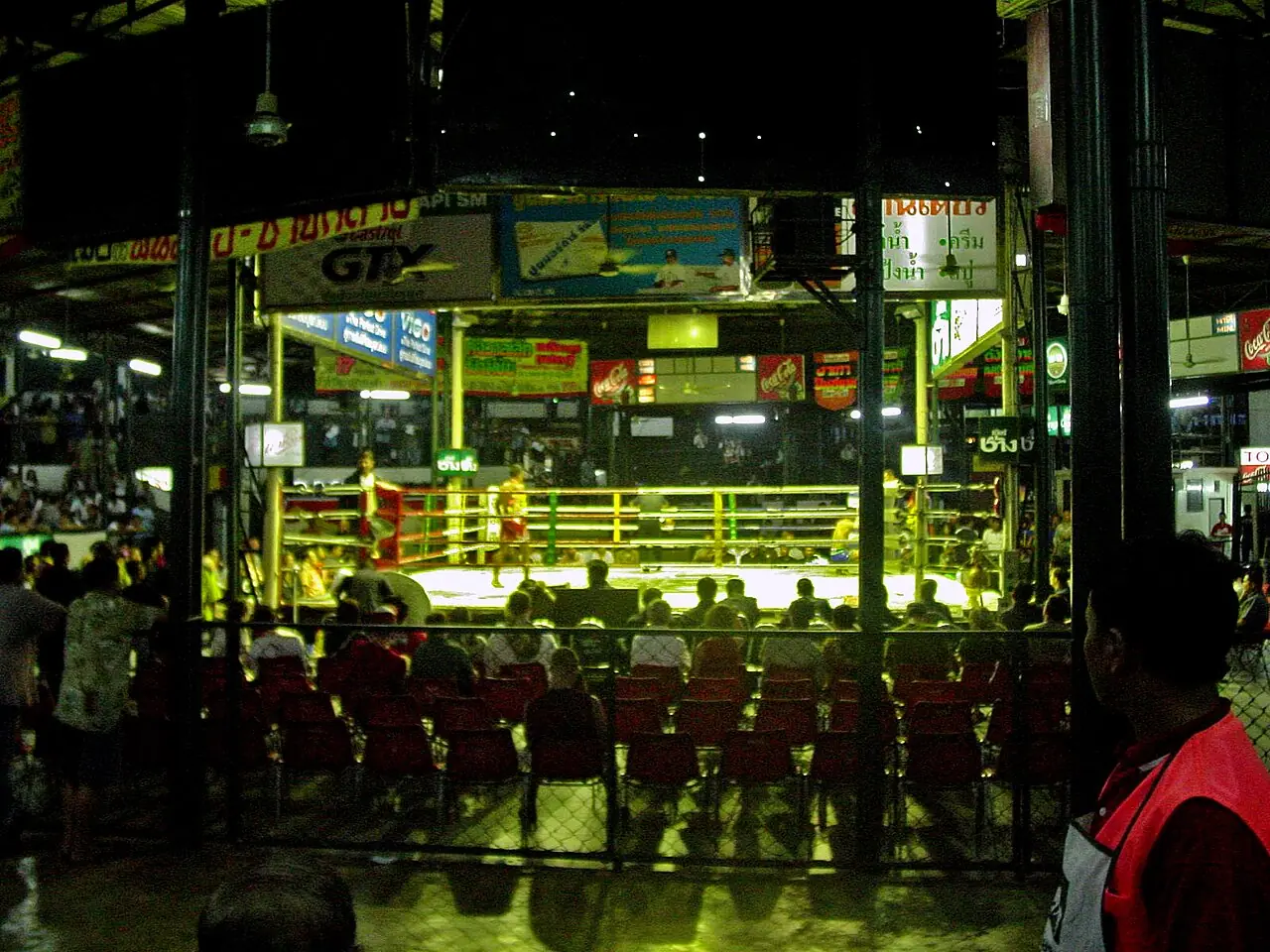
In 1963, Bangkok hosted the first Asian Boxing Championships, establishing a recurring continental competition for the development of amateur boxing across Asia. The image shows Lumpinee Boxing Stadium in Bangkok.
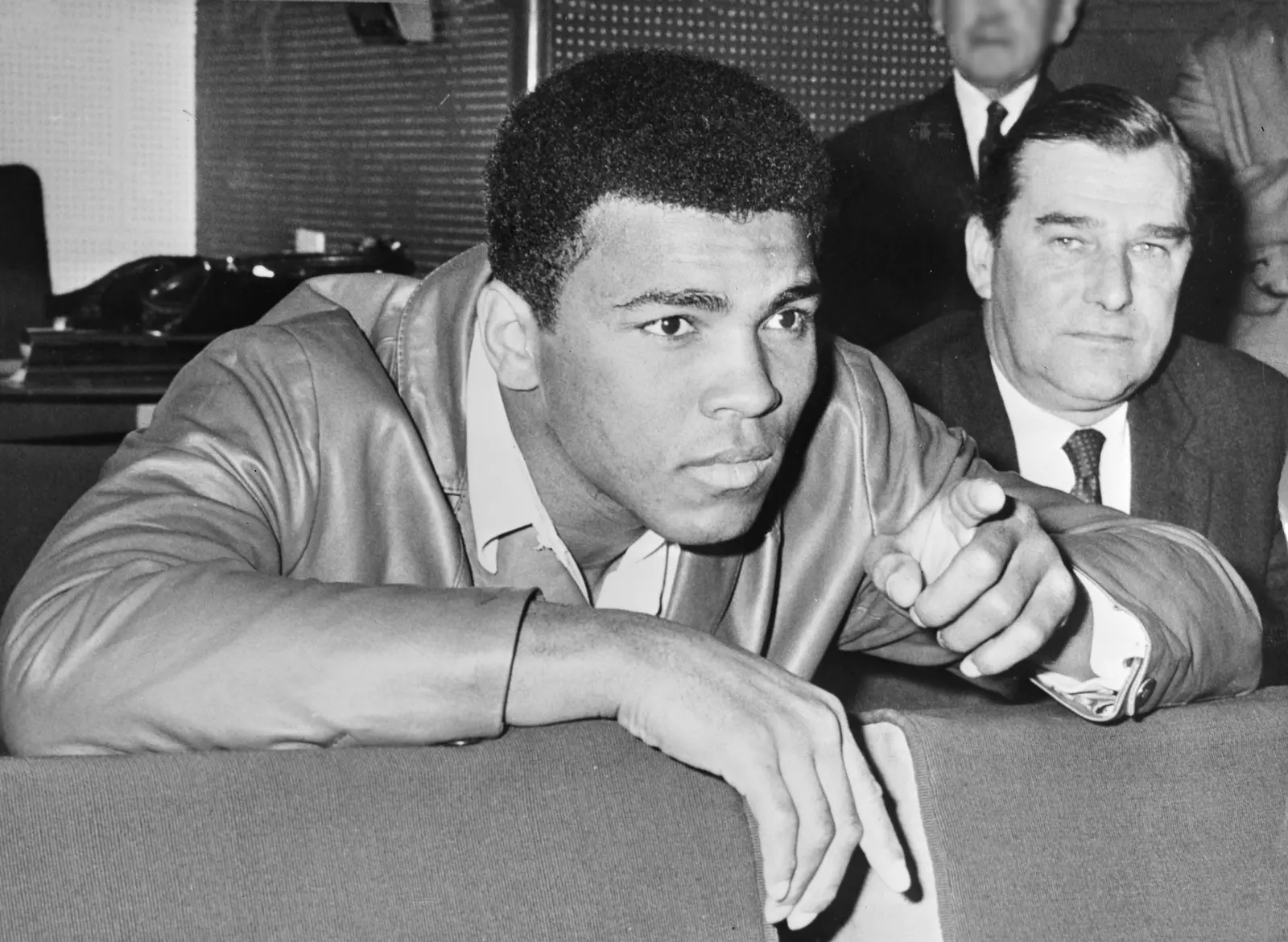
In 1964 Cassius Clay defeats Sonny Liston to win the heavyweight world championship, producing one of the greatest upsets in boxing history. Soon afterwards he becomes publicly known as Muhammad Ali and grows into one of the most recognisable sporting figures of the 20th century. The image shows Muhammad Ali in a 1966 photograph.
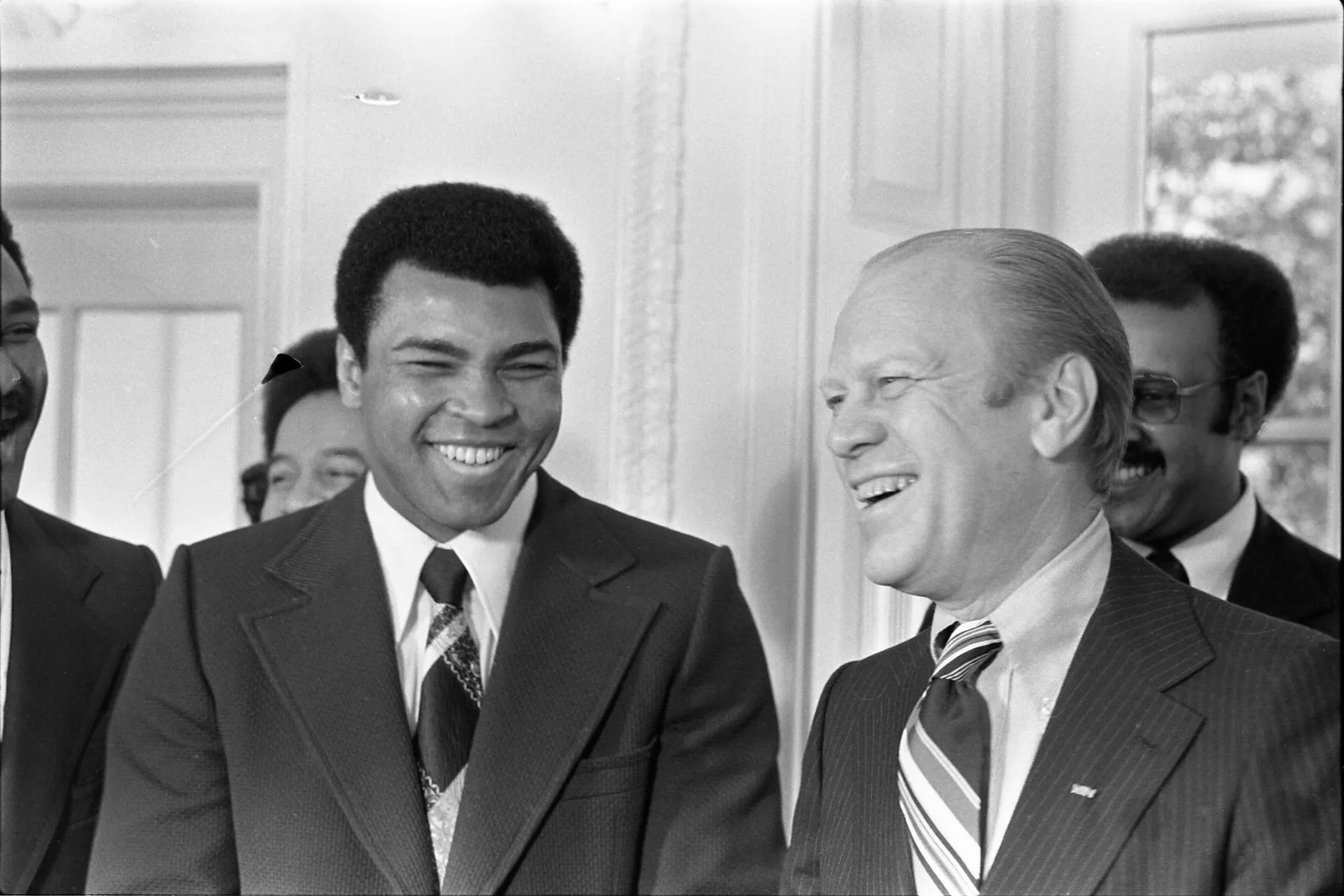
In 1967, Muhammad Ali was stripped of his titles and barred from boxing after refusing military induction during the Vietnam War, turning his career into an issue of enormous political and social significance. The image shows Muhammad Ali with President Gerald Ford in the Oval Office.
In 1967 Evangelos Oikonomakos wins the 71 kg gold medal at the Mediterranean Games in Tunis, defeating Italy’s Nicola Menchi in the final. The result is one of Greek boxing’s significant post-war international achievements and comes before Oikonomakos’s Olympic appearances in 1968 and 1972. The image shows Stade El Menzah in Tunis in 1967, during the period of the Mediterranean Games.
In 1968, the World Boxing Council implements the 10-Point Must System, under which the winner of a round normally receives 10 points and the opponent nine or fewer depending on knockdowns, dominance and penalties. The system becomes the scoring framework that develops into the modern global standard for professional boxing.
In 1969 Sydney hosts the first Oceanian Boxing Championships, creating an official continental competition for the national teams of Oceania. The event further extends the geographic network of regional championships within international amateur boxing.
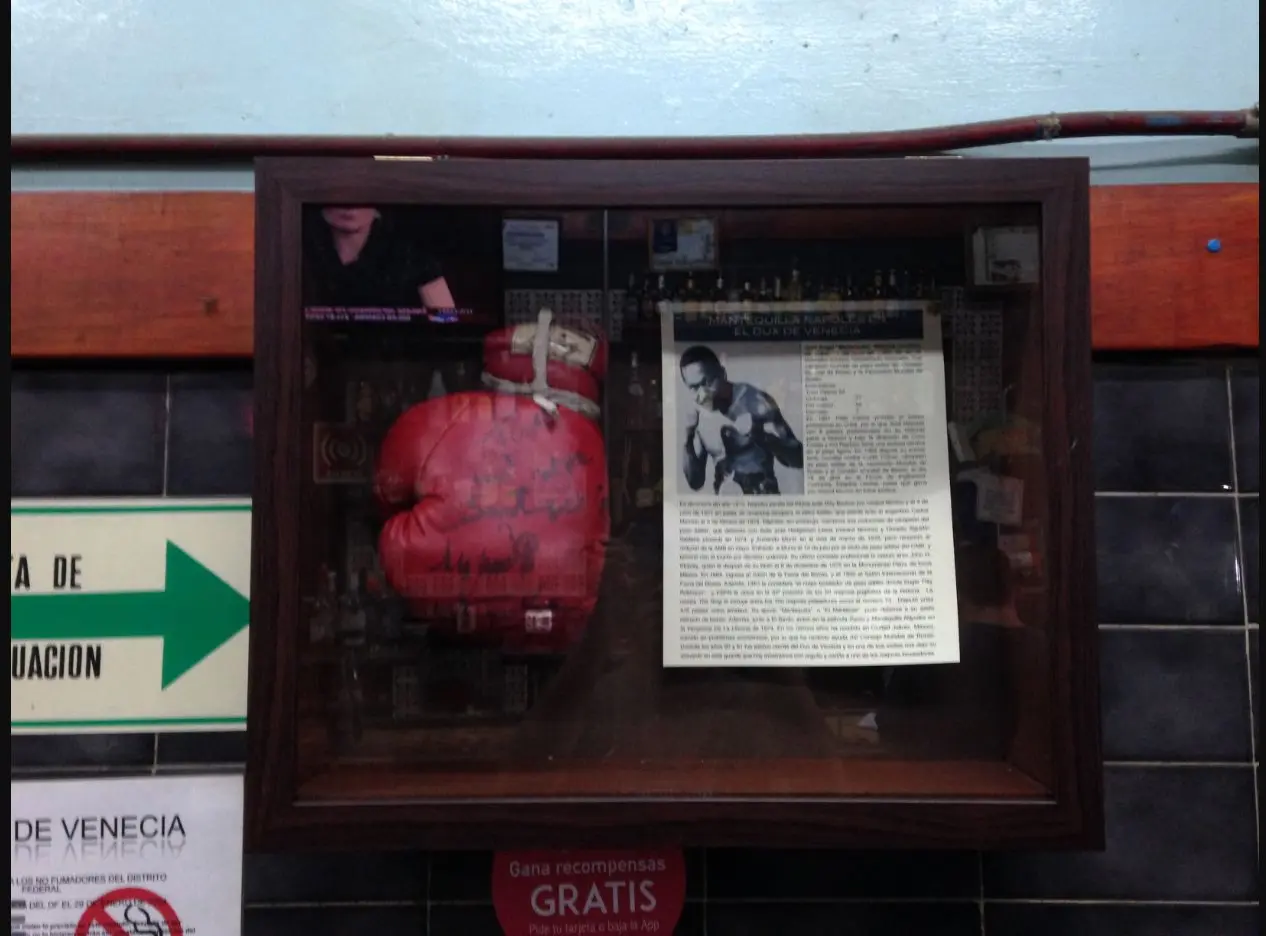
On April 18, 1969, José “Mantequilla” Nápoles defeated Curtis Cokes when the bout was stopped after the 13th round, winning the world welterweight championship. He briefly lost the title to Billy Backus in 1970, regained it in 1971 and remained a dominant presence in the division until 1975. His technique, movement and accuracy established him as one of the classic great welterweights. The image uses an actual Nápoles boxing glove as a directly connected historical artifact.
Carlos Monzón captured the world middleweight championship in 1970 and remained at the top until his retirement in 1977. During his reign he made 14 successful title defenses and ended his career unbeaten across his final 82 bouts, creating one of the most imposing periods of dominance in middleweight history. The flag of Argentina is used as a safe symbolic contextual visual.
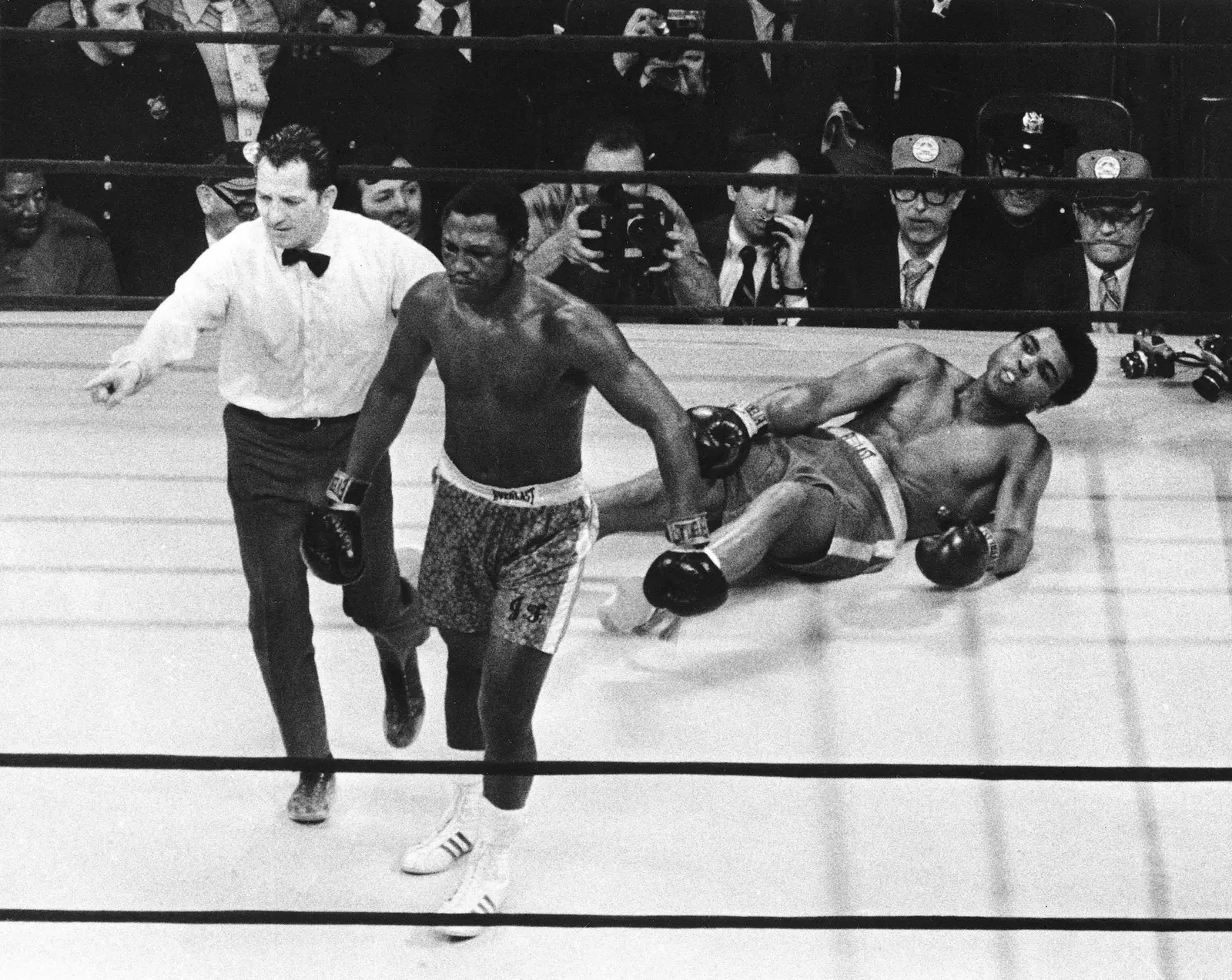
From 1971 to 1975 Muhammad Ali and Joe Frazier met three times in one of boxing history's defining rivalries. In the 1971 “Fight of the Century” at Madison Square Garden, with both men undefeated entering the bout, Frazier defeated Ali by unanimous decision over 15 rounds and handed him the first professional loss of his career. They returned to the same arena in 1974 for “Super Fight II”, where Ali won a 12-round unanimous decision to level the series. The trilogy concluded on October 1, 1975 in the Philippines with the “Thrilla in Manila”: after 14 exhausting rounds, trainer Eddie Futch stopped the fight before the 15th and Ali retained the heavyweight championship, closing the historic series with two wins to Frazier's one.
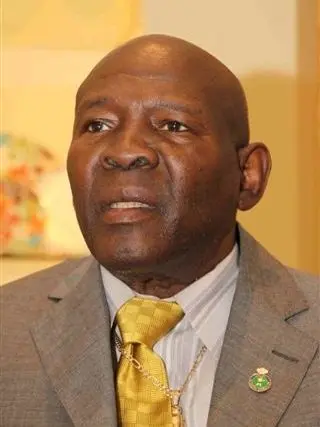
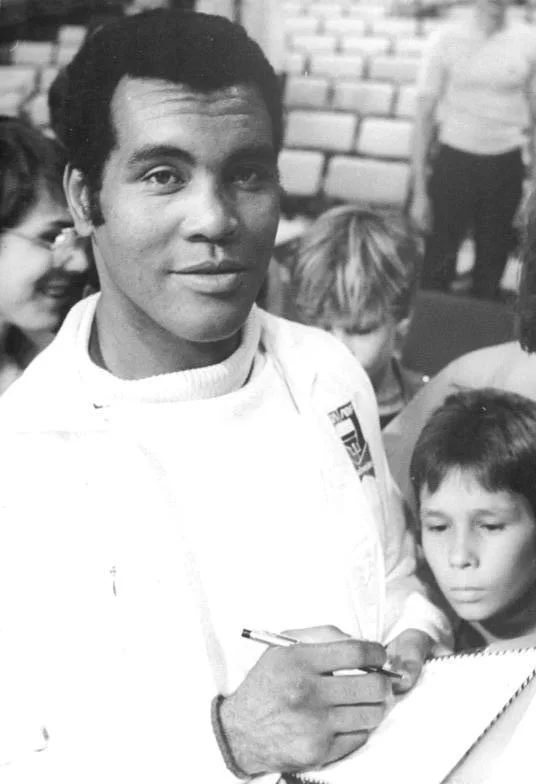
At the Munich 1972 Olympic Games, Cuba’s Teófilo Stevenson won the first of three consecutive heavyweight gold medals, beginning one of amateur boxing’s most iconic careers. The image shows a photographic portrait of Teófilo Stevenson in 1985.
In 1973, an incident at a bout in Venezuela — where analysis of a suspicious substance revealed amphetamines — becomes the catalyst for the WBC’s organised anti-doping policy. From 1975, the World Boxing Council formalises mandatory testing following its world-title bouts, making substance control an institutional part of boxer protection and competitive integrity.
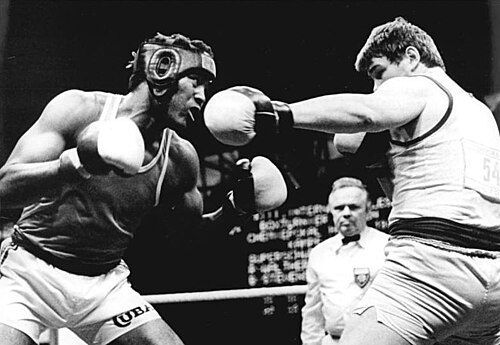
In 1974, Havana hosted the first AIBA Men’s World Boxing Championships, giving amateur boxing a world championship independent of the four-year Olympic cycle. The image shows Teófilo Stevenson and Olaf Walther in 1984.
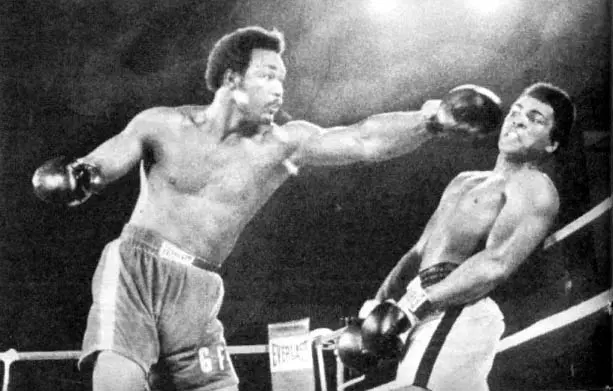
In 1974, Muhammad Ali faces heavyweight champion George Foreman in Kinshasa, Zaire, and regains the world title by eighth-round knockout. The globally televised Rumble in the Jungle becomes an international sporting spectacle and is historically associated with Ali's rope-a-dope strategy.
Alexis Argüello captured the WBA featherweight championship in 1974, followed it with the WBC super-featherweight title in 1978 and moved up again to become WBC lightweight champion in 1981. World titles in three divisions, combined with his precision, power and refined technique, established him as one of the defining figures of Nicaraguan and Latin American boxing. The image shows Argüello in a later photograph from 2009.
From 22 to 26 September 1975, Athens hosts the inaugural international Acropolis Cup. With gold medals won by Greece, West Germany and Austria, the tournament begins a long-running chapter in Greek international boxing that would eventually extend to the Olympic Test Event edition of 2004.
On 5 December 1975, meeting in Tunis, the World Boxing Council ends recognition of South African professional boxing authorities and removes South African boxers from its world ratings for as long as apartheid remains in force. The decision places a major boxing organisation within the international sporting campaign against institutional racial segregation.
At Montreal 1976, Teófilo Stevenson won a second consecutive Olympic heavyweight gold and cemented his dominance at the top of world amateur boxing. The image shows Ulli Kaden and Teófilo Stevenson in a 1984 bout.
In 1976 George Foreman, returning to the highest level of the heavyweight division after his loss to Muhammad Ali, faced Ron Lyle at Caesars Palace in Las Vegas. The bout developed into an extraordinary exchange of power, with both men hurting and knocking down one another. The fourth round became especially famous for its repeated momentum swings before Foreman finished the fight by knockout in the fifth. The contest remains a defining example of the power and drama of 1970s heavyweight boxing.
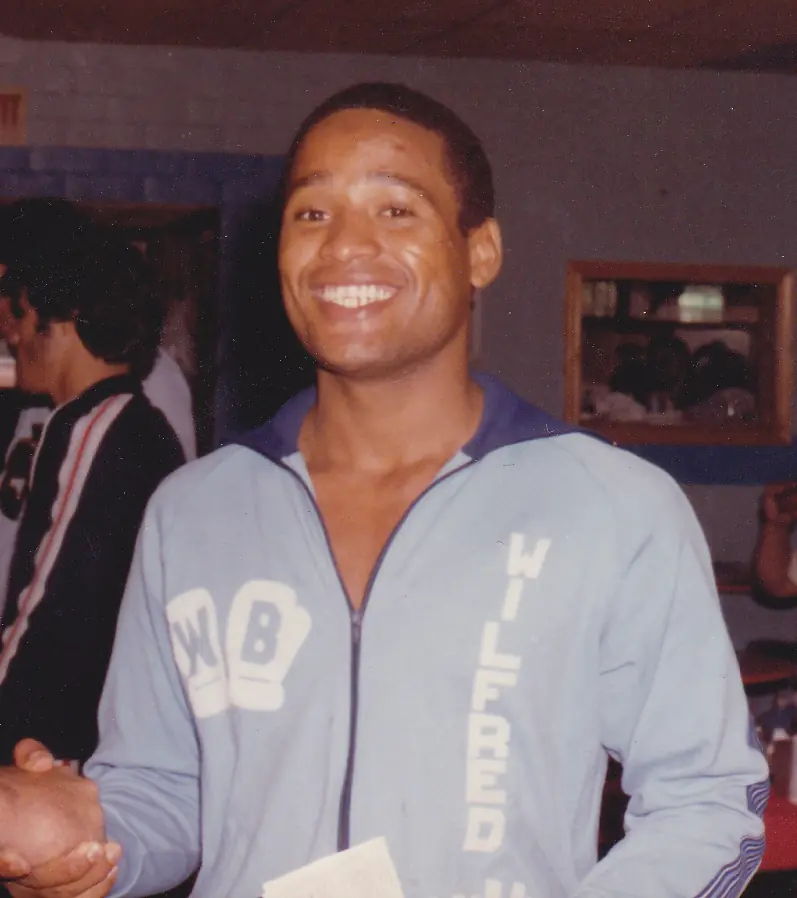
On 6 March 1976 in San Juan, Wilfred Benítez defeats veteran WBA champion Antonio Cervantes by split decision to win the light-welterweight world title. At just 17 years and 176 days old, he becomes the youngest boxing world champion in history — a record that still stands.
On 29 September 1977 at Madison Square Garden, Eva Shain judges the Muhammad Ali–Earnie Shavers world heavyweight title fight, becoming the first woman to serve as a judge in a heavyweight championship bout. The milestone extends women’s place in boxing history beyond competing athletes and into the sport’s official roles.
In 1978 legal and licensing victories in the United States substantially strengthen women’s right to obtain licences and compete in officially sanctioned boxing, reducing institutional barriers that had kept them on the margins. This period is a crucial bridge between individual pioneers of earlier decades and the institutional expansion of women’s boxing in the 1990s.
In the late 1970s professional boxing strengthens boxer protection through a new series of reforms. The WBC introduces the mandatory eight-count and abolishes the saved-by-the-bell rule in 1978, strengthens mandatory medical examinations, and in 1979 implements attached-thumb gloves to reduce eye and hand injuries. These measures form part of boxing’s shift toward a more systematic model of athlete safety. The image shows a pair of modern boxing gloves as a contextual reference to protective equipment.
In 1978 the undefeated Larry Holmes challenged WBC heavyweight champion Ken Norton in Las Vegas. Their contest became an exceptionally close 15-round battle and was decided by a narrow split decision in Holmes's favour. The victory gave Holmes the WBC heavyweight championship and opened one of the major heavyweight title reigns of his era. This milestone complements, rather than replaces, the History's existing later reference to Holmes and the development of the IBF.
In 1978, the World Boxing Council begins a research programme with UCLA in Los Angeles to study the effects of boxing on the brain, funding the work with one million dollars. Alongside the rule reforms of the period, boxer safety increasingly becomes a subject of organised scientific investigation.
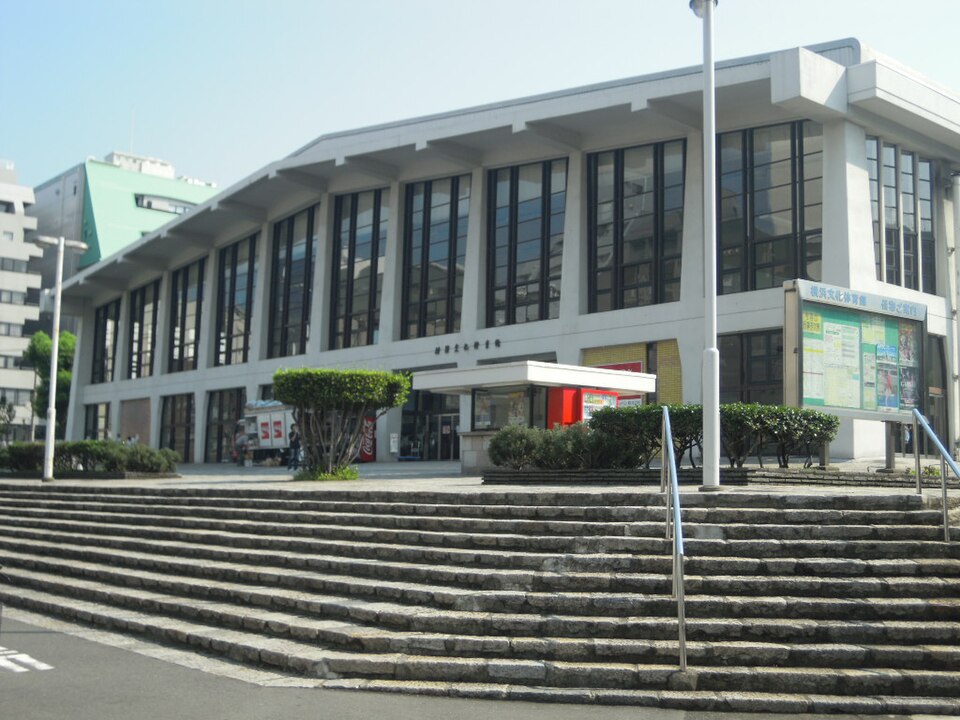
In 1979, Yokohama hosted the first AIBA Junior World Championships, creating a world championship specifically for younger boxers and a formal pathway toward elite competition. The image shows Yokohama Cultural Gymnasium.
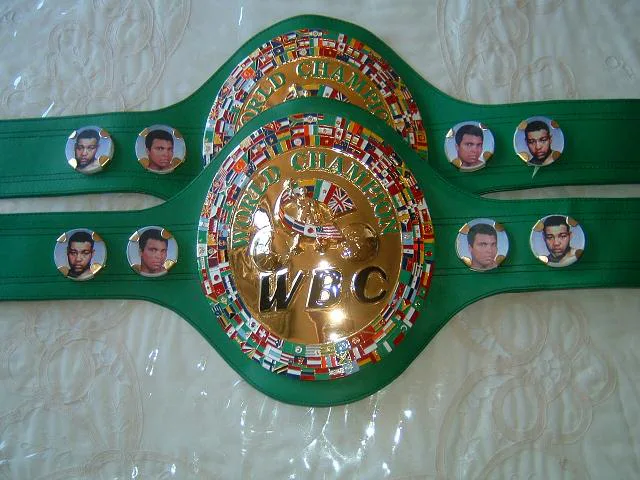
In 1979, the WBC introduced the cruiserweight division at 190 lb, creating a class between light-heavyweight and heavyweight for fighters who had previously fallen between the traditional limits. The image shows a WBC championship belt.
At Moscow 1980, Teófilo Stevenson won a third consecutive Olympic heavyweight gold, matching László Papp’s then-unique achievement of three straight Olympic titles. The image shows Teófilo Stevenson and Sergej Kormilizyn in a 1985 bout.
During the 1980s, Sugar Ray Leonard, Roberto Durán, Thomas Hearns and Marvelous Marvin Hagler — the “Four Kings” — faced one another in nine fights in total. Their contests, across different weight classes and with world titles at stake, defined one of the most celebrated eras of professional boxing. The image shows Hagler in a later 2008 photograph.
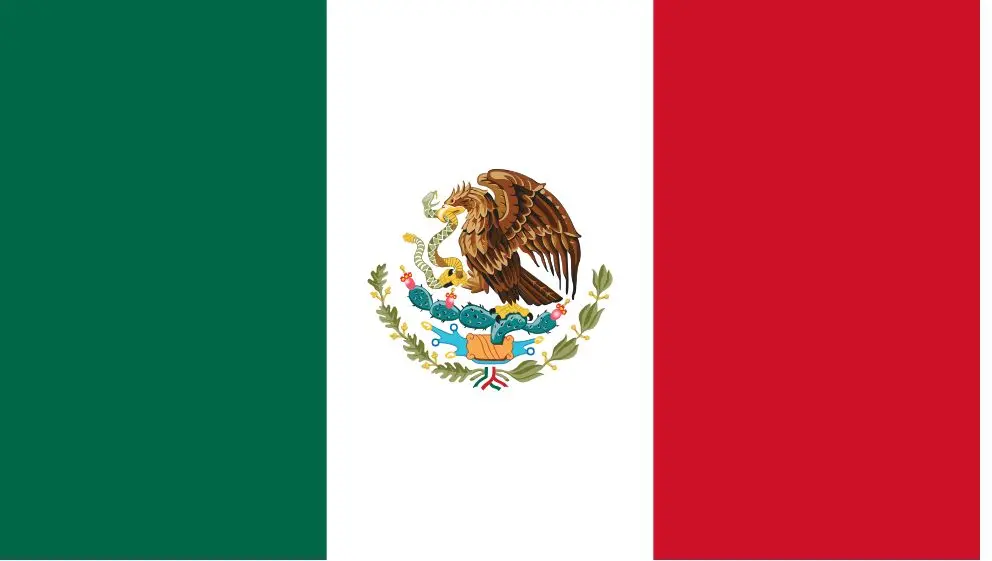
In 1981 WBC featherweight champion Salvador Sánchez faced the unbeaten Wilfredo Gómez, who entered with 33 wins and 32 knockouts after already dominating the junior-featherweight division. Sánchez dropped Gómez in the first round and continued to control the contest until the stoppage in the eighth, a victory that became a central part of his short but extraordinary legacy. The flag of Mexico, Sánchez’s home country, is used as a symbolic contextual visual; it does not depict the fight.
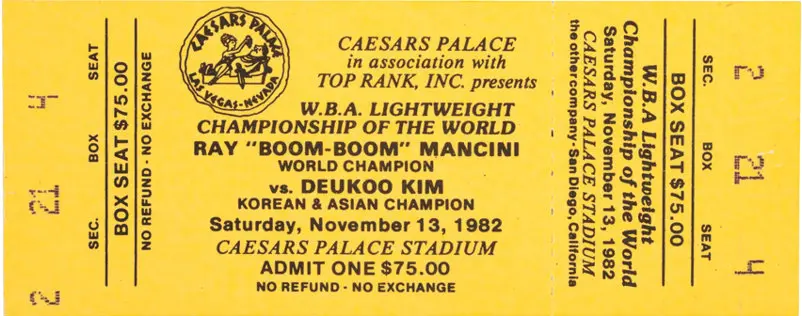
After his 1982 world lightweight title fight with Ray Mancini, Duk-Koo Kim dies from his injuries, intensifying international concern over boxer health and championship-fight duration. In 1983, the WBC reduces its world-title contests from 15 rounds to 12, with other major organisations following over time, establishing the modern standard without the tragedy being the sole cause of every later reform.
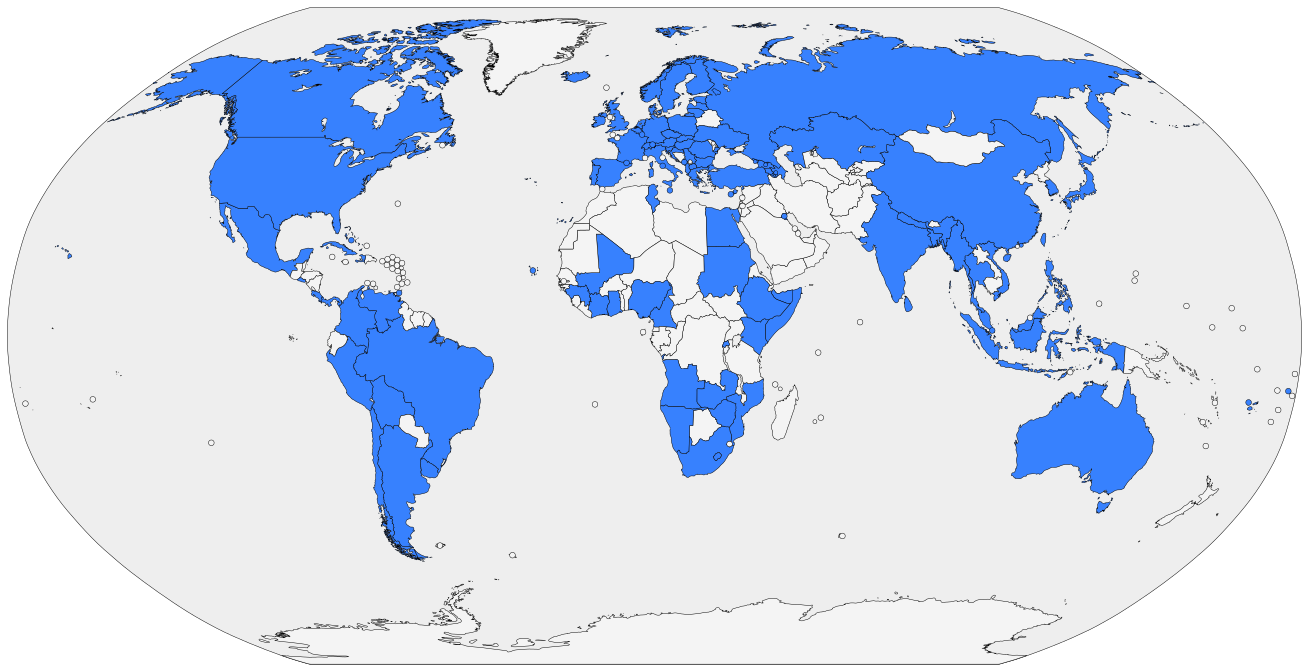
In 1983, the World Medical Association adopted its first formal Statement on Boxing, moving concerns about brain injury, medical ethics and safety from the sports-medicine community onto an international institutional level. The image shows a world map of World Medical Association members.
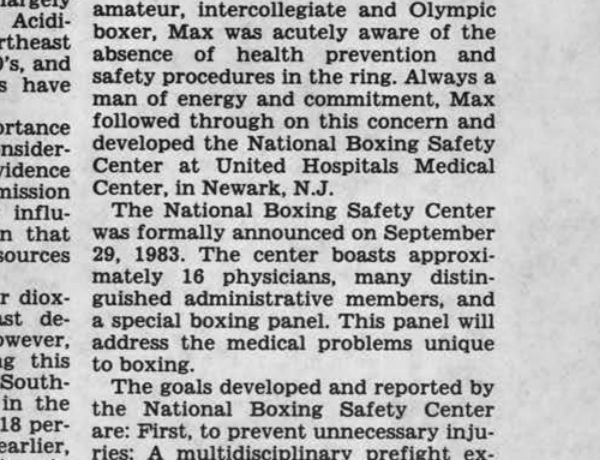
On 29 September 1983, the National Boxing Safety Center is formally announced in Newark, New Jersey, developed by orthopaedic surgeon and ringside physician Dr Max Novich. Its mission is to reduce serious injuries and deaths through multidisciplinary pre-fight examinations, ringside education, post-bout follow-up and research into boxing injuries.
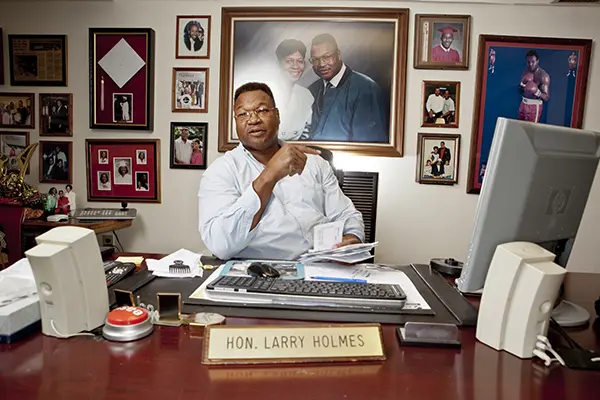
In 1984 USBA-International develops into the International Boxing Federation — IBF — adding another major world-title organisation to professional boxing. Recognising Larry Holmes as heavyweight champion gives the new body immediate international credibility, and Holmes becomes the first IBF heavyweight world champion. The image shows Larry Holmes in a 2011 photograph.
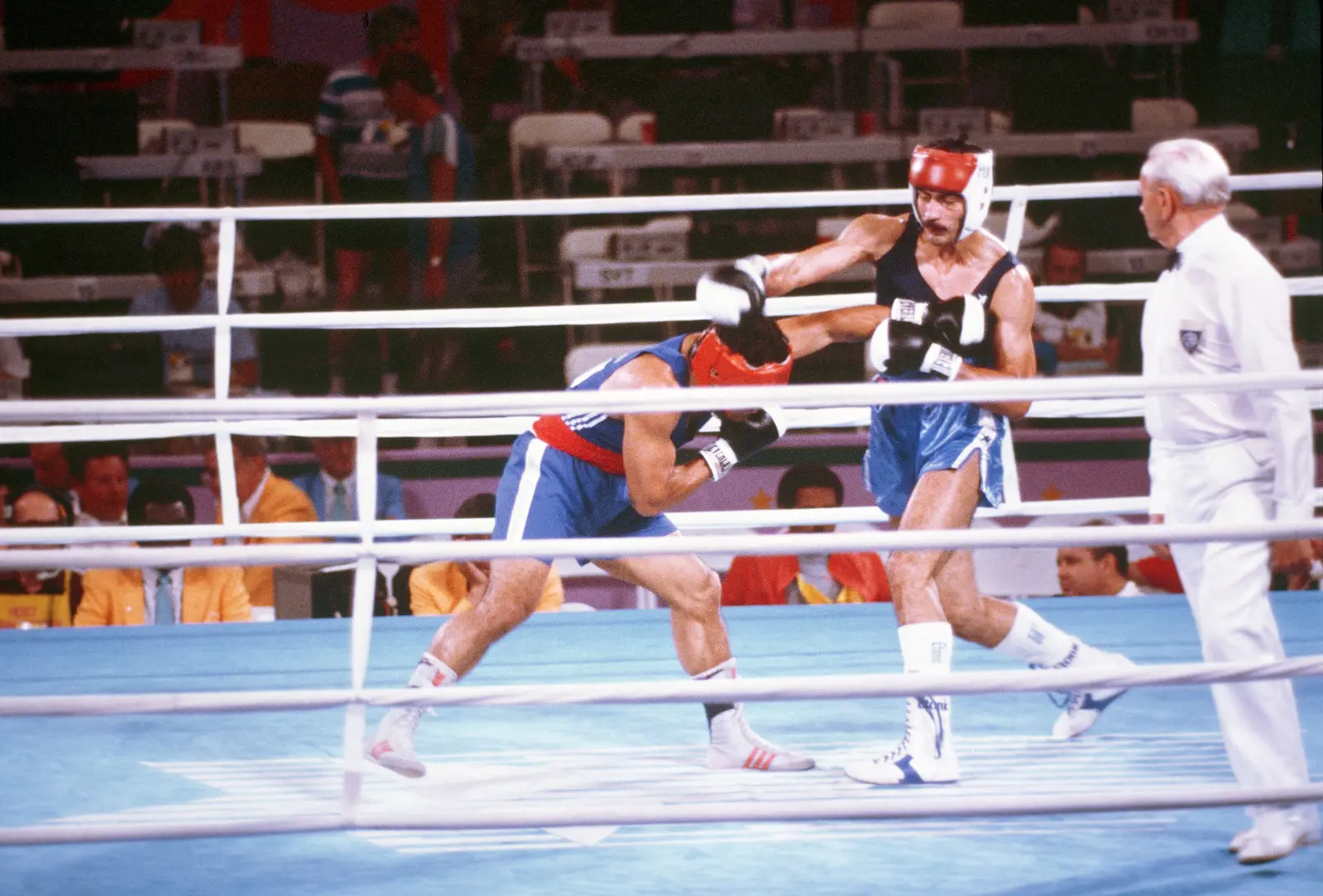
At the Los Angeles 1984 Olympic Games, protective headguards became standard in men’s Olympic boxing, changing the sport’s appearance and equipment for almost three decades. The image shows a boxing match at the 1984 Olympic Games.
At the Los Angeles 1984 Olympic Games, Giorgos Stefanopoulos reached the heavyweight quarter-finals and finished fifth, one of Greece’s strongest post-war Olympic boxing performances. The image shows boxing competition at the same Los Angeles 1984 Olympic Games. He later added a European Championship silver medal in 1991 and bronze in 1993.
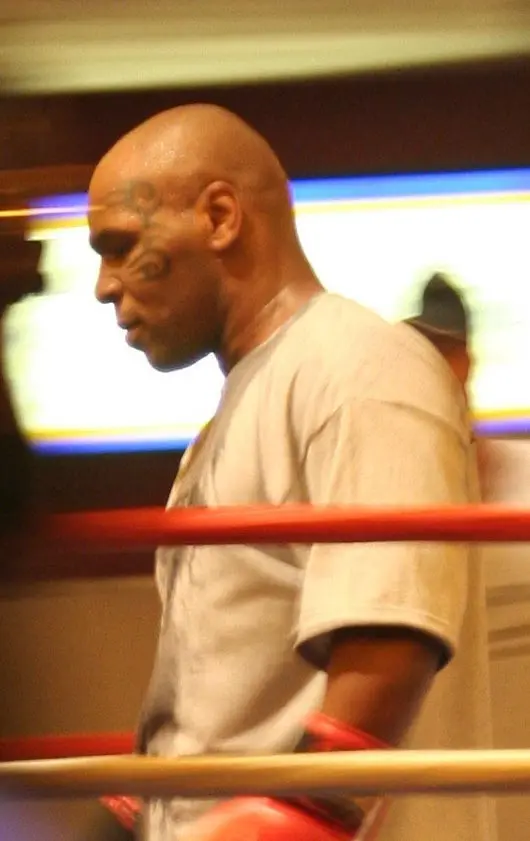
On 22 November 1986, 20-year-old Mike Tyson stops Trevor Berbick in the second round in Las Vegas to win the WBC heavyweight championship. At 20 years and 145 days, he becomes the youngest heavyweight world champion in boxing history, beginning the period of dominance that would make him one of the most recognisable figures in modern boxing. The image shows Tyson in the ring in Las Vegas in 2006.
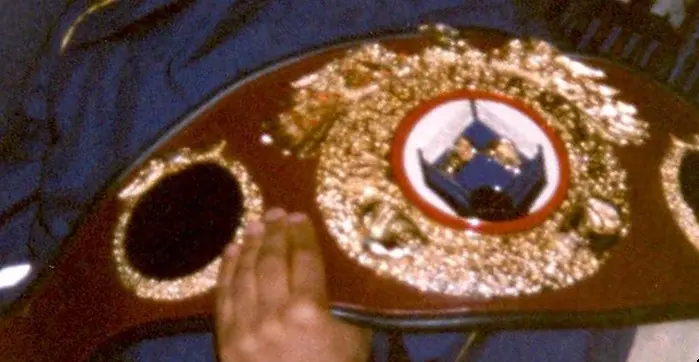
In 1988, the World Boxing Organization—WBO—was founded in Puerto Rico and gradually developed into one of the four major bodies recognising professional world titles. The image shows a WBO championship belt.
At the 39th CISM World Boxing Championships in Cairo, held from 20 to 30 October 1988, Stamatios “Makis” Kolethras wins the military world title at 71 kg. The achievement adds a significant world-level distinction to Greek boxing in the 1980s, four years after Kolethras had represented Greece at the Los Angeles Olympic Games.
At the 1989 European Championships in Athens, Giorgos Tsachakis wins the +91 kg silver medal. The result is recorded as Greek boxing's first European Championship medal and stands as a foundational milestone in the country's international presence.
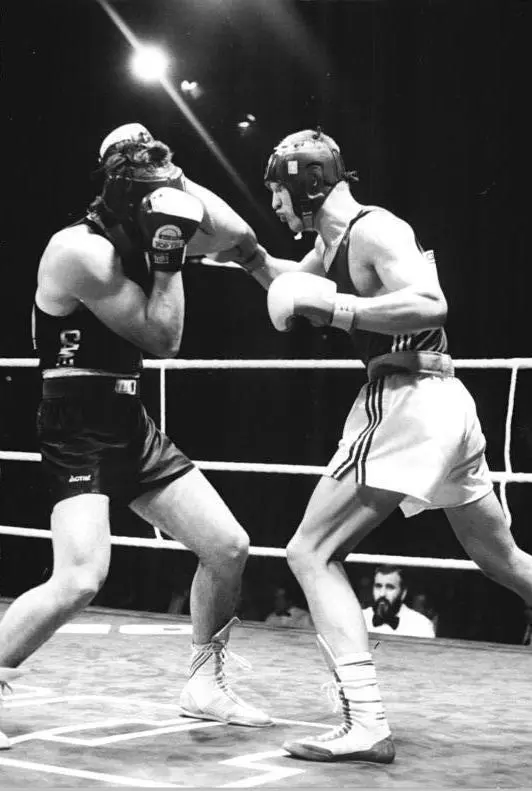
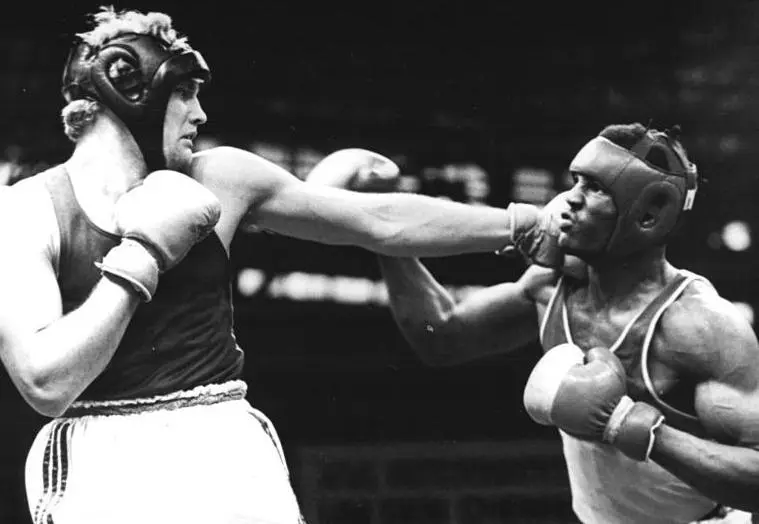
In 1989 electronic scoring is used for the first time at an AIBA World Championships in Moscow, marking amateur boxing’s move toward more mechanised and standardised recording of judges’ scores. The change forms part of the sport’s long effort to make scoring more controlled and comparable internationally. The image shows Axel Schulz and Igor Schischkin boxing in Berlin in 1989; the archival caption records the use of “Computerwertung”, or computer scoring. One year earlier, the Seoul 1988 light-middleweight final had become an enduring symbol of the crisis of confidence in Olympic judging: Roy Jones Jr. lost a 3–2 decision to Park Si-hun in one of the most controversial judging outcomes in Olympic history, even though Jones received the Val Barker Trophy as the Games’ outstanding boxer.
On 10 June 1989, the International Boxing Hall of Fame opens to the public in Canastota, New York. The project grew from the community’s desire to honour hometown champions Carmen Basilio and Billy Backus; the organisation had incorporated in 1984, and five years later boxing gained a permanent public institution dedicated to preserving and presenting its global history. The first induction class followed in 1990.
In 1990 at the Tokyo Dome, James “Buster” Douglas — a 42–1 underdog — stopped the unbeaten Mike Tyson in the 10th round to become heavyweight champion. The result remains widely regarded as the biggest upset in boxing history and shattered Tyson’s aura of invincibility. The image shows Douglas in a later 2020 photograph.
On August 11, 1990, Pernell Whitaker stopped Juan Nazario in the first round and became the first undisputed lightweight champion since Roberto Durán’s reign in the 1970s. His rise to the top was built on exceptional defense, footwork, distance control and accuracy, qualities that established him as one of modern boxing’s defining defensive technicians. A boxing ring is used as a neutral contextual visual.
Ricardo “Finito” López won the WBC strawweight title in 1990 and followed it with 21 consecutive successful title defenses. In 1999 he became a world champion in a second division at light flyweight and completed his fighting career unbeaten at 50–0–1 with 37 knockouts. His extraordinary consistency and technical precision placed him among the most important champions of boxing’s lighter divisions. A boxing-ring icon is used as a symbolic contextual visual.
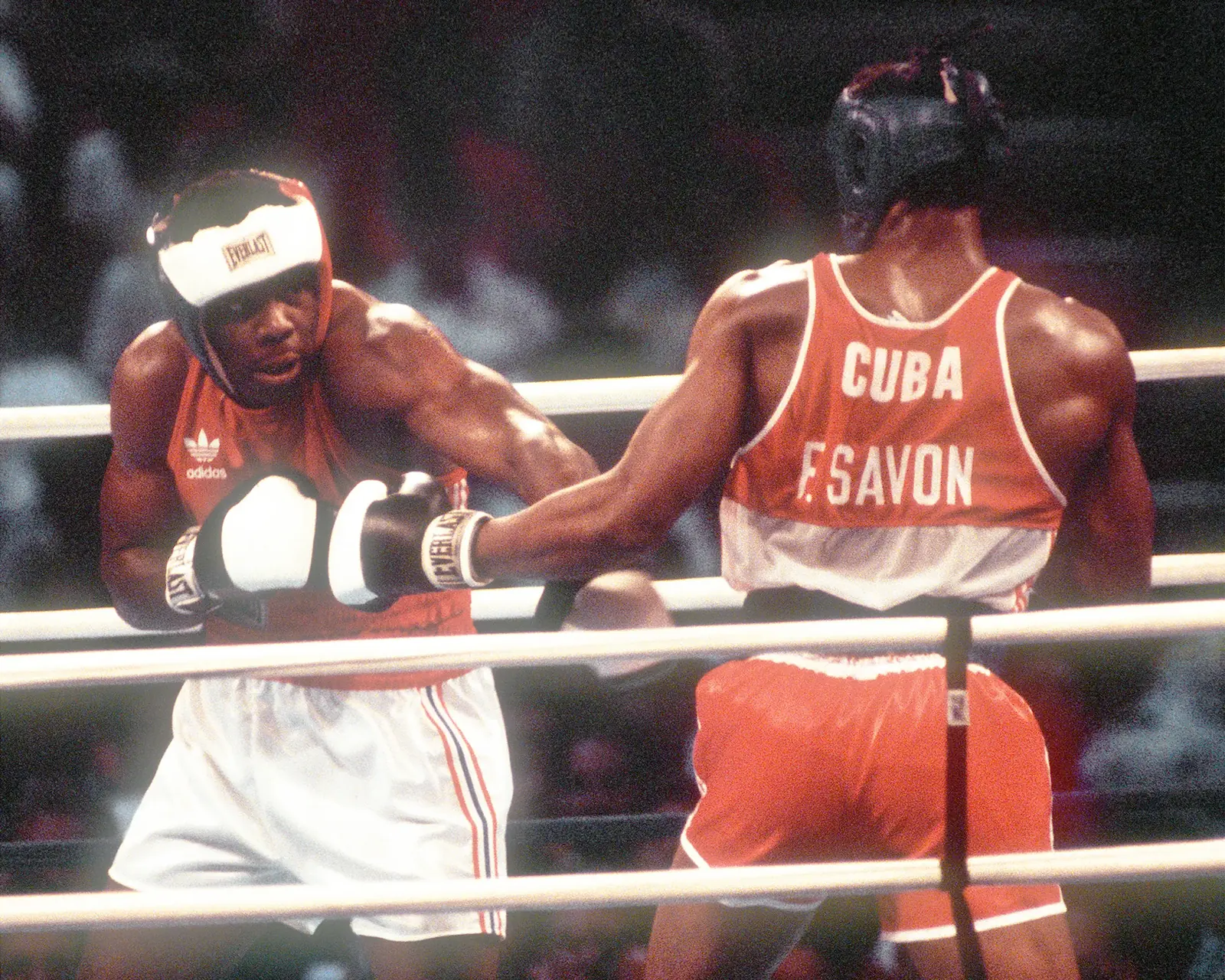
At Barcelona 1992, Cuba’s Félix Savón won the first of three consecutive Olympic heavyweight gold medals, beginning another three-title Olympic dynasty after Papp and Stevenson. The image shows Félix Savón boxing at the Chemiepokal in 1986.
In 1992 two undefeated heavyweight stars, world champion Evander Holyfield and Riddick Bowe, met in Las Vegas. Over a demanding 12-round fight, Bowe increasingly imposed his size and pressure, dropped Holyfield in the 11th round and ultimately won by unanimous decision. The victory gave him the major heavyweight world titles and opened one of the defining heavyweight trilogies of the 1990s.
In 1992, the World Boxing Council abolishes the use of six-ounce gloves under its rules and moves to gloves with greater padding. The decision is a direct equipment-safety reform intended to increase boxer protection and reduce injury risk.
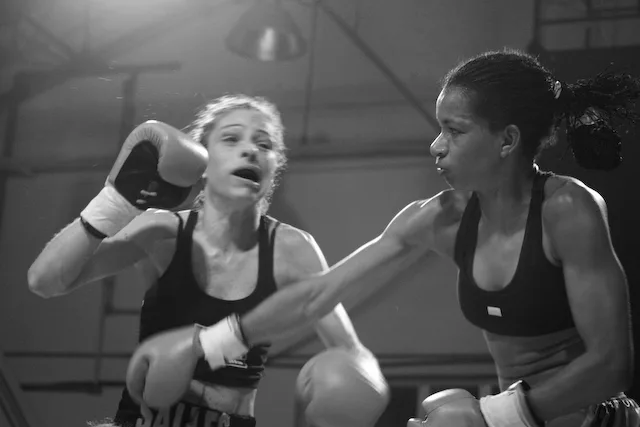
In 1993, Barbara Buttrick helped found the Women’s International Boxing Federation—WIBF—giving women’s professional boxing a specialised international title organisation during a period of rapid institutional growth. The image shows a women’s boxing match.
In 1993 USA Boxing formally sanctions women’s amateur boxing, opening an institutional path to national championships, international teams and a new generation of American athletes. The decision is a major step in the progression that takes women’s amateur boxing from national recognition to the world stage and ultimately the Olympics.
At the 1993 European Junior Championships in Thessaloniki, Charalampos Belagief reaches the +91 kg final and wins the silver medal. Achieved in front of a home crowd, the result is one of Greek boxing’s notable international youth-level successes of the 1990s.
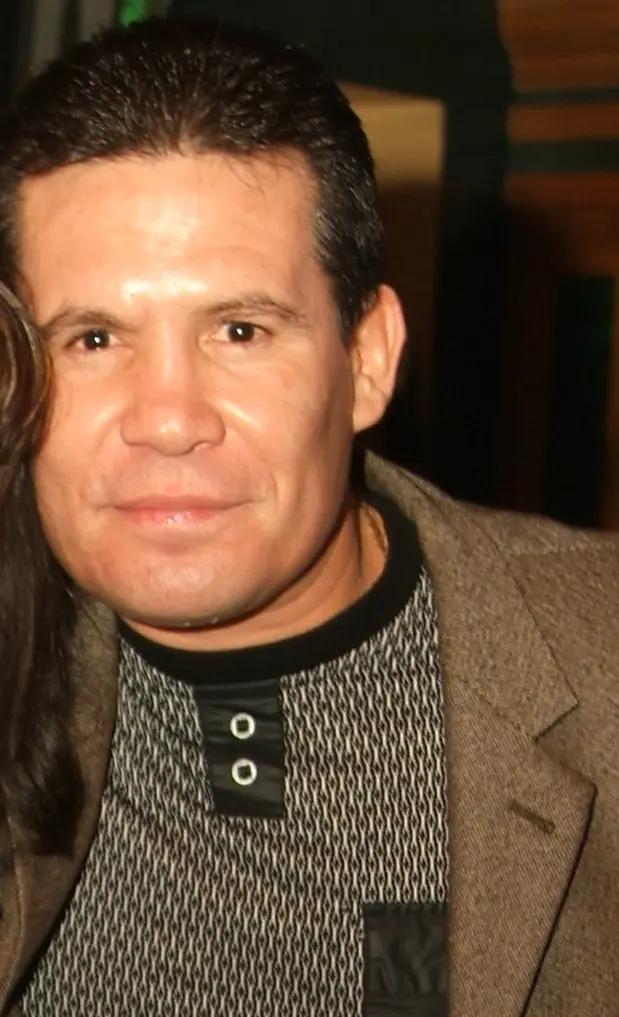
Julio César Chávez faces Greg Haugen at Mexico City’s Estadio Azteca before 132,274 paid spectators, a historic boxing attendance record. Chávez wins by fifth-round TKO, but the wider significance of the night lies in the extraordinary mass appeal of Mexican boxing. The image shows Julio César Chávez in a later portrait from 2006.
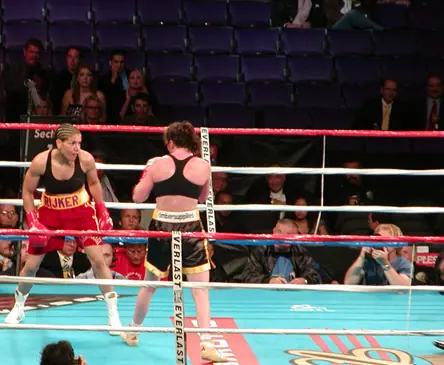
In 1994, AIBA formally recognised women’s boxing as a competitive discipline, a crucial institutional step toward international championships and, eventually, Olympic inclusion. The image shows Lucia Rijker in a women’s boxing match.
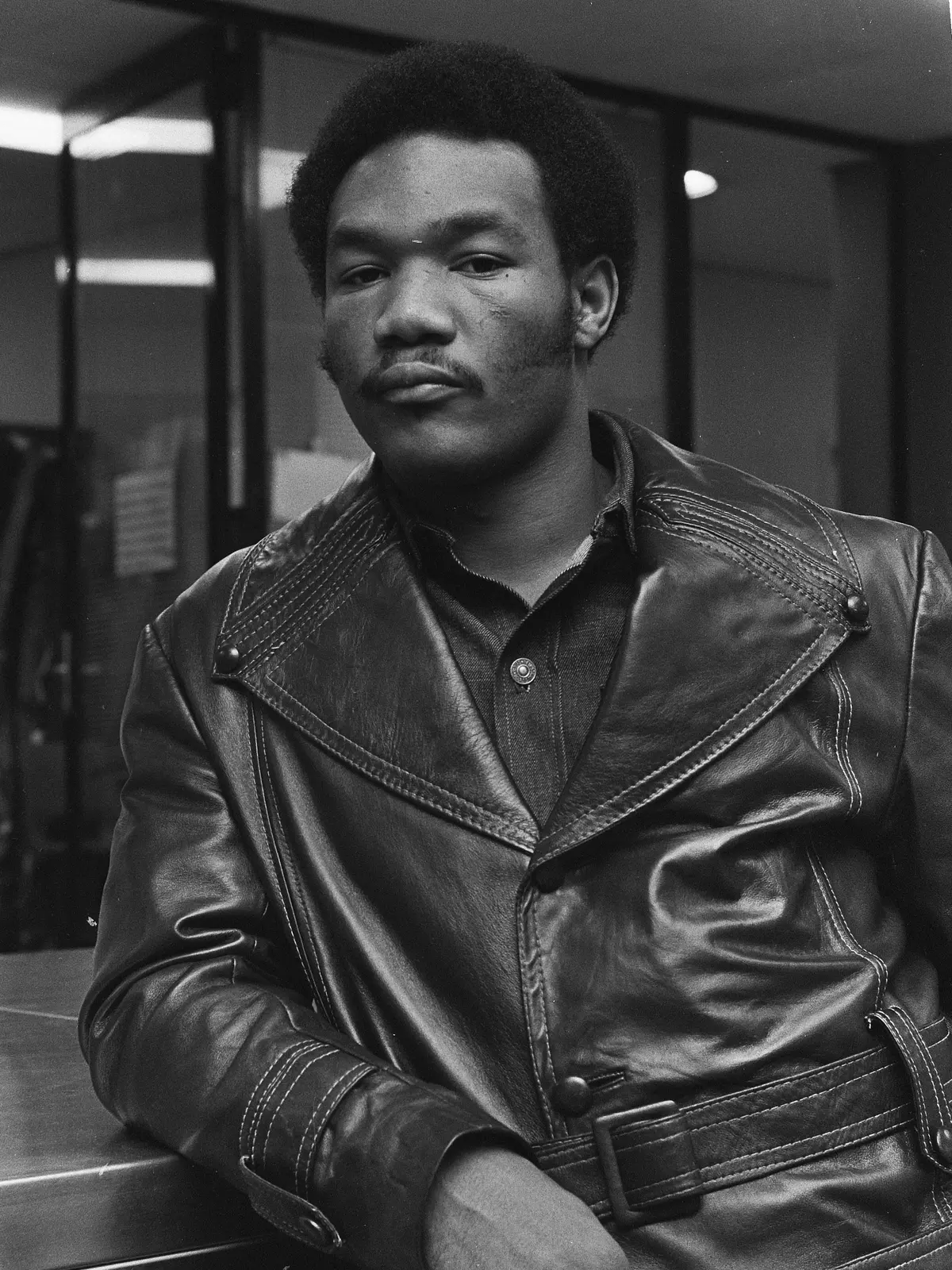
On 5 November 1994, George Foreman, aged 45 years and 299 days, knocks out Michael Moorer in the tenth round in Las Vegas to regain a heavyweight world championship. Twenty years after losing the title to Muhammad Ali, he becomes the oldest heavyweight world champion, completing one of the most remarkable comebacks in boxing history. The image shows Foreman at Amsterdam Airport Schiphol in 1973.
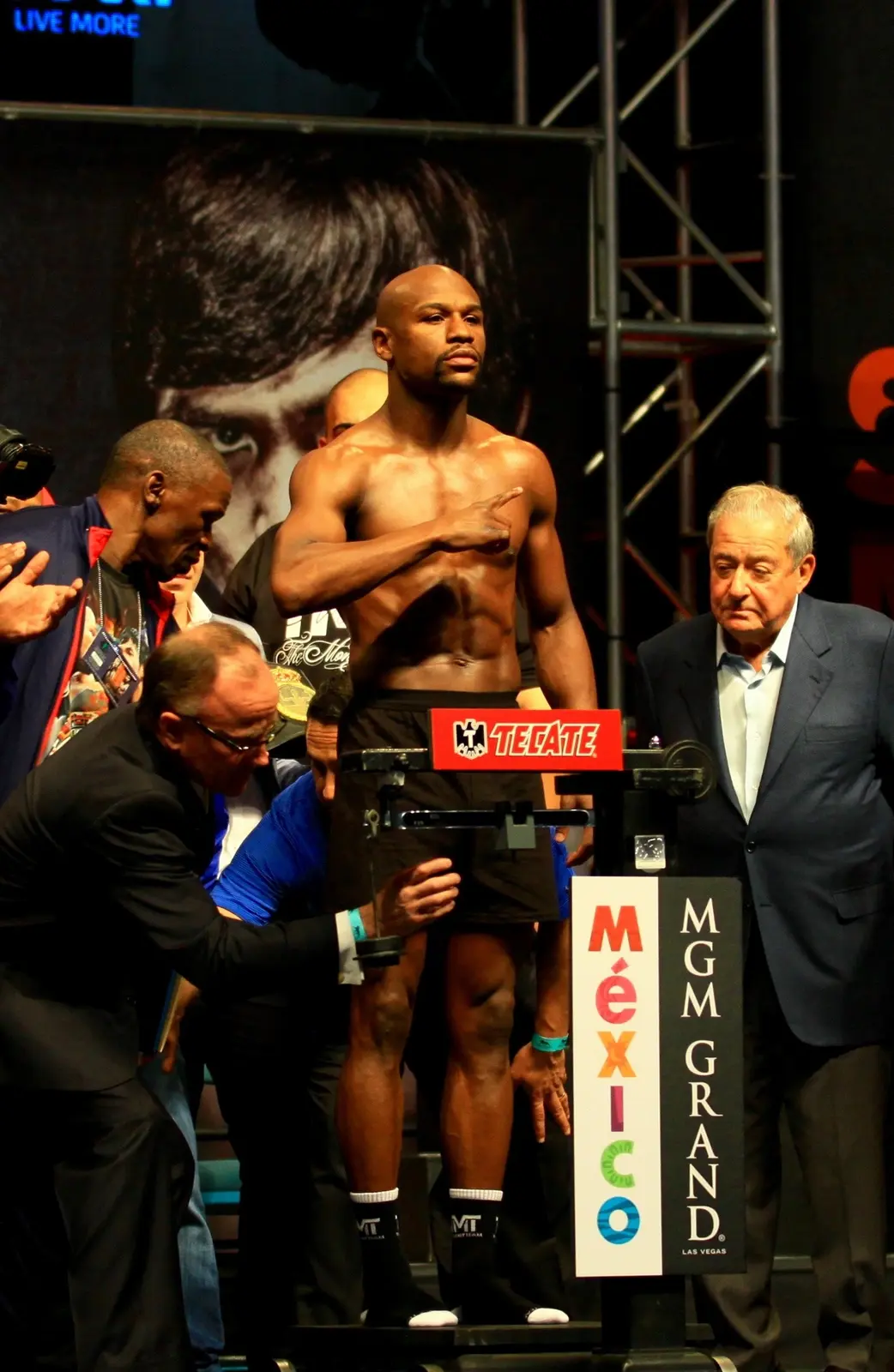
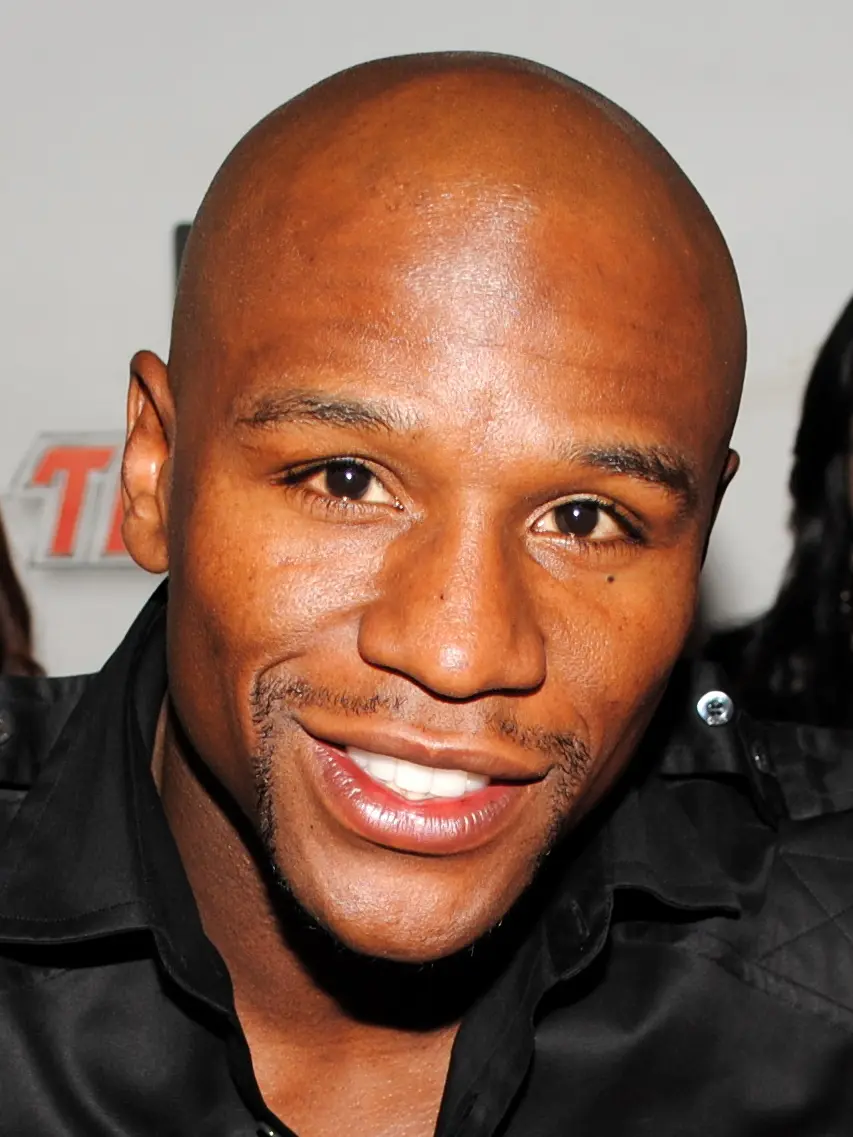
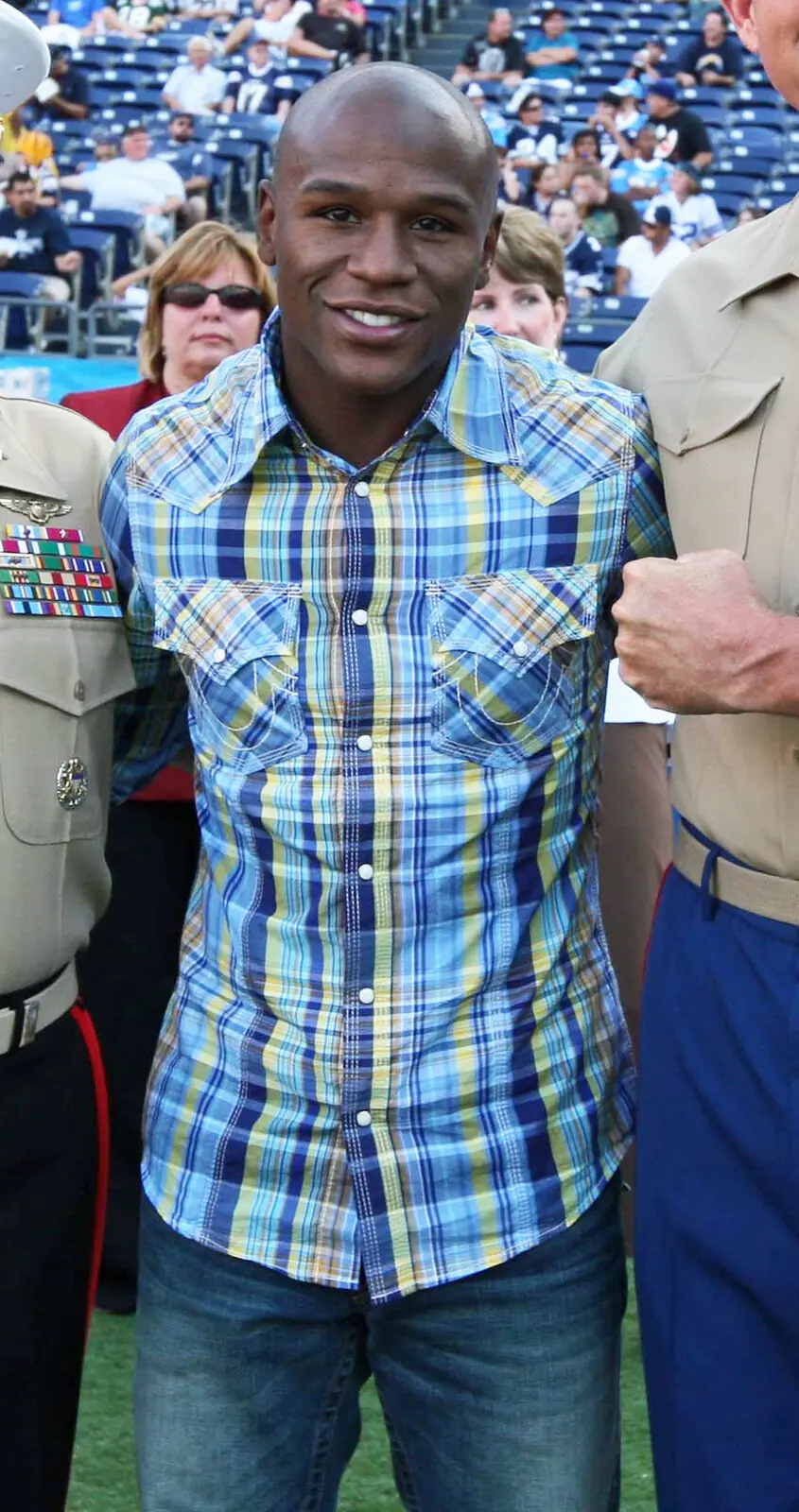
The WBC establishes the official weigh-in 24 hours before the fight as a safety measure against the severe dehydration caused by rapid weight cutting. The additional recovery window allows boxers to rehydrate and restore part of their normal physiological function before entering the ring. The image shows Floyd Mayweather Jr. at an official weigh-in in 2015 as a modern example of the process.
At Atlanta 1996, Félix Savón won a second consecutive Olympic heavyweight gold, confirming his dominance of amateur boxing in the 1990s. The image shows Maik Heydeck and Félix Savón in a 1987 bout.
In 1996, the Christy Martin–Deirdre Gogarty fight received unprecedented television exposure for women’s professional boxing and helped bring the sport to a much broader mainstream audience. The image shows a women’s boxing match.
On 9 October 1996, the United States enacts the Professional Boxing Safety Act, establishing a federal minimum safety framework for professional boxing. The Act requires medical fitness examinations, a ringside physician, an ambulance or appropriate resuscitation support, and health insurance for fight injuries, while also creating cross-state recognition of key boxing suspensions. Its principal provisions take effect on 1 July 1997.
In 1997, Dr Michael Schwartz and other physicians establish the American Association of Professional Ringside Physicians — AAPRP — to promote collaboration and continuing education among ringside doctors and more effectively protect the health, safety and welfare of professional boxers. The organisation marks the institutionalisation of ringside medicine as a specialised field; in 2014 its mission is continued and expanded by the Association of Ringside Physicians.
In 1997, Greek women boxers make the first documented international appearance of Greek women’s boxing at the Acropolis Cup. One year later, in 1998, Greece stages its first Panhellenic Women’s Boxing Championship. The 1997–98 period marks the transition from early individual participation to an organised national competitive structure.
Jane Couch wins her 1998 industrial-tribunal case against the British Boxing Board of Control, overturning the refusal to grant her a professional licence because she was a woman. She becomes Britain’s first licensed female professional boxer and opens the institutional path for sanctioned women’s professional boxing in the country. The image shows Jane Couch in January 1998.
In September 1998, the international Acropolis Cup in Athens is staged as a European Cup. Greece features prominently in the finals, with Artur Mikaelian winning the 54 kg division and Stavros Kofinis taking gold at +91 kg. The tournament marks an important chapter in Greece’s international boxing presence at the end of the 1990s.
On 17 September 1998, an all-women professional boxing card from Biloxi, Mississippi makes digital-sports history. Distributed through CBS SportsLine, it becomes the first pay-per-view sporting event offered on the Internet, headlined by Joline Blackshear defending the IFBA flyweight title against Delia Gonzalez. Boxing thus becomes an early bridge between the cable/satellite PPV era and paid online sports distribution.
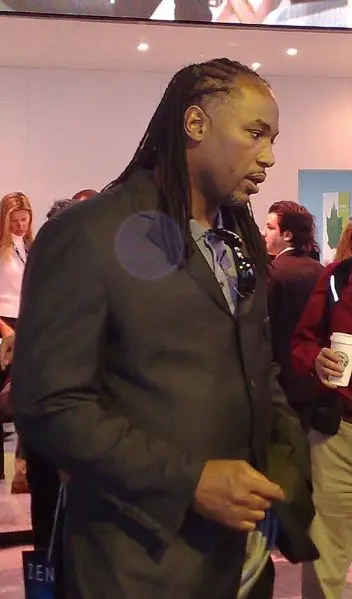
In 1999 Lennox Lewis unanimously defeated Evander Holyfield in their Las Vegas rematch, unifying the WBC, WBA and IBF titles and becoming undisputed heavyweight champion. He remained the last undisputed heavyweight champion until Oleksandr Usyk unified the division in 2024. The image shows Lewis in a later 2008 photograph.
At the Sydney 2000 Olympic Games, Félix Savón wins a third consecutive heavyweight gold and becomes only the third boxer to achieve three straight Olympic titles, after László Papp and Teófilo Stevenson. At the same Games, Tigran Ouzlian reaches fifth place at lightweight for Greece, adding one of the country’s best Olympic boxing finishes. Ouzlian had already won bronze at 60 kg at the 1998 European Championships, two years before his fifth-place finish at the Sydney Olympics.
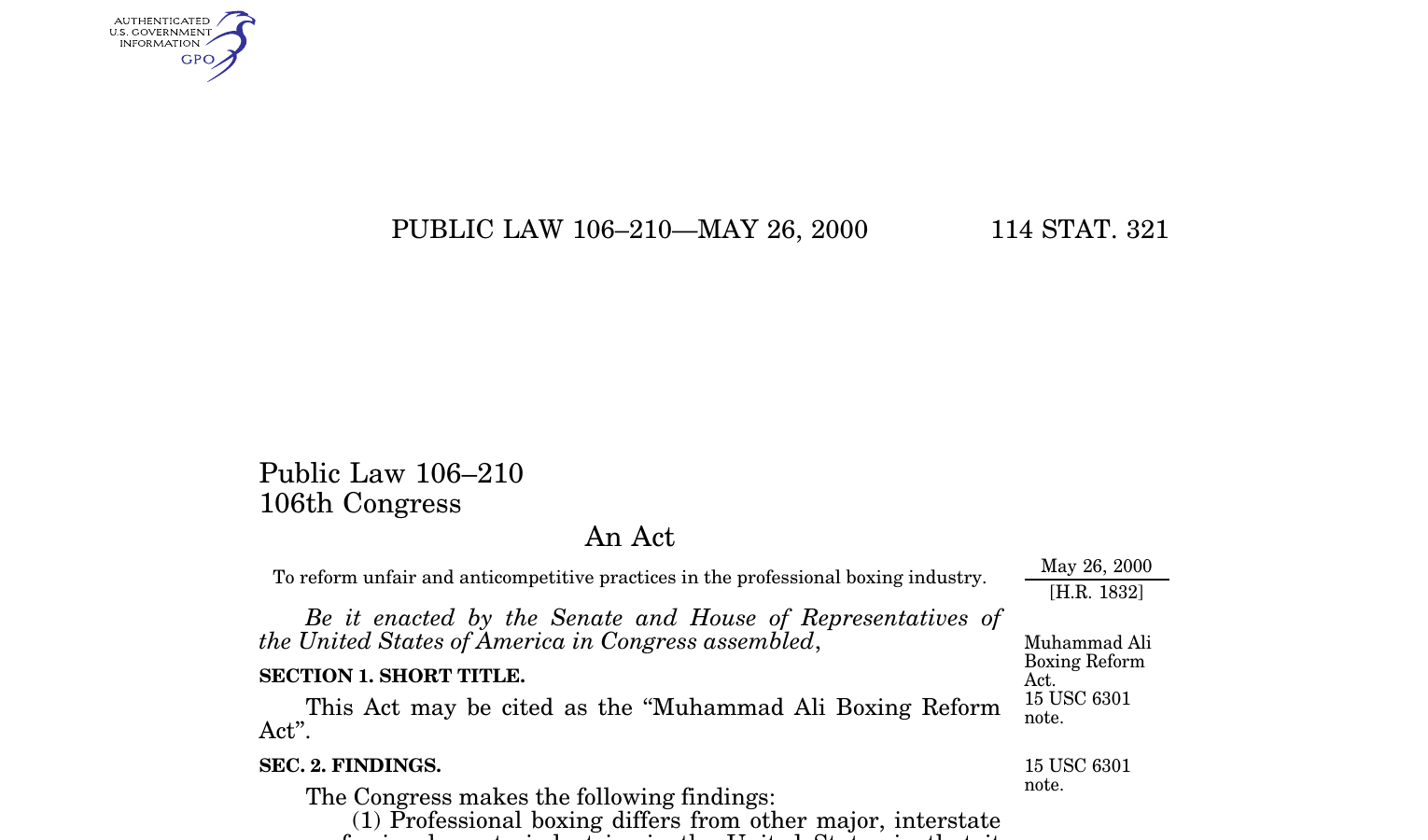
On 26 May 2000, the Muhammad Ali Boxing Reform Act becomes federal law in the United States. Where the 1996 Professional Boxing Safety Act focused primarily on physical protection, the Ali Act targets unfair and anticompetitive practices in professional boxing, increasing transparency around promoters, sanctioning organisations and fighter contracts while strengthening boxers’ economic protections.
In 2001 the first AIBA Women’s World Boxing Championships are held in Scranton, United States, giving leading female boxers an official world championship. The event creates a top-level international title for women’s amateur boxing more than a decade before the full Olympic debut at London 2012.
In 2001, Saint-Amand-les-Eaux in France hosts the first official European Women’s Boxing Championship, with 78 athletes competing. The event establishes a formal continental championship structure for women’s boxing and becomes an important institutional step on the road towards later Olympic inclusion.
On 25 August 2001, the Association of Boxing Commissions approves the Unified Rules of Boxing, bringing core professional-boxing rules into a common regulatory framework. The standard includes the 10-Point Must system, mandatory eight counts, three judges, compulsory mouthpieces and clear referee authority to stop a bout, improving consistency across commissions and their protective procedures.
In 2002 reigning heavyweight champion Lennox Lewis and former undisputed champion Mike Tyson finally met in Memphis after years of anticipation. Lewis used his jab, superior reach and control of distance to contain Tyson before ending the fight by knockout in the eighth round. More than a routine title defence, the event became the long-awaited meeting of two of the most recognisable heavyweight figures of the preceding era.
At the 2nd AIBA Women’s World Boxing Championships in Antalya, held on 21–27 October 2002, Greek women’s boxing wins three world medals. Areti Mastrodouka takes silver at 60 kg, while Eleftheria Paleologou at 51 kg and Maria Semertzoglu at 57 kg claim bronze. The one-silver, two-bronze haul becomes one of the major early international achievements of Greek women’s boxing.
In 2004 the WBC, WBA and IBF raise the professional cruiserweight ceiling to 200 lb, stabilising the division’s modern position between light-heavyweight and heavyweight. The change reflects the evolution of a weight class originally created at a lower limit to bridge the growing gap between the two divisions. The image shows world cruiserweight champion Jean-Marc Mormeck in 2005, as a period reference for the modern division.
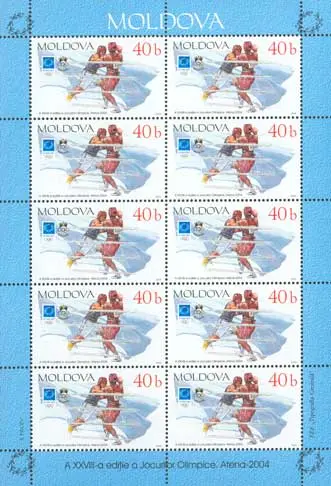
At the Athens 2004 Olympic Games, Olympic boxing returns to Greece, with six Greek boxers in the national delegation and Ilias Pavlidis reaching fifth place at light-heavyweight. Pavlidis records Greece's best boxing result of those Games and continues the country's line of Olympic quarter-final appearances. The image shows a Moldovan stamp from 2004 dedicated to Olympic boxing.
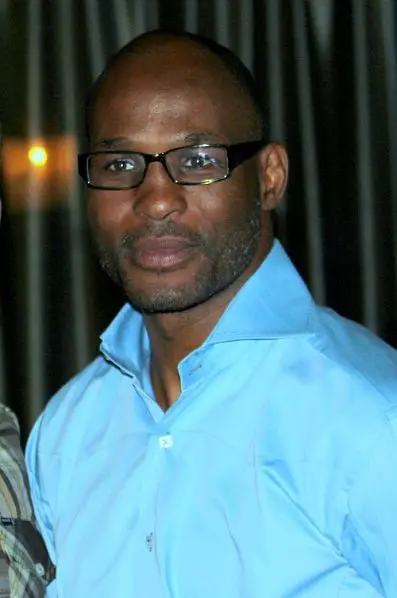
In 2004 Bernard Hopkins stopped Oscar De La Hoya in the ninth round of their middleweight unification fight, adding the WBO title to the WBA, WBC and IBF belts he already held. He became the first fighter in any division in the four-belt era to hold all four major titles at the same time. The image shows Hopkins in a later 2010 photograph.
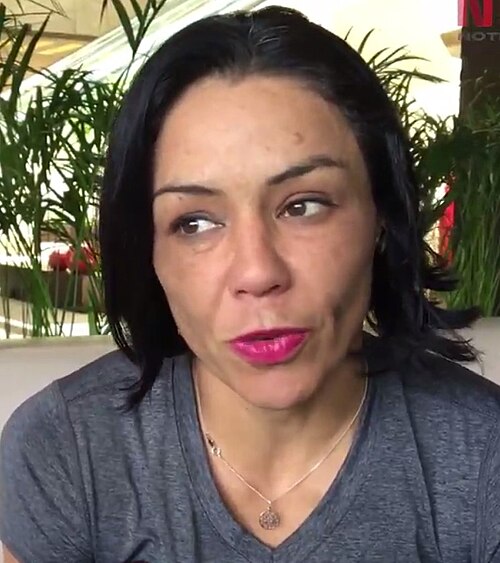
On 30 May 2005 in Tijuana, Jackie Nava defeats Leona Brown by unanimous decision to win the first women’s world championship ever awarded by the World Boxing Council. As the first WBC women’s world champion, Nava marks a major institutional step in bringing women’s professional boxing into the sport’s leading sanctioning bodies.
Ilias Pavlidis wins back-to-back gold medals at the European Union Boxing Championships in the 91 kg division. In Dublin in 2007 he defeats Italy’s Clemente Russo 13–8 in the final, and in Poland in 2008 he retains the title by defeating Con Sheehan 14–9. The two victories stand among the notable senior international achievements of modern Greek amateur boxing.
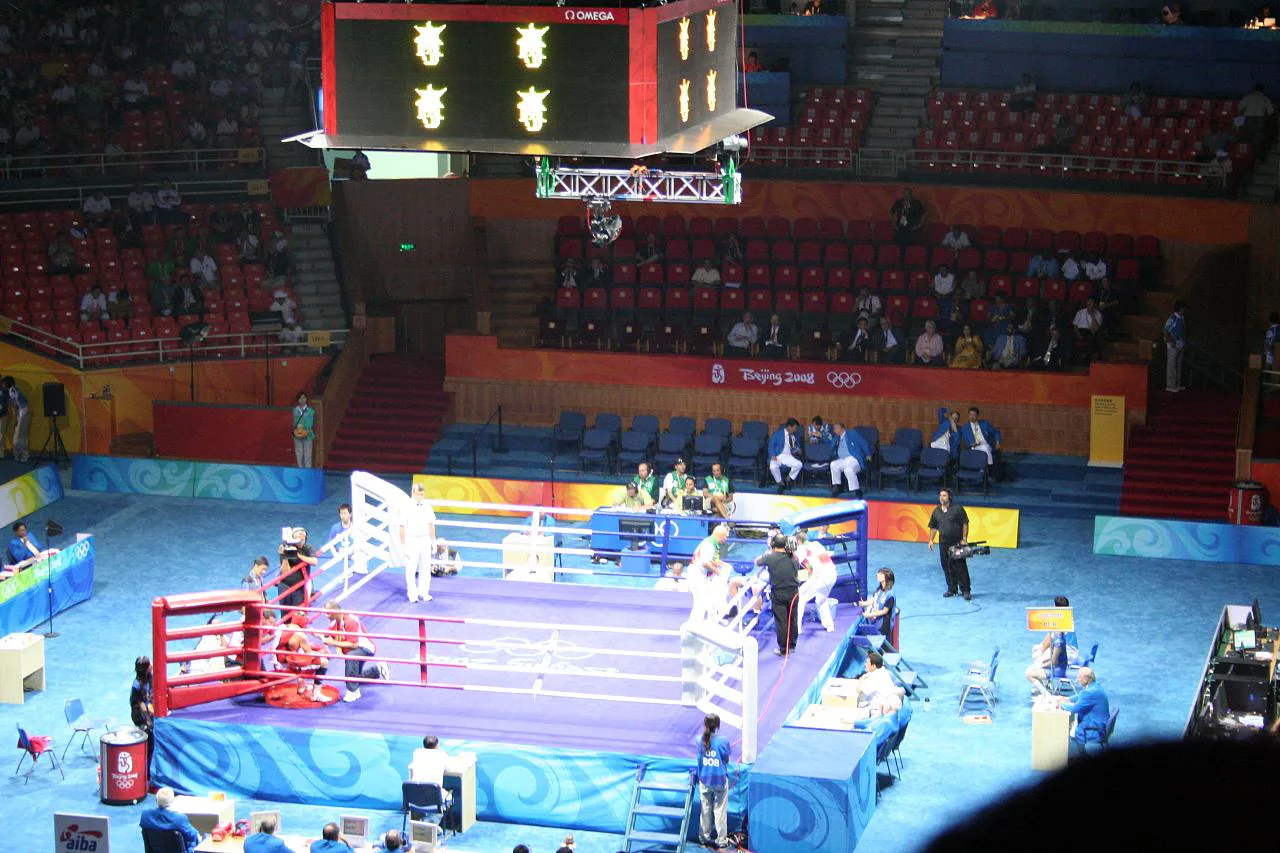
At Beijing 2008, Ilias Pavlidis again finished fifth at the Olympics, this time at heavyweight, reaching an Olympic quarter-final for the second consecutive Games. The image shows an Olympic boxing match with headguards in Beijing in 2008.
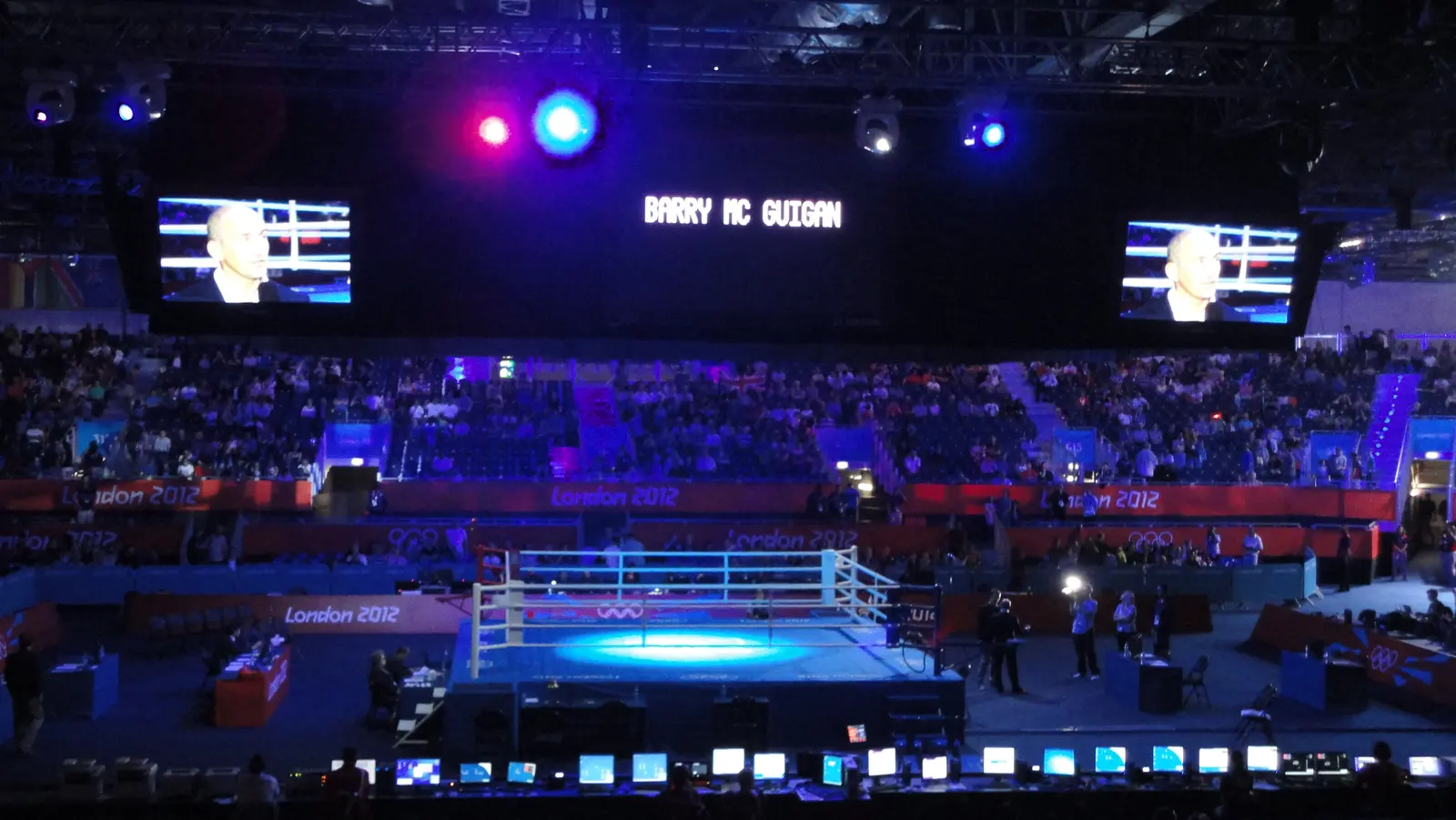
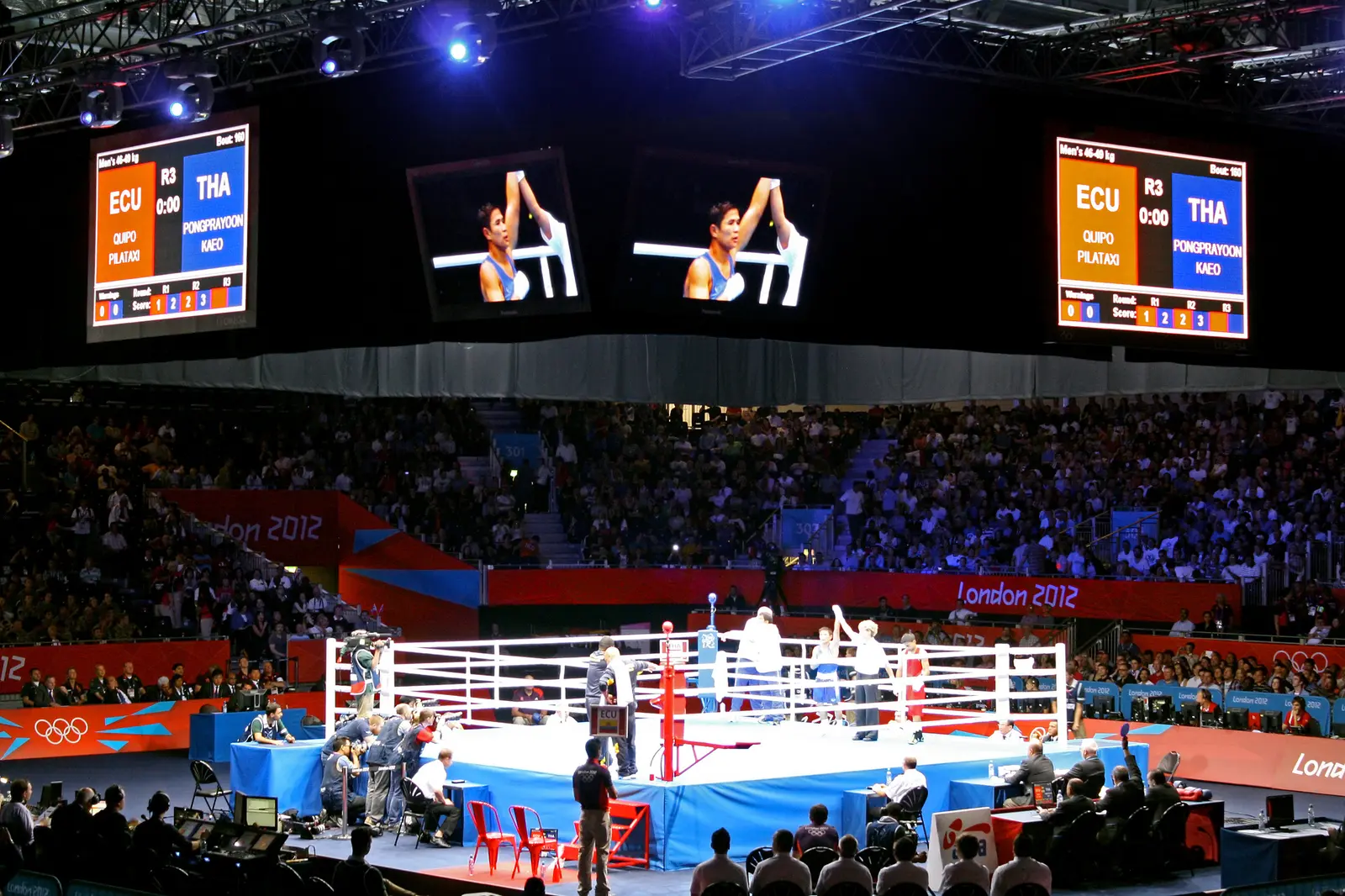
In 2009, the IOC approves the inclusion of women's boxing in the programme of the London 2012 Olympic Games, ending a long period of exclusion from the world's leading multi-sport event. The decision introduces three women's weight categories and makes London 2012 the first Olympic Games to award official women's boxing medals. The image shows the Olympic boxing ring at ExCeL London during the 2012 Games.
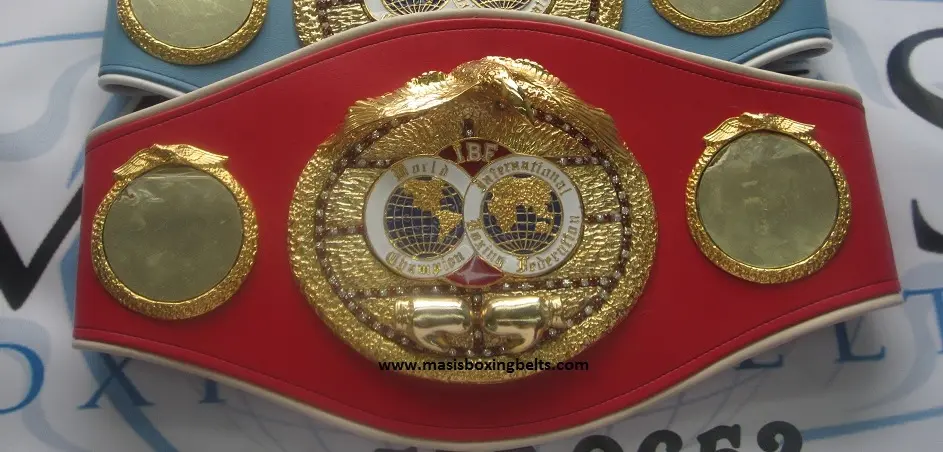
In 2010, the IBF introduced official women’s rankings and recognised Daniella Smith as its first female world champion, formally bringing women’s titles into the system of a major sanctioning body. The image shows an IBF world championship belt.
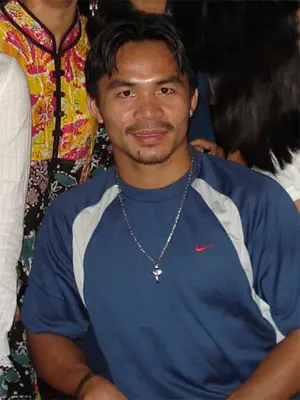
On 13 November 2010, Manny Pacquiao defeats Antonio Margarito by unanimous decision in Arlington, Texas, to win the vacant WBC super-welterweight title. With the victory, Pacquiao becomes the first boxer in history to win world championships across eight different weight divisions, one of professional boxing's most distinctive achievements. The image shows Pacquiao in Cebu City in 2007.
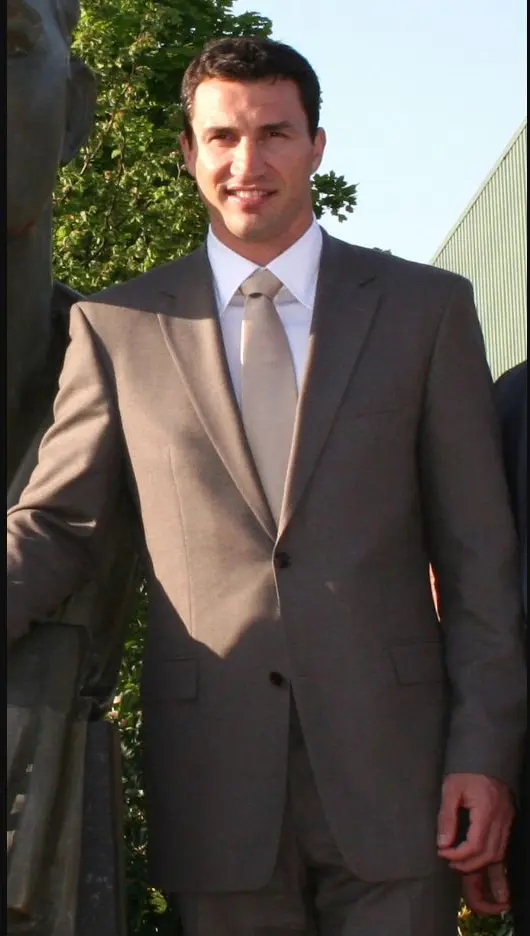
On July 2, 2011, Wladimir Klitschko defeated David Haye by unanimous decision in a heavyweight unification fight in Hamburg. Klitschko, already the IBF and WBO champion, added Haye’s WBA crown and strengthened his control of the heavyweight division, while his brother Vitali held the WBC title during the same period. The Klitschko era became one of the longest periods of dominance in modern heavyweight boxing. The image shows Wladimir Klitschko in 2010.
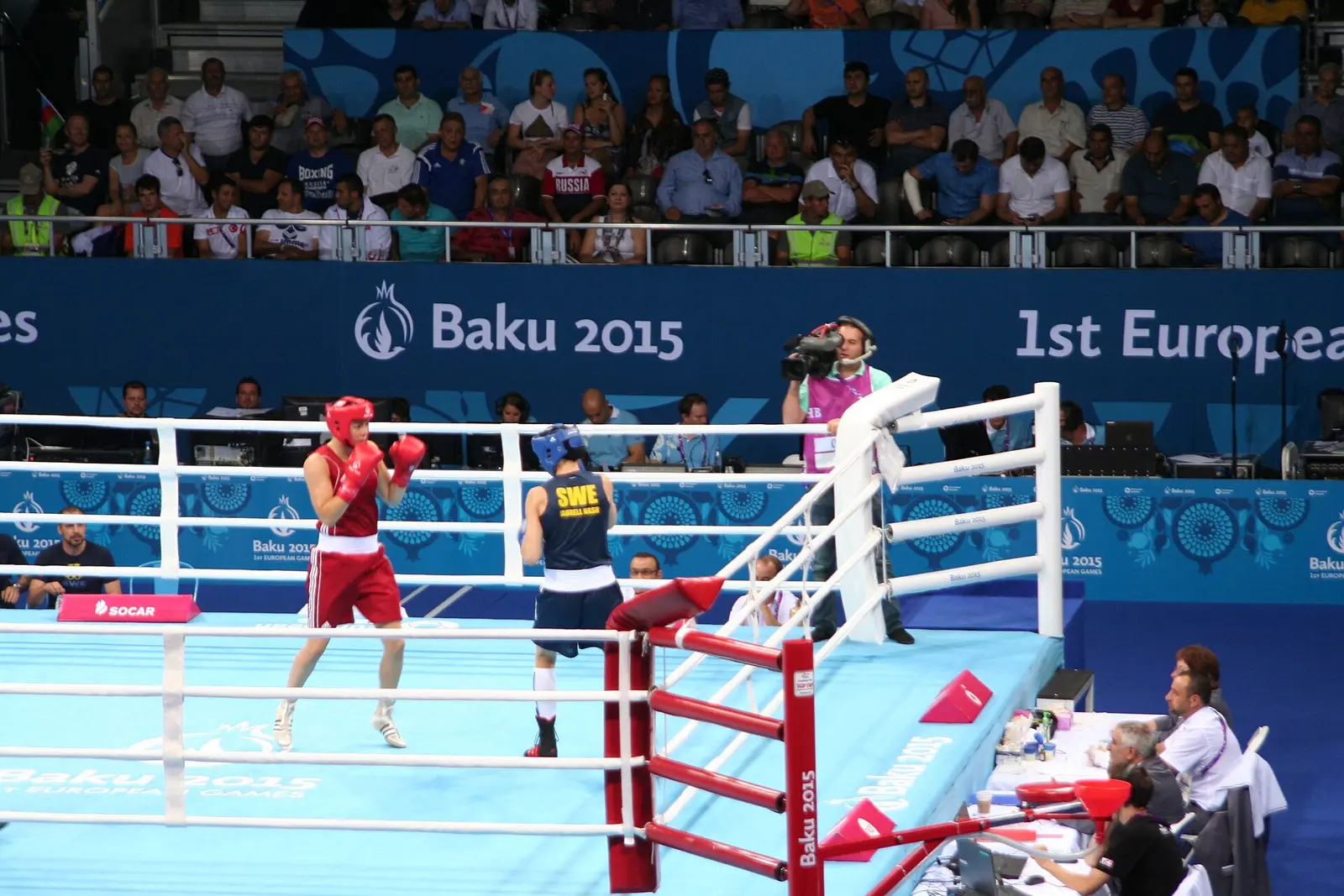
At London 2012, women’s boxing made its full Olympic debut with official medals in three weight divisions, turning the 2009 approval into actual competition in the ring. The image shows a boxing match at the London 2012 Olympic Games.
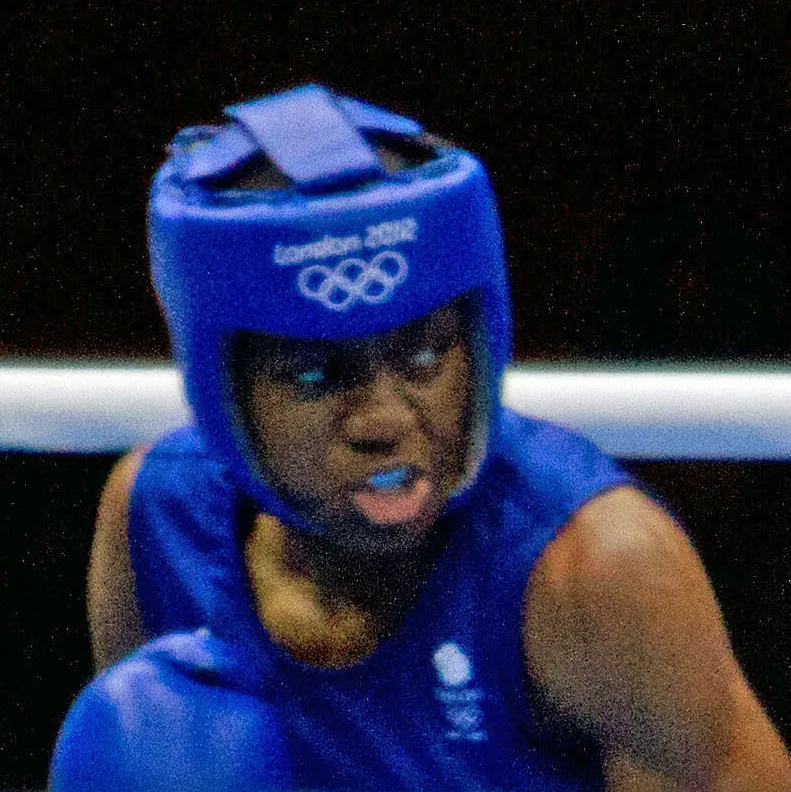
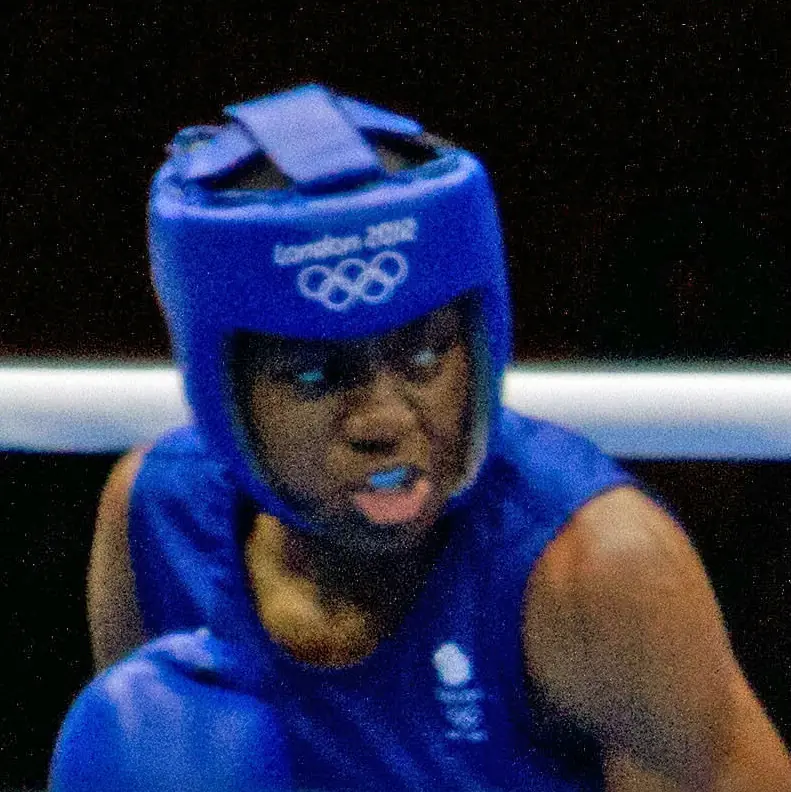
At London 2012, Nicola Adams won flyweight gold and became the first woman in history to win an Olympic boxing gold medal. The image shows Nicola Adams boxing at the London 2012 Olympic Games.
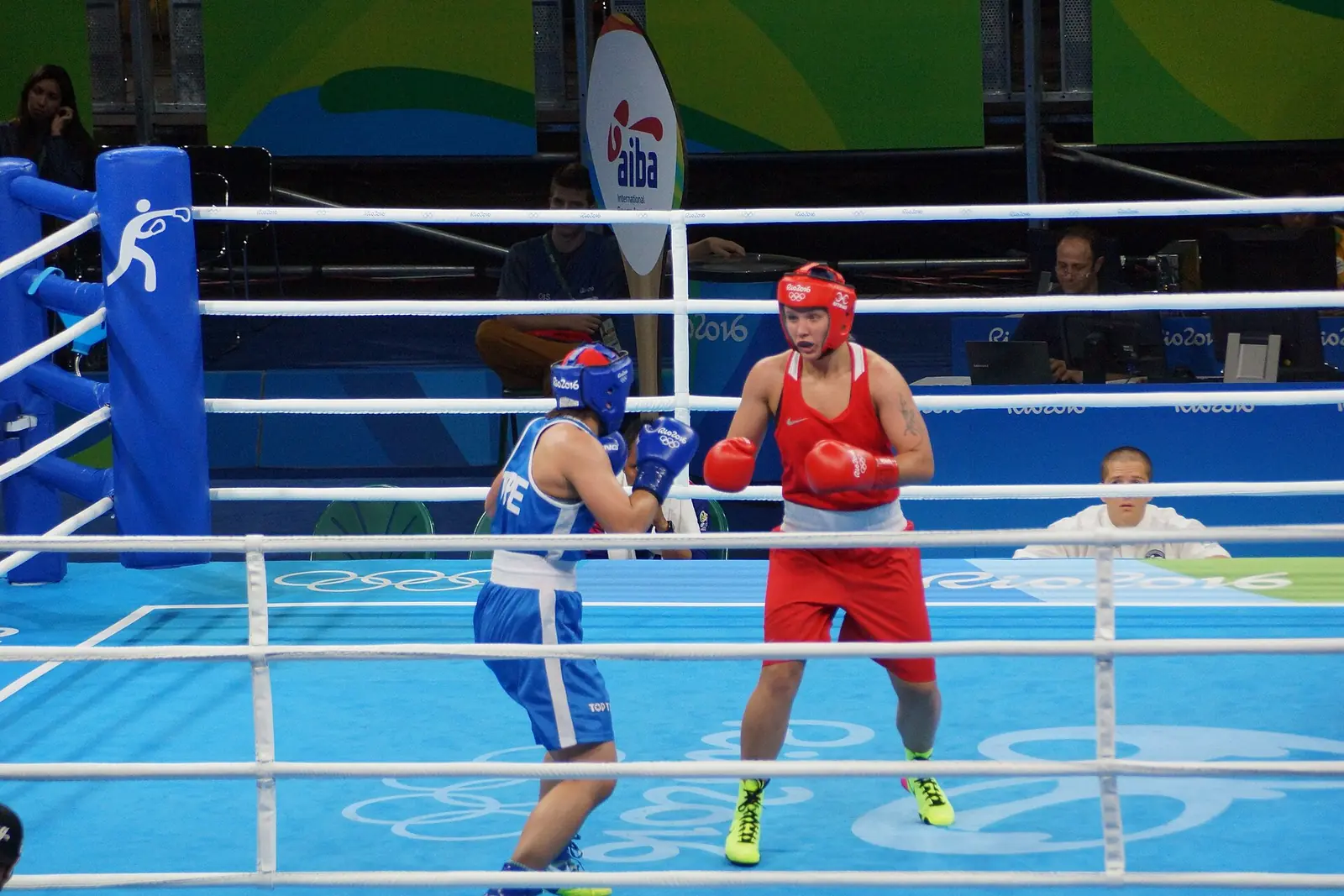
In 2013, AIBA removed headguards from elite men’s boxing and made a major scoring shift toward the 10-Point Must system, bringing the presentation of amateur elite bouts closer to professional conventions. The image shows a boxing match without headguards at the 2016 Olympic Games.
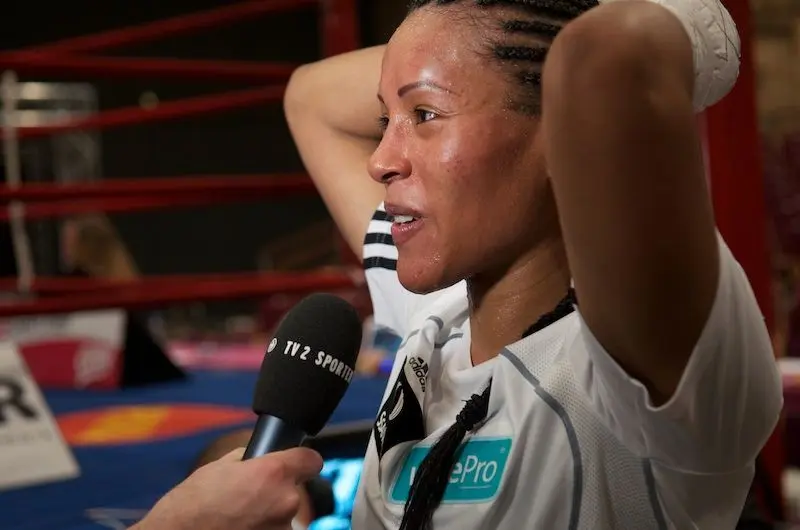
In 2014 Cecilia Brækhus defeated Ivana Habazin by unanimous decision, adding the IBF title to the WBA, WBC and WBO belts she already held. She became the first woman in history to hold all four major world titles simultaneously. The image shows Brækhus after a bout in Herning in 2011.
At Glasgow 2014, women’s boxing enters the Commonwealth Games programme for the first time, initially across three weight divisions. Two years after its Olympic debut at London 2012, the move represents another major step in the international institutionalisation and visibility of women’s boxing.
On 29 March 2014, Areti Mastrodouka faces Claudia Ferenczi in Athens in a contest described by the Women Boxing Archive as the first professional boxing bout staged in Greece. That October she wins the GBU title against Hana Horakova, before completing the sequence on 9 May 2015 by defeating Loli Muñoz in Athens by unanimous decision for the unified WBF/WIBF/GBU women’s super-featherweight world championship.
On 2 May 2015, Floyd Mayweather Jr. defeats Manny Pacquiao by unanimous decision at the MGM Grand in Las Vegas, unifies the WBO, WBA and WBC welterweight titles and moves his professional record to 48–0. Guinness World Records lists the contest as the highest-selling pay-per-view boxing match, with approximately 4.4 million purchases, reflecting the enormous worldwide interest generated by the meeting of two of their generation's greatest fighters. The image shows Mayweather at an event in 2011.
In 2015, the WBC creates the Clean Boxing Program in partnership with VADA, with operational implementation beginning for male boxers in September 2016. The programme combines anti-doping education, mandatory enrolment for champions and leading contenders, whereabouts information and random out-of-competition testing, moving boxing anti-doping beyond post-fight testing towards continuous prevention and monitoring.
In 2016, AIBA changed its rules so professional boxers could enter the Olympic pathway, removing a long-standing administrative barrier between professional and Olympic-style boxing. The image shows Abdulkadir Selimov and Joe Joyce at the 2016 Olympic Games.
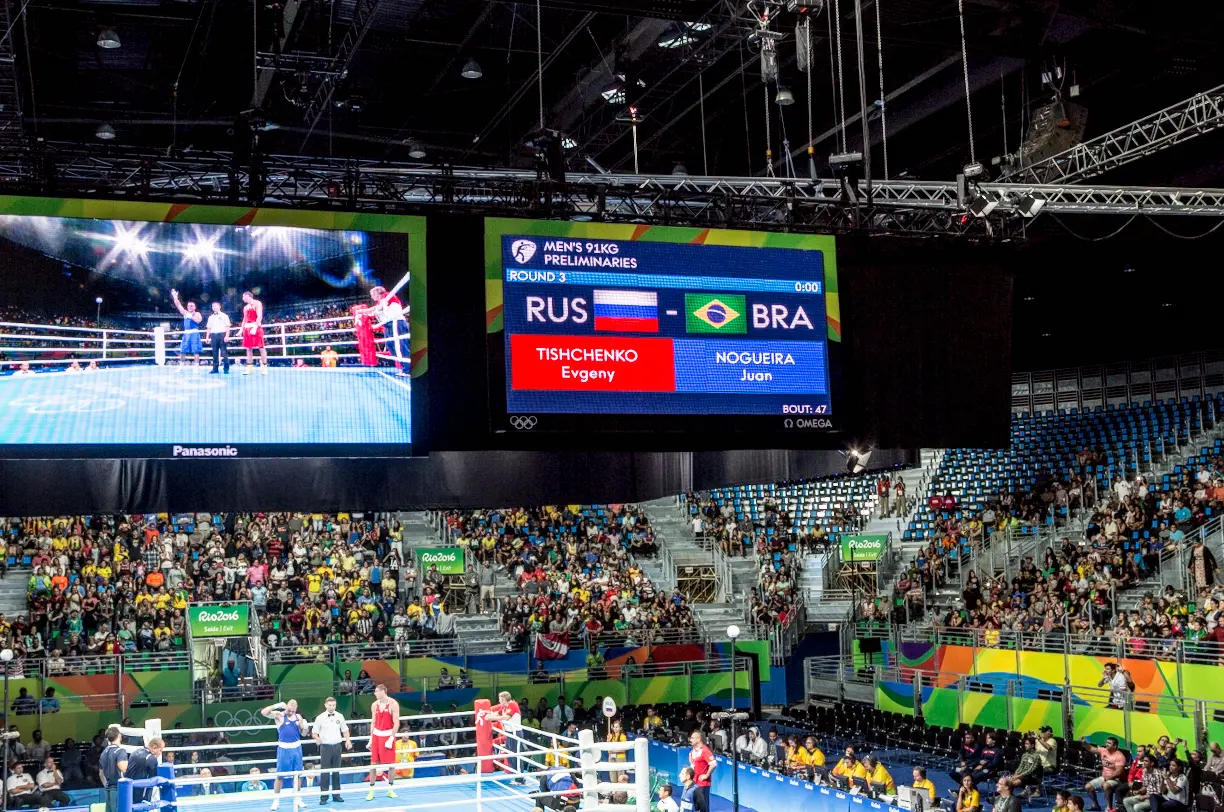
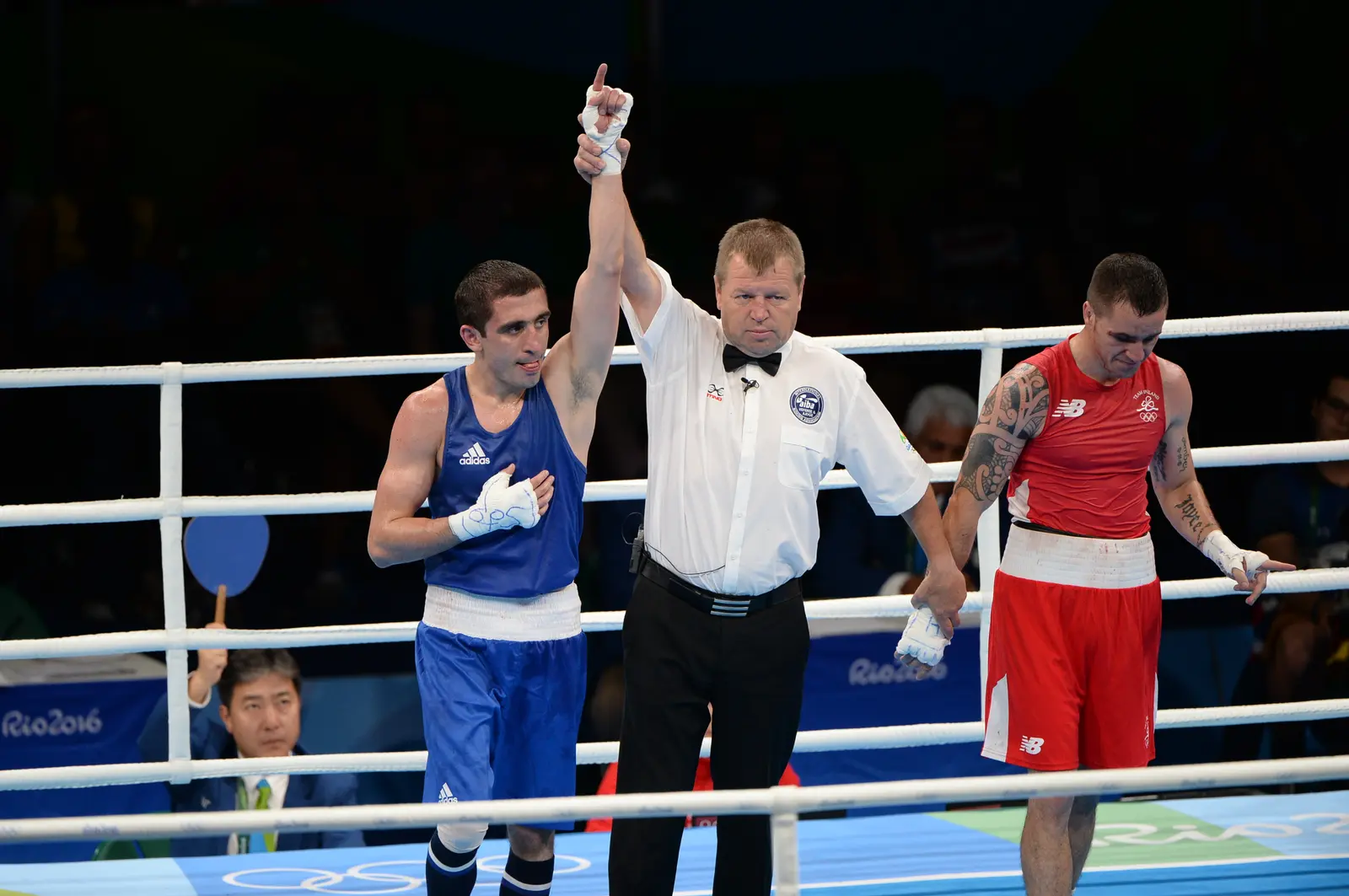
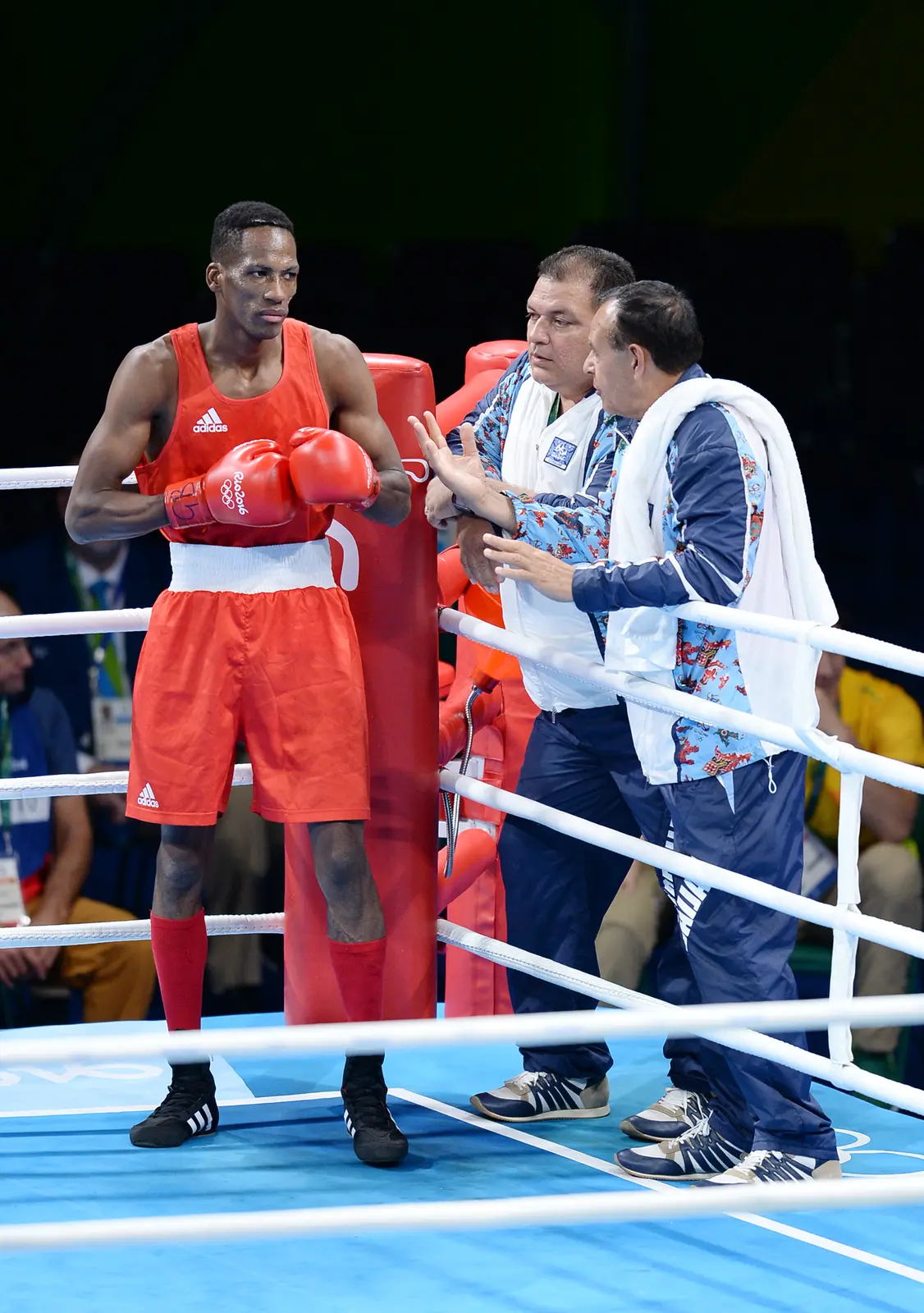
At Rio 2016, male Olympic boxers competed without headguards for the first time since 1980, while women continued to wear them, making the recent rule change visible on the Olympic stage. The image shows Lorenzo Sotomayor and Hassan Amzile at the 2016 Olympic Games.
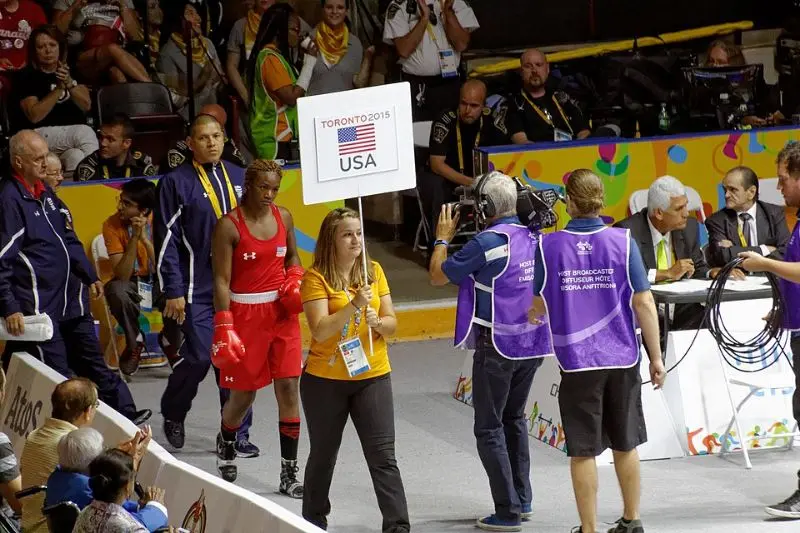
At Rio 2016 Claressa Shields won a second consecutive Olympic middleweight gold. She became the first U.S. boxer, male or female, to win two Olympic gold medals and the first woman to receive the Val Barker Trophy as the Games’ outstanding boxer. The image shows Shields entering the ring at the 2015 Pan American Games.
On 9 June 2017, the IOC Executive Board approves the expansion of women’s Olympic boxing from three to five weight classes for Tokyo 2020. Men’s events are reduced from ten to eight while two women’s events are added, accelerating boxing’s move towards greater gender equality at the Olympic Games.
On 26 August 2017 in Las Vegas, Floyd Mayweather Jr. faces UFC champion Conor McGregor in the Irish star’s first professional boxing match and wins by tenth-round TKO. The bout’s historical significance lies primarily beyond the sporting result: boxing and MMA converge in an unprecedented crossover promotion that generates 4.3 million North American pay-per-view buys and more than $600 million in global event revenue, demonstrating the new scale of boxing as a global entertainment business.
On 26 July 2018, the Association of Ringside Physicians publishes the first written consensus statement specifically addressing concussion management and return to competition in combat sports. Recognising that head contact is inherent to these sports, the guidance recommends stricter management than in non-combat competition, including minimum 30-, 60- and 90-day suspensions depending on the type of head-strike stoppage, together with a symptom-free and gradual return-to-fight process.
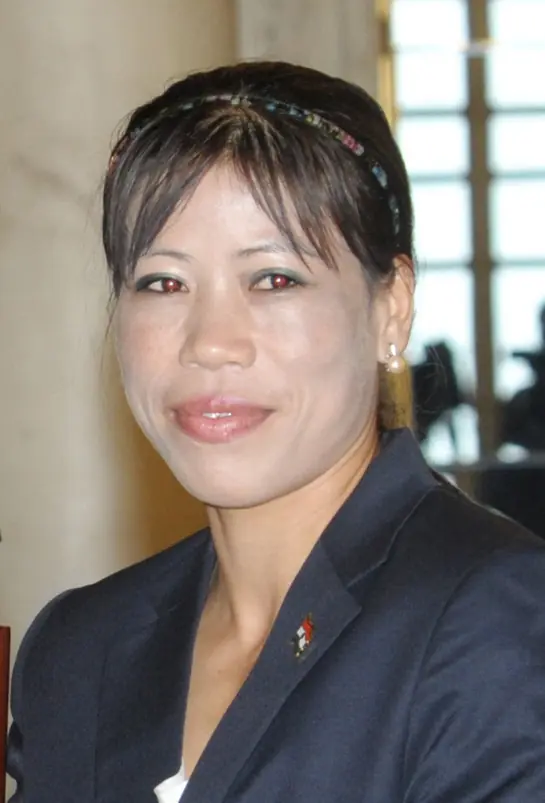
In 2018 Mary Kom won the sixth AIBA Women’s World Championships gold medal of her career in New Delhi, taking the 48 kg title. Her sixth world crown tied Félix Savón for the number of AIBA World Championship titles and further established her as one of the defining figures of women’s and Indian boxing. The image shows Mary Kom in a modern photograph.
On March 24, 2019 in Athens, Christina Linardatou stopped Kandi Wyatt in the sixth round to win the vacant WBO world junior-welterweight title. The event was the first WBO world-title fight staged in Greece.
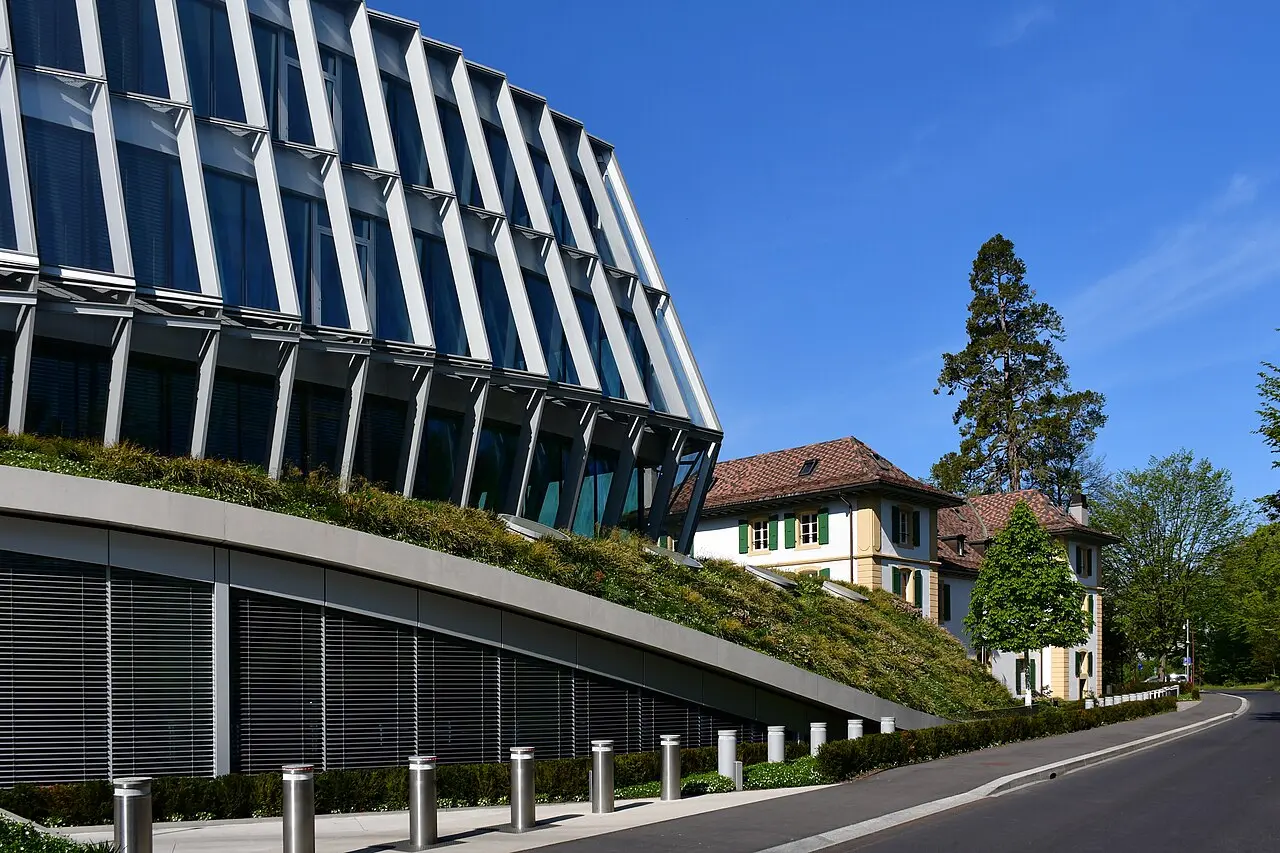
In 2019 the IOC suspends recognition of AIBA and removes the international federation’s responsibility for organising Olympic boxing at Tokyo 2020. The IOC itself takes over the qualification process and Olympic tournament, creating an unprecedented rupture between the Olympic movement and boxing’s world governing body. The image shows the headquarters of the International Olympic Committee and the Château de Vidy in Lausanne.
In 2019, the World Boxing Council implements a new Weight Management Program designed to protect boxer health and limit dangerous rapid changes in body weight. The system establishes checks 30, 14 and 7 days before a bout — with respective limits of 10%, 5% and 3% above the division limit — and adds a fight-day weight check.
On 4 December 2019, the International Boxing Hall of Fame announces female boxers among its inductees for the first time. Barbara Buttrick is elected in the Women’s Trailblazer category, with Christy Martin and Lucia Rijker in Women’s Modern, forming the Hall’s historic first female class. The induction ceremony would later be delayed by the pandemic, but the institutional breakthrough had already taken place.
In 2021, Antonia-Filippa Giannakopoulou wins the 54 kg gold medal at the EUBC Youth European Championships in Budva, Montenegro, defeating Turkey's Kevser Tütüncü 5–0 in the final. The victory is recorded as the first European Championship gold medal in the history of Greek boxing and marks a historic international breakthrough for Greece's new generation and women's boxing. Her international journey continued in 2025 with the 54 kg silver medal at the European U23 Championships.
On 5 March 2021 in Flint, Michigan, Claressa Shields defeats Marie-Eve Dicaire to unify all four major world titles at super welterweight. Already undisputed at middleweight, she becomes the first boxer — male or female — to become undisputed champion in two divisions in the four-belt era.
The year 2022 was a milestone for Phoenix Boxing Club, marked by a series of major European and international achievements by the club's athletes. Michalis Tsamalidis won the gold medal at 80 kg at the EUBC European Youth Championships in Sofia, Vasilis Topalos won gold at 60 kg at the EUBC European Junior Championships in Montesilvano, Petros Topalos won silver at 60 kg at the EUBC European Schoolboys Championships in Erzurum, and Olga Papadatou won bronze at 57 kg at the EUBC European Elite Women's Championships in Budva. In the same year, Ioannis Poumpouridis won the gold medal at the international Gheorgheni Open tournament in Romania and later made his first appearance at a European Championship, competing at 66 kg at the EUBC Schoolboys European Boxing Championships in Erzurum. That participation marked the beginning of a path that led him the following year to the bronze medal at 75 kg at the 2023 EUBC Junior European Boxing Championships in Ploiești.
In 2022, Stelios Roulias and Christos Karaitis win bronze medals at +92 kg and 71 kg respectively at the IBA Youth World Boxing Championships in La Nucía, Spain. Two Greek medals at the same World Youth Championships mark a historic result for Greek boxing and confirm the country's new generation on the global stage.
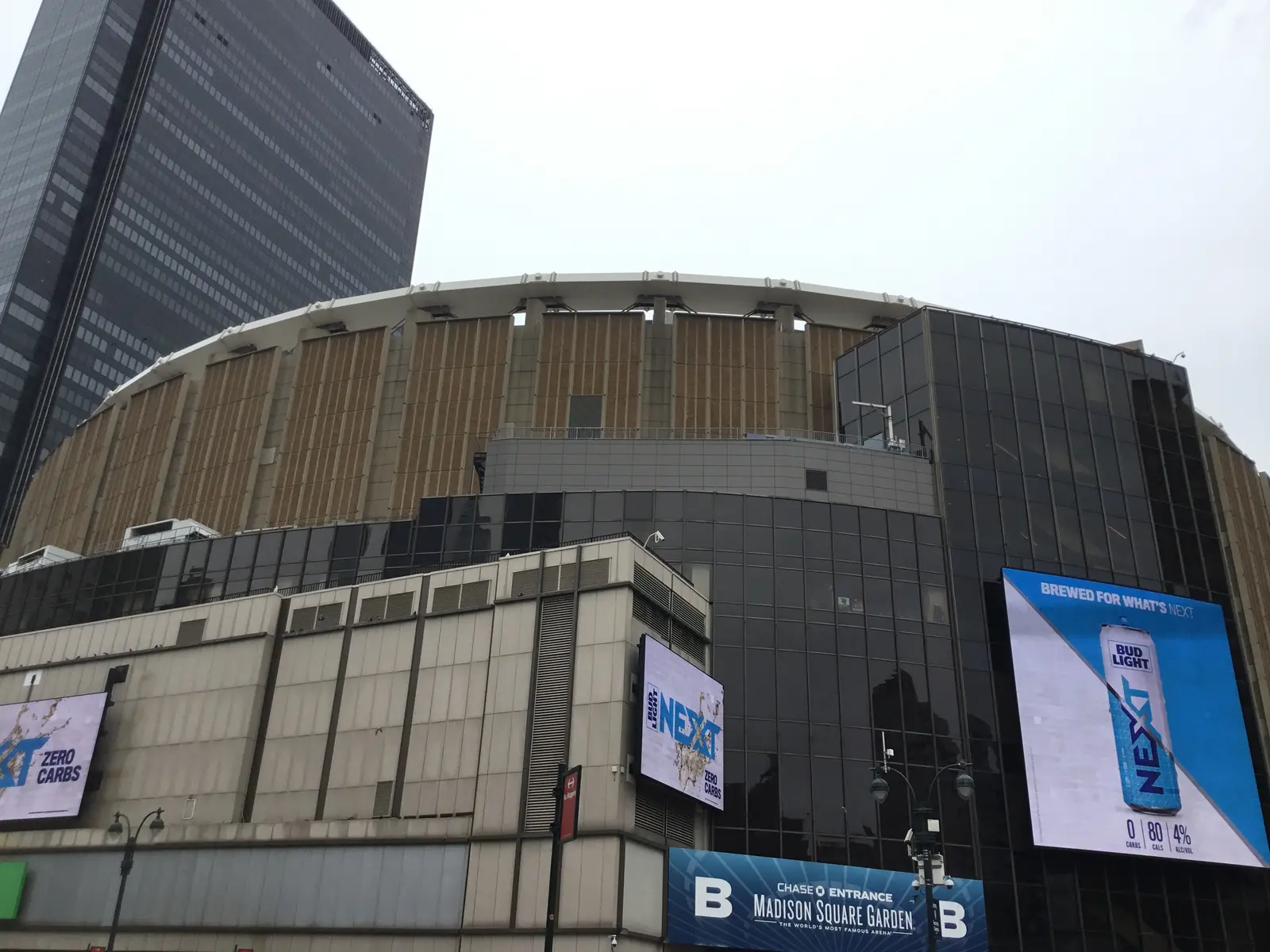
Katie Taylor and Amanda Serrano become the first women to headline a boxing event at New York’s Madison Square Garden. Their undisputed lightweight championship bout marks a major step in women’s professional boxing entering the global sporting mainstream. The image shows Madison Square Garden on 18 April 2022, twelve days before the historic fight.
In 2023 the IOC permanently withdraws recognition of the IBA after a prolonged period of concerns over governance, financial transparency and competition integrity. The decision is historic for Olympic boxing because it leaves the sport without a recognised international federation and makes a new institutional solution necessary for its future at the Games.
In 2023 World Boxing is founded by national federations seeking a new international structure for the sport after the IOC–IBA rupture. From its launch it states that keeping boxing at the heart of the Olympic movement is a central mission and begins attracting national federations from multiple continents.
On 27 October 2023 in Orlando, Amanda Serrano defeats Danila Ramos by unanimous decision and retains her WBA, IBF and WBO featherweight titles over twelve three-minute rounds. It is the first women’s title fight since 2007 to use the same 12×3 duration as men’s world-title boxing, bringing the debate over equality in women’s championship round length back to the centre of the sport.
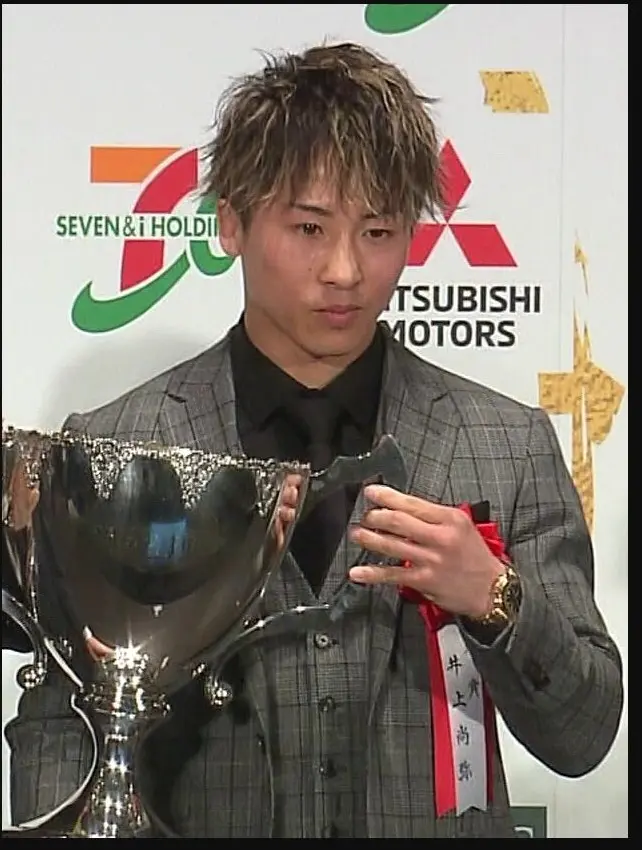
On December 26, 2023, Naoya Inoue stopped Marlon Tapales in the tenth round in Tokyo, adding the WBA and IBF belts to the WBC and WBO super-bantamweight titles he already held. With the victory he became only the second fighter, after Terence Crawford, to achieve undisputed status in two divisions during the four-belt era. The achievement confirmed Inoue’s place among the defining figures of modern Japanese and world boxing. The image shows Inoue in a 2023 photograph.
In 2024 Oleksandr Usyk defeated Tyson Fury by split decision in Riyadh, unifying the WBA, WBC, IBF and WBO titles. He became the first undisputed heavyweight champion of the four-belt era and the first undisputed heavyweight champion since Lennox Lewis. The image shows Usyk in a 2012 photograph.
In 2024, Stelios Roulias wins the +92 kg silver medal at the EUBC U23 European Championships in Sofia. In the final he faces Ukraine’s Vasyl Tkachuk, with the bout decided 3–2.
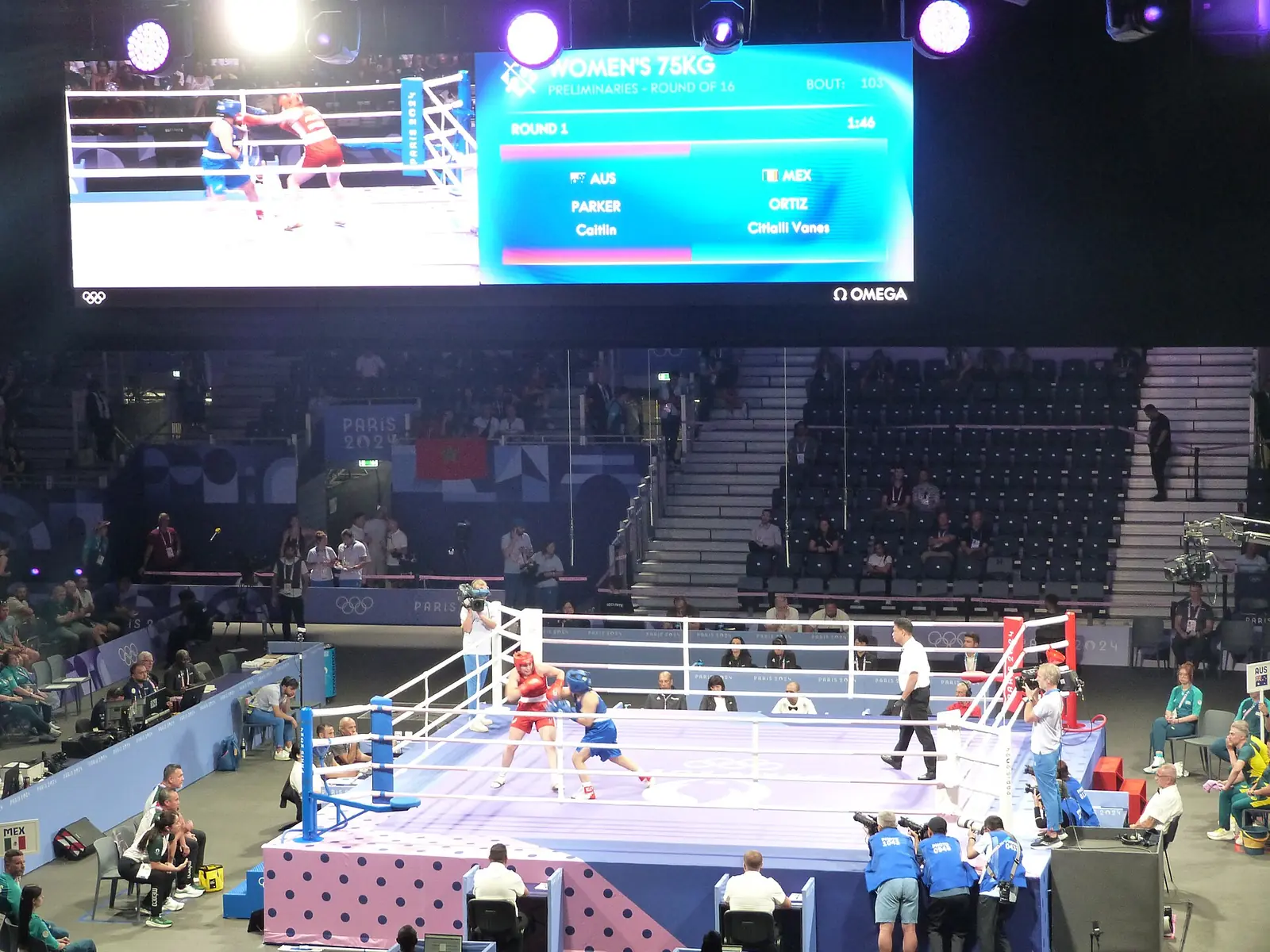
At Paris 2024, Cindy Ngamba makes history beyond boxing itself. On 4 August she defeats France’s Davina Michel 5–0 in the women’s 75 kg quarter-final, guaranteeing the first Olympic medal ever won by an athlete representing the Refugee Olympic Team. Four days later, she completes the tournament with bronze.
For Paris 2024, the Olympic boxing qualification system allocates its original 248 quota places equally for the first time: 124 for women and 124 for men. The parity applies to athlete quotas rather than weight classes, with six women’s events and seven men’s events on the programme. Full parity in weight categories would follow later for LA28.
On 15 November 2024, Paul–Tyson at AT&T Stadium is distributed live worldwide through Netflix, turning a boxing event into a mass global streaming spectacle outside the traditional pay-per-view purchase model. Netflix reports an estimated 108 million live global average-minute viewers and a peak of 65 million concurrent streams, describing the bout as the most-streamed global sporting event to that point. Boxing thus completes a media journey from fight films and radio to broadcast television, closed circuit, PPV and global streaming.
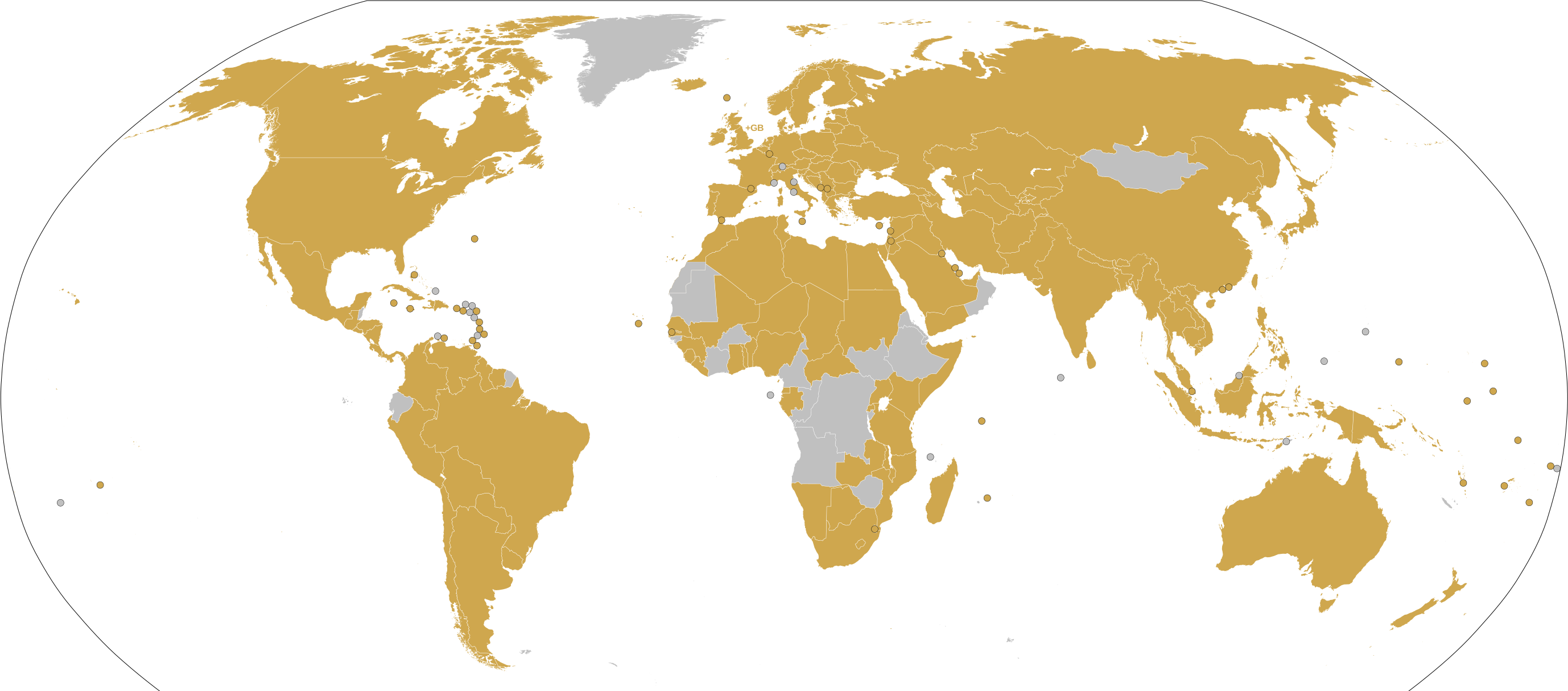
In 2025, the IOC granted provisional recognition to World Boxing, a decisive step toward an internationally recognised federation structure capable of supporting the future of Olympic boxing. The image shows a map of World Boxing member federations.
In 2025 boxing is officially confirmed on the sport programme for the Los Angeles 2028 Olympic Games, removing the immediate risk of the sport disappearing from the Games after the preceding governance crisis. The decision follows the IOC’s provisional recognition of World Boxing and restores a clear Olympic pathway for athletes and national federations. The LA28 structure provides gender parity with 7 men's and 7 women's weight classes, plus 124 quota places for each gender.
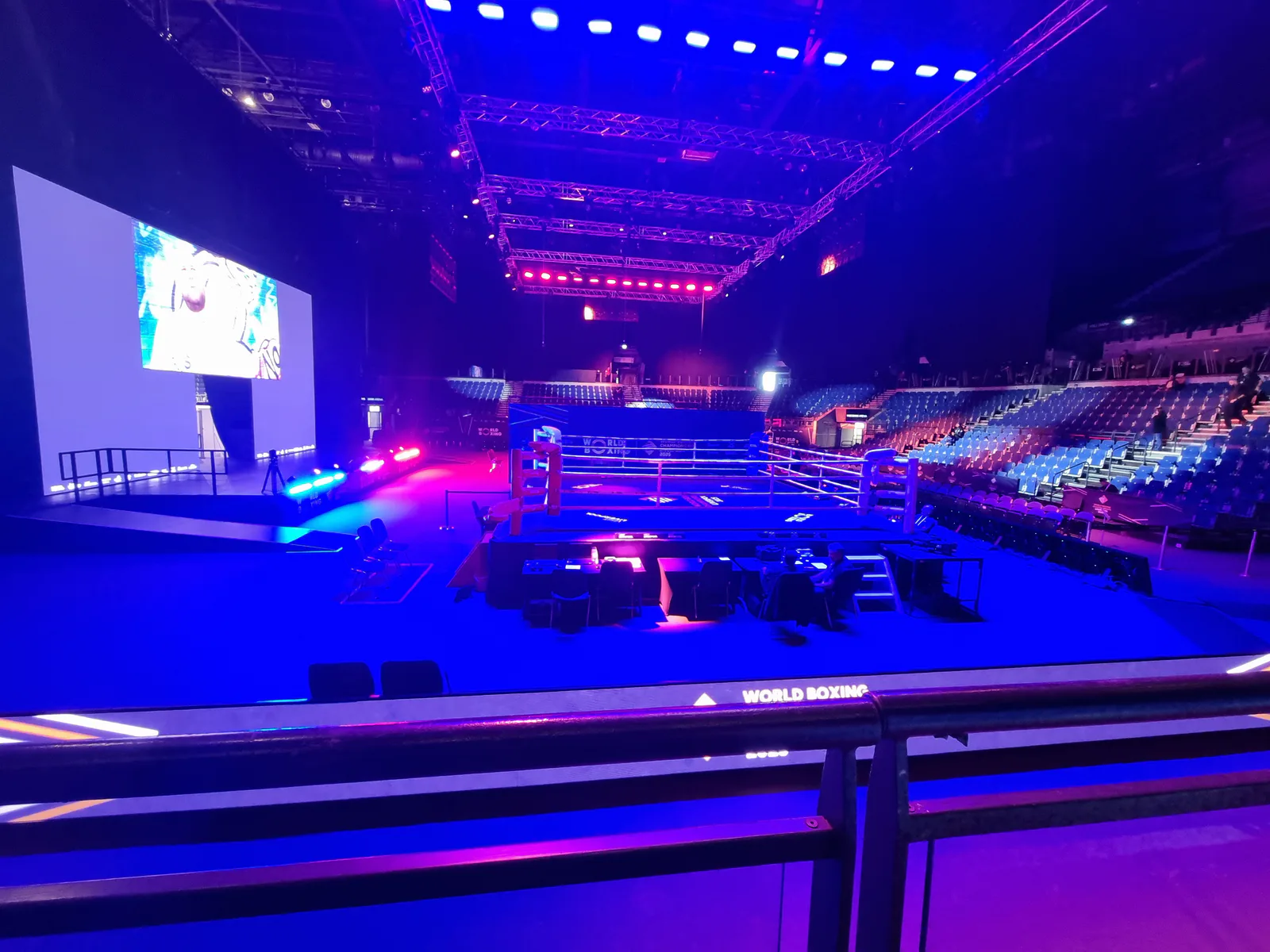
In 2025, the Hellenic Boxing Federation joined World Boxing, institutionally aligning Greece with the new international federation that had received provisional IOC recognition and was taking a central role in boxing’s Olympic pathway. The image shows a scene from the 2025 World Boxing Championships.
In 2025, Greece wins three medals at the European U23 Boxing Championships: Antonia Giannakopoulou takes silver at 54 kg, Vasiliki Stavridou bronze at 80 kg, and Zacharias Mylonas bronze at 70 kg. The three-medal result strengthens the international presence of Greece’s new boxing generation.
On September 13, 2025, Terence Crawford defeated Saúl “Canelo” Álvarez by unanimous decision in Las Vegas to become the undisputed super-middleweight world champion. Having previously become undisputed at super lightweight and welterweight, Crawford became the first male boxer of the four-belt era to achieve undisputed status in three different divisions. The flag of Nebraska, his home state, is used as a safe symbolic contextual visual; it does not depict the fight.
At the Taranto 2026 Mediterranean Games, Sofia Legaki wins bronze in the women’s 60 kg division and becomes the first Greek female boxer in history to reach a Mediterranean Games podium. Her run to the semi-finals marks a new milestone for Greek women’s boxing.